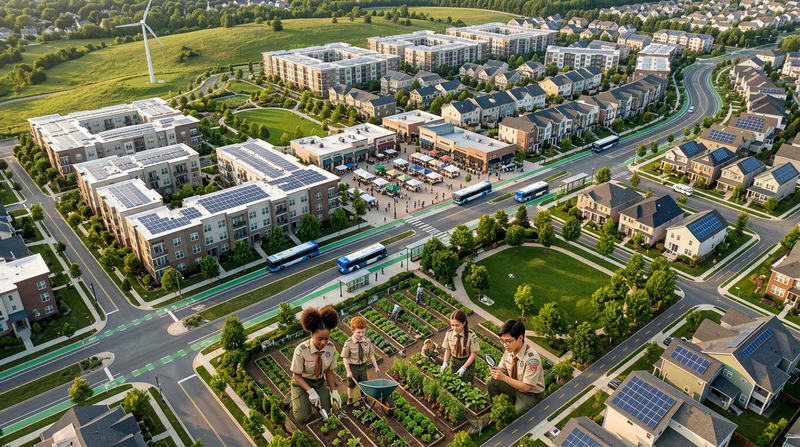
Req 4a — Design a Community
Choose ONE of requirements 4a, 4b, or 4c. This page covers option 4a. Read all three options before deciding which one interests you most.
What Makes a Community Sustainable?
A sustainable community is designed so that the way people live, work, shop, and travel reduces waste, conserves resources, and supports a healthy environment and economy. It is not about fancy technology — it is about smart design.
Think about your own community. How far do you travel to get to school? Do most people drive or walk? Are there parks and green spaces? Where does your trash go? The answers to these questions reveal how sustainable — or unsustainable — a community’s design really is.
Key Elements of Sustainable Community Design
Housing
Sustainable housing uses less energy, less water, and fewer materials than conventional homes:
- Energy-efficient design — Good insulation, double-pane windows, and efficient heating/cooling systems reduce energy use by 30–50%
- Solar panels — Rooftop solar can generate much of a home’s electricity
- Mixed housing types — Apartments, townhomes, and single-family homes in the same area give people affordable options and reduce sprawl
- Green building materials — Recycled, locally sourced, and sustainably harvested materials reduce the environmental footprint of construction
Work Locations
Where people work relative to where they live has a huge impact on sustainability:
- Mixed-use zoning — Putting homes, offices, and shops in the same area reduces the need to drive long distances
- Remote work — When people work from home, they eliminate commute-related emissions entirely
- Local businesses — Money spent at local businesses circulates in the community, strengthening the local economy
Shops and Services
- Walkable shopping — When stores, restaurants, and services are within walking distance of homes, people drive less
- Farmers markets — Local food requires less transportation and packaging
- Repair shops — Access to repair services means fewer items get thrown away
Schools
- Neighborhood schools — Schools within walking or biking distance reduce bus and car trips
- Green school buildings — Energy-efficient schools save money and teach students about sustainability by example
- School gardens — Growing food on campus connects students to sustainable food practices
Transportation
Transportation is often the biggest source of pollution and energy use in a community:
- Public transit — Buses, trains, and light rail move more people with less energy than individual cars
- Bike lanes and sidewalks — Safe infrastructure for walking and cycling reduces car dependence
- Electric vehicle charging — Supporting the transition from gas-powered to electric vehicles
- Compact design — When everything is closer together, people travel shorter distances
Creating Your Sketch
Your sketch does not need to be artistic — it needs to be clear. Here is how to approach it:
Sketch Planning Guide
Elements to include in your community design
- Housing areas with different types of homes (apartments, townhomes, houses)
- A town center with shops, services, and public spaces
- Schools positioned within walking distance of neighborhoods
- Work areas (offices, workshops) integrated with or near residential areas
- Parks, green spaces, and community gardens
- Transportation routes: roads, bike lanes, bus/transit lines, sidewalks
- Natural features: streams, forests, wetlands preserved as green buffers
- Renewable energy sources: solar panels, wind turbines
- Water management: rain gardens, retention ponds
How Design Affects Sustainability
When you discuss your sketch with your counselor, be ready to explain these connections:
| Design Element | Energy Impact | Pollution Impact | Natural Resources | Economic Impact |
|---|---|---|---|---|
| Compact layout | Less driving = less fuel | Lower emissions | Less land consumed | Lower infrastructure costs |
| Solar panels | Renewable energy | Zero emissions | Reduces fossil fuel use | Long-term energy savings |
| Public transit | Shared energy use | Fewer cars = cleaner air | Less road building | Accessible to all income levels |
| Green spaces | Natural cooling | Air filtration | Habitat preservation | Higher property values |
| Local shops | Less transportation energy | Less delivery pollution | Less packaging waste | Money stays local |