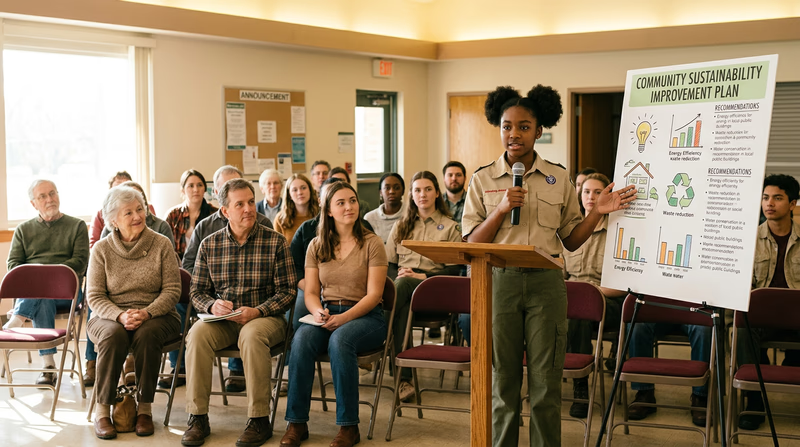
Req 4b — Fix an Unsustainable Practice
Finding Unsustainable Practices
Every community has practices that waste resources, create pollution, or harm the environment. The first step is to look around with a critical eye. Here are places to look:
Transportation
- No bike lanes or sidewalks, forcing everyone to drive even short distances
- School bus routes that are inefficient, with buses running half-empty
- Lack of public transit options
Waste Management
- No curbside recycling program, or a program with very low participation
- No composting options for yard waste or food scraps
- Excessive use of single-use plastics at community events
Water
- Overwatering of public parks, sports fields, or golf courses
- Storm drains that carry polluted runoff directly into waterways
- Aging water infrastructure with frequent leaks and breaks
Energy
- Public buildings (schools, libraries, offices) with poor insulation or old HVAC systems
- Streetlights left on during daylight hours or using inefficient bulbs
- No electric vehicle charging stations
Land Use
- Paving over green spaces for parking lots
- New development in flood-prone or ecologically sensitive areas
- Lack of urban tree canopy, creating heat islands
Writing Your Plan
Once you have identified an unsustainable practice, develop a written plan to fix it. A strong plan includes these elements:
1. Define the Problem
State clearly what the unsustainable practice is, where it occurs, and why it is a problem. Use specific details and data when possible.
Example: “Our community park’s sprinkler system runs for 45 minutes every morning, even when it has rained. This wastes an estimated 2,000 gallons of water per week during wet months.”
2. Research Solutions
Look at what other communities have done to solve similar problems. Identify multiple possible solutions and evaluate each one.
3. Propose a Solution
Choose the best solution and explain:
- What specifically would change
- Who would need to be involved (city council, school board, local businesses, volunteers)
- How it would be implemented step by step
- When each step would happen (create a timeline)
- How much it would cost (estimate if exact figures are not available)
- What benefits it would provide (environmental, economic, social)
4. Address Challenges
Every plan faces obstacles. Identify potential challenges and how you would address them:
- Cost concerns → Show long-term savings or find grant funding
- Resistance to change → Educate and demonstrate benefits
- Technical complexity → Identify experts or partners who can help
5. Measure Success
How would you know if your plan worked? Define specific, measurable outcomes.
Example: “Water usage at the park would decrease by 40% during wet months, saving approximately 8,000 gallons per month.”