Req 5b — Family Energy Use
How Your Family Uses Energy
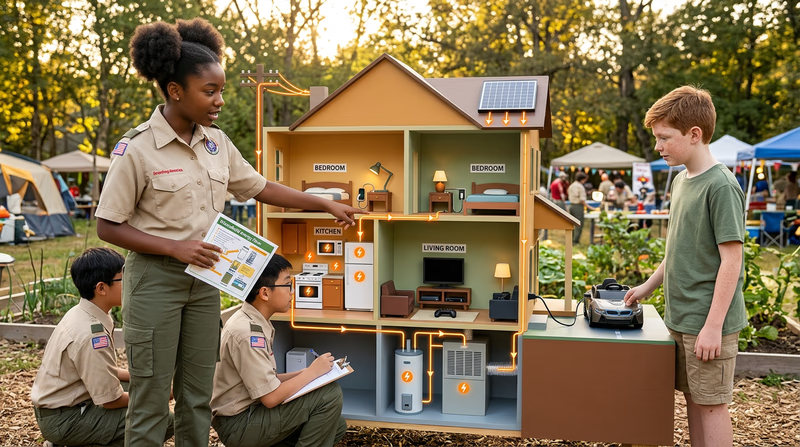
Energy use is woven into every part of daily life — so deeply that you probably do not even think about most of it. This requirement asks you to make the invisible visible by cataloging how your family consumes energy.
Finding Your Eight Energy Uses
Walk through your home and think about your daily routine. Here are common ways families consume energy:
At Home:
- Heating and cooling — Furnaces, air conditioners, heat pumps, and fans
- Hot water — Water heaters use a significant amount of energy (about 18% of home energy)
- Cooking — Gas or electric stoves, ovens, and microwaves
- Lighting — Overhead lights, lamps, and outdoor lighting
- Electronics — TVs, computers, gaming consoles, phones, and tablets
- Refrigeration — Your fridge runs 24/7, making it one of the biggest energy users in your home
- Laundry — Washing machines and especially dryers use substantial energy
- Dishwashing — Dishwashers use both electricity and hot water
Transportation:
- Family car(s) — Gasoline or diesel vehicles for commuting, errands, and activities
- School bus — Diesel-powered buses that transport students daily
- Air travel — Flying for vacations or family visits
- Recreational vehicles — ATVs, boats, or RVs
Energy Audit Walk-Through
Room-by-room checklist for identifying energy use
- Kitchen: Stove, oven, microwave, refrigerator, dishwasher, small appliances
- Living room: TV, gaming systems, lighting, fans or space heaters
- Bedrooms: Lighting, chargers, alarm clocks, fans
- Bathroom: Hot water for showers/baths, hair dryers, heated towel racks
- Laundry room: Washer, dryer, iron
- Garage: Vehicles, power tools, garage door opener
- Whole house: HVAC system, water heater, outdoor lighting
Reducing Home Energy Consumption
Choose one home-related energy use and identify three ways to reduce it. Here is an example:
Example: Heating and Cooling
Adjust the thermostat — Lowering your thermostat by just 2°F in winter (or raising it 2°F in summer) can save about 5% on your heating and cooling bill. A programmable or smart thermostat can do this automatically when you are asleep or away.
Seal air leaks — Feel around windows, doors, and outlets for drafts. Weatherstripping and caulk are inexpensive fixes that can save 10–20% on heating and cooling costs.
Use fans strategically — Ceiling fans make a room feel 4–6°F cooler, letting you set the AC higher. In winter, reverse the fan direction to push warm air down from the ceiling.
Reducing Transportation Energy Consumption
Choose one transportation-related energy use and identify three ways to reduce it. Here is an example:
Example: Family Car
Combine trips — Instead of making three separate drives for errands, plan one loop that covers everything. Each cold start of your engine uses extra fuel.
Walk, bike, or carpool — For short trips (under two miles), walking or biking uses zero fossil fuel. For longer commutes, carpooling with neighbors or friends cuts per-person energy use in half or more.
Maintain the vehicle — Properly inflated tires improve fuel efficiency by up to 3%. Regular oil changes, clean air filters, and a well-tuned engine all help your car use less fuel.
Understanding Your Carbon Footprint
Your carbon footprint is the total amount of greenhouse gases (measured in CO2 equivalents) produced by your activities. The average American’s carbon footprint is about 16 tons of CO2 per year — one of the highest in the world. The global average is about 4 tons.
Every reduction in energy use shrinks your carbon footprint. Some reductions are bigger than others:
- Switching to a fuel-efficient or electric vehicle can save 2–5 tons of CO2 per year
- Improving home insulation can save 1–2 tons per year
- Switching to LED bulbs throughout your home saves about 0.5 tons per year