Req 6a — Needs vs. Wants
Choose ONE of requirements 6a, 6b, or 6c. This page covers option 6a. Read all three options before deciding which one interests you most.
Needs vs. Wants
Every item you own falls somewhere on a spectrum between “absolutely necessary for survival” and “nice to have.” Understanding the difference between needs and wants is one of the most important skills in sustainability — because the more stuff we buy, produce, transport, and eventually throw away, the more resources we consume.
Needs are things required for health, safety, and basic functioning:
- Soap, toothbrush, and hygiene products
- Clothing appropriate for the weather
- School supplies
- Food and water
- A bed and blankets
Wants are things that make life more enjoyable but are not essential:
- Video games and gaming consoles
- Decorative items and collectibles
- Extra pairs of shoes beyond what you need
- The latest phone when your current one works fine
The line is not always clear. A phone is a want if you are thinking about the newest model — but a basic phone might be a need for safety and communication. A winter coat is a need — but a designer winter coat is a want.
Creating Your List
Look around your room, closet, bathroom, and wherever you keep your personal belongings. Choose 15 items that represent a mix of different types of stuff. For each item, ask yourself:
- Do I need this to stay healthy, safe, or able to do my daily responsibilities? If yes, it is a need.
- Would I be fine without this? If yes, it is a want.
- Have I used this in the past month? If no, it might be excess.
Dealing with Excess Stuff
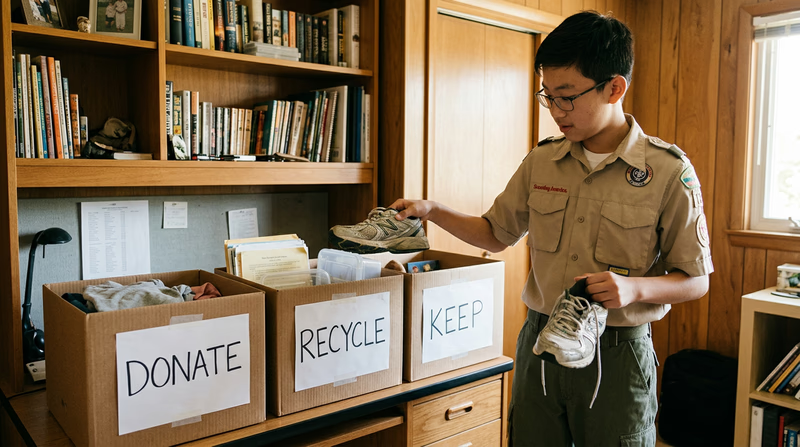
Once you have classified your items, look for things you no longer need or use. Work with your family to decide what to do with them:
Donate
Items in good condition can go to organizations like Goodwill, Salvation Army, or local shelters. Clothing, books, sports equipment, and household items are always needed. Some organizations will even pick up donations from your home.
Repurpose
Get creative. An old t-shirt can become a cleaning rag. A jar can store art supplies. A bookshelf can be refinished instead of thrown away. Repurposing keeps items out of the landfill and gives them a second life.
Recycle
Electronics, batteries, and certain plastics should not go in the regular trash. Find local recycling drop-off locations for:
- Old phones, tablets, and computers (many electronics stores accept these)
- Batteries (check your local recycling center)
- Clothing that is too worn to donate (some stores have textile recycling programs)
Sell or Swap
Garage sales, online marketplaces, and Scout troop swap events let you pass items to someone who will use them — and maybe earn a little money in the process.