Req 6c — Waste & Recycling
How Waste Affects the Environment
Every piece of trash you throw away has to go somewhere — and that “somewhere” affects the land, water, and air around it.
Impact on Land
Most waste ends up in landfills — engineered sites where trash is buried. In the U.S., there are about 2,600 active landfills. They take up enormous amounts of space, and despite engineering controls, they can leak toxic chemicals into surrounding soil. Landfills also generate leachate — liquid that seeps through decomposing trash and can contaminate groundwater if the liner fails.
Illegal dumping in forests, fields, and vacant lots damages habitats, introduces toxins into soil, and makes areas unsafe for wildlife and people.
Impact on Water
Waste that is not properly managed often ends up in waterways. Plastic bags, bottles, food packaging, and industrial waste flow into rivers, lakes, and oceans. This pollution:
- Kills marine life (animals mistake plastic for food or become entangled)
- Introduces microplastics into the food chain
- Contaminates drinking water sources
- Creates “dead zones” where decomposing waste depletes oxygen, killing fish and other aquatic life
Impact on Air
Landfills produce methane — a greenhouse gas about 80 times more potent than CO2 over a 20-year period. Burning waste (incineration) releases CO2, dioxins, and heavy metals into the atmosphere. Even transporting waste in diesel trucks generates significant air pollution.
The Trash Vortex (Great Pacific Garbage Patch)
The Great Pacific Garbage Patch — also called the trash vortex — is a massive concentration of plastic debris in the North Pacific Ocean. It is located between Hawaii and California and covers an area estimated at twice the size of Texas.
How It Formed
Ocean currents form large circular patterns called gyres. The North Pacific Subtropical Gyre slowly rotates clockwise, trapping floating debris in its center. Over decades, plastic waste from coastal communities, ships, and rivers across the Pacific Rim has accumulated in this zone.
The patch is not a solid island of trash — it is more like a cloudy soup of plastic fragments, many smaller than a grain of rice (microplastics). These particles are nearly impossible to clean up and are consumed by fish, seabirds, and marine mammals throughout the food chain.
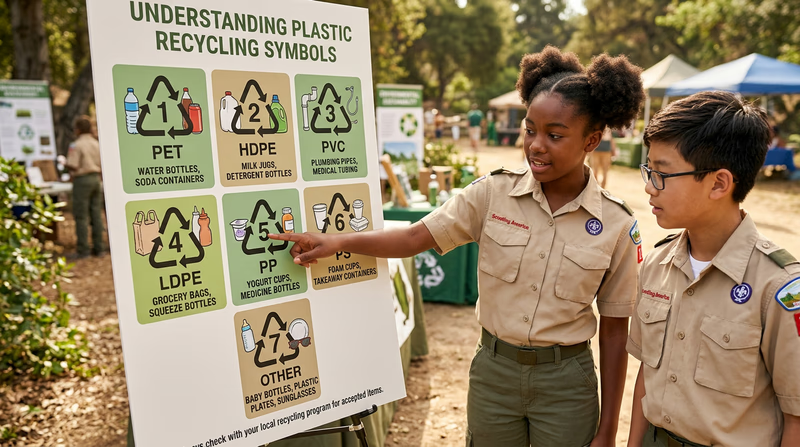
Plastic Recycling Numbers
Look at the bottom of any plastic container and you will see a number inside a triangle of arrows. This resin identification code tells you what type of plastic the item is made from:
| Number | Plastic Type | Common Products | Commonly Recycled? |
|---|---|---|---|
| 1 — PET/PETE | Polyethylene terephthalate | Water bottles, soda bottles | Yes — widely recycled |
| 2 — HDPE | High-density polyethylene | Milk jugs, detergent bottles | Yes — widely recycled |
| 3 — PVC | Polyvinyl chloride | Pipes, window frames | Rarely recycled |
| 4 — LDPE | Low-density polyethylene | Plastic bags, squeeze bottles | Sometimes (special drop-off) |
| 5 — PP | Polypropylene | Yogurt cups, bottle caps | Increasingly recycled |
| 6 — PS | Polystyrene (Styrofoam) | Takeout containers, packing peanuts | Rarely recycled |
| 7 — Other | Mixed or specialty plastics | Water cooler bottles, some food containers | Rarely recycled |
Key takeaway: Only plastics #1 and #2 are consistently recycled across the U.S. The rest often end up in landfills even if you put them in the recycling bin. Check your local recycling program’s website to find out exactly which numbers they accept.
Electronic Waste (E-Waste)
E-waste includes any discarded electronic device — phones, computers, TVs, game consoles, and more. It is the fastest-growing waste stream in the world.
Device Lifespans
The average lifespan of common electronics varies widely:
- Smartphone: 2–4 years (most people replace them every 2–3 years)
- Laptop computer: 3–5 years
- Desktop computer: 5–8 years
- Television: 7–10 years
- Game console: 5–7 years
- Tablet: 3–5 years
Why E-Waste Matters
Electronics contain valuable materials (gold, silver, copper, rare earth metals) alongside hazardous substances (lead, mercury, cadmium). When e-waste goes to a landfill, those toxic materials can leach into soil and groundwater. When it is properly recycled, those valuable materials can be recovered and reused.
Recycling Electronics
Most electronics can be recycled in whole or in part:
- Best Buy, Staples, and Apple stores accept old electronics for recycling
- Manufacturer take-back programs (Dell, HP, Samsung) let you mail back old devices
- Local e-waste collection events are held in many communities
- Certified e-waste recyclers (look for R2 or e-Stewards certification) ensure responsible recycling
For your counselor discussion, pick one electronic device in your household and research its average lifespan, what happens when it is discarded, and your local options for recycling it.