Req 7f — Climate Change
Temperature Change Over 100+ Years
NASA and NOAA maintain detailed records of global temperatures dating back to 1880. These records show a clear pattern: Earth’s average surface temperature has risen by about 1.1°C (2°F) since the late 1800s, with most of the warming occurring since the 1970s.
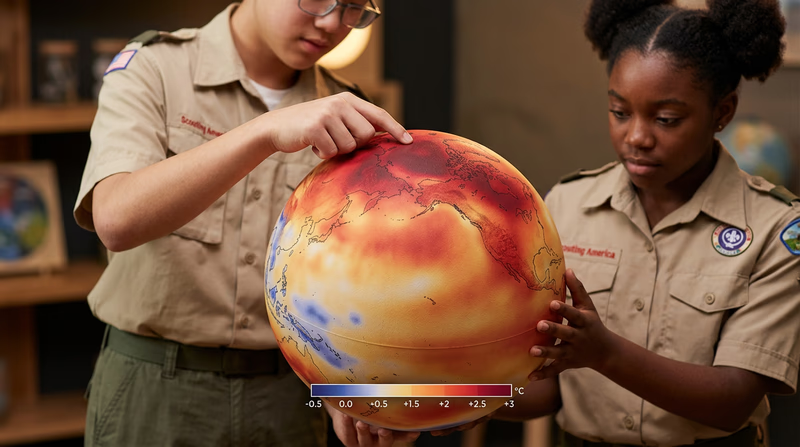
World maps showing temperature change over time — called temperature anomaly maps — use color coding to show which regions have warmed and by how much. Key observations from these maps:
- The Arctic has warmed faster than any other region — about two to three times the global average
- Land areas have warmed faster than oceans — because water absorbs heat more slowly
- Every continent shows warming — there is no region that has cooled over the past century
- The most recent decade was the warmest on record — each of the last several years has ranked among the hottest ever measured
Three Factors That Affect Global Temperature
1. Greenhouse Gases
Certain gases in the atmosphere — primarily carbon dioxide (CO2), methane (CH4), and nitrous oxide (N2O) — trap heat from the sun like a blanket around Earth. This is called the greenhouse effect, and it is natural and necessary — without it, Earth would be too cold for life.
The problem is that human activities have dramatically increased the concentration of these gases:
- CO2 has risen about 50% since 1750, mainly from burning fossil fuels and deforestation
- Methane has more than doubled, from livestock, rice paddies, landfills, and natural gas leaks
- Nitrous oxide has risen about 20%, from agricultural fertilizers and industrial processes
2. Solar Activity
The sun’s energy output varies slightly over an 11-year cycle (and over longer periods). During periods of higher solar activity, Earth receives slightly more energy. However, solar changes account for only a small fraction of the warming observed since 1900 — scientists estimate solar activity explains less than 10% of recent temperature changes.
3. Volcanic Eruptions and Aerosols
Major volcanic eruptions inject sulfur dioxide and ash into the upper atmosphere, where they reflect sunlight and temporarily cool the planet. The eruption of Mount Pinatubo in 1991 cooled global temperatures by about 0.5°C for roughly two years.
Human-produced aerosols (tiny particles from burning coal, diesel, and other fuels) can have a similar cooling effect by reflecting sunlight. Ironically, cleaning up air pollution — while great for human health — may slightly accelerate warming by removing this cooling mask.
Climate Change and Sustainability
Climate change is not a separate problem from sustainability — it is woven into every aspect of it. Here is how it affects key resources:
Impact on Food
- Crop yields decline when temperatures exceed optimal growing ranges
- Droughts and floods destroy harvests and disrupt planting seasons
- Pest ranges expand as warmer temperatures allow insects to move into new areas
- Pollinators are disrupted as flowering seasons shift out of sync with pollinator lifecycles
Impact on Water
- Glaciers and snowpack that provide freshwater to billions of people are shrinking
- Drought intensity and duration are increasing in many regions
- Flooding is becoming more severe as warmer air holds more moisture
- Sea level rise threatens freshwater supplies in coastal areas through saltwater intrusion
Impact on Other Resources
- Forests face increased wildfire risk, pest outbreaks, and heat stress
- Fisheries are disrupted as ocean temperatures and chemistry change
- Energy systems are strained by increased cooling demand and extreme weather damage
- Infrastructure (roads, bridges, buildings) is damaged by extreme heat, flooding, and storms