Req 8a — Campout Observations
Complete ALL of requirements 8a, 8b, and 8c.
Sustainability in the Field
Everything you have learned so far in this badge — water, food, energy, waste, communities — comes together when you step outdoors. A campout is a miniature community with its own resource needs and environmental impact. This requirement asks you to be a sustainability observer at an actual Scouting event.
What to Observe
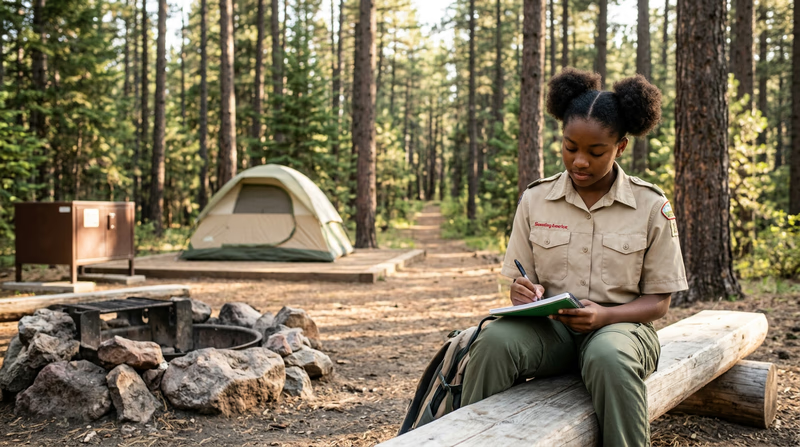
Bring a notebook and pen to your next campout or outdoor activity. Pay attention to these eight areas:
Transportation
How did everyone get to the activity?
- Did families drive separately, or did you carpool?
- How far did people travel?
- Were there opportunities to reduce the number of vehicles?
- Did anyone bike, walk, or take public transit?
Forestry
How is the forested area managed?
- Are trails maintained to prevent erosion and protect root systems?
- Is firewood gathered responsibly (using dead and downed wood only)?
- Are living trees protected from damage (no cutting, carving, or stripping bark)?
- Is there evidence of sustainable forest management (trail markers, managed growth)?
Soil Conservation
How is the soil being treated?
- Are trails well-maintained to prevent erosion?
- Are tent sites on durable surfaces (established pads, gravel, rock) rather than delicate ground?
- Is there evidence of soil compaction or erosion from overuse?
- Are campfire areas contained to prevent soil damage?
Water Resources
How is water being used and protected?
- Is clean water available, and where does it come from?
- Are Scouts washing dishes and themselves at least 200 feet from water sources?
- Is gray water (from washing) being strained and dispersed properly?
- Are waterways free of litter and contamination?
Habitat
How are wildlife and natural habitats treated?
- Is food stored properly to avoid attracting wildlife (bear boxes, bear bags)?
- Are Scouts staying on trails to protect vegetation?
- Is wildlife observed from a distance without disturbance?
- Are nesting areas, dens, and sensitive habitats avoided?
Buildings
If the activity is at a camp with structures:
- Are buildings energy-efficient (LED lighting, insulation)?
- Is water used efficiently in bathrooms and kitchens?
- Are recycling and composting options available?
- Are buildings maintained with sustainable materials?
Campsites
How sustainable are the campsite practices?
- Are tents set up on established sites rather than creating new ones?
- Are campfires kept in existing fire rings?
- Is the campsite left cleaner than it was found?
- Are Leave No Trace principles being followed?
Sanitation
How is waste — both human and otherwise — managed?
- Are latrines or restrooms maintained properly?
- Is trash separated for recycling?
- Are pack-it-in, pack-it-out policies followed?
- Is human waste disposed of properly (cat holes at least 200 feet from water)?
Campout Observation Checklist
Bring this to your next outdoor activity
- Transportation: How many vehicles? Carpooling used?
- Forestry: Firewood source? Tree protection?
- Soil: Trail conditions? Erosion evidence?
- Water: Distance from water sources? Proper dishwashing?
- Habitat: Food storage? Wildlife distance? Trail discipline?
- Buildings: Energy efficiency? Recycling available?
- Campsites: Established sites? Fire ring use? Cleanup?
- Sanitation: Waste disposal? Trash separation? Pack-it-out?