Req 8b — Scout Values & Sustainability
Scouting Values Are Sustainability Values
You might not think of the Scout Oath and Scout Law as sustainability documents — but they contain ideas that align perfectly with living sustainably. This requirement asks you to make those connections explicit.
The Scout Oath and Sustainability
On my honor I will do my best to do my duty to God and my country and to obey the Scout Law; to help other people at all times; to keep myself physically strong, mentally awake, and morally straight.
- “Do my duty to my country” — Part of that duty is protecting the land, water, and air that make life in this country possible. Sustainability is patriotic.
- “Help other people at all times” — Sustainable practices help not only people alive today but future generations. Reducing waste, conserving water, and protecting ecosystems are all forms of helping others.
- “Keep myself physically strong” — Clean air, clean water, and healthy food are necessary for physical health. Sustainability protects the conditions that keep people strong.
- “Mentally awake” — Being aware of how your choices affect the environment and other people is exactly what sustainability requires.
The Scout Law and Sustainability
Each point of the Scout Law connects to sustainability:
- Trustworthy — When you commit to sustainable practices, people can count on you to follow through
- Loyal — Loyalty to your community means protecting its resources
- Helpful — Helping others includes leaving them a healthy planet
- Friendly — Building relationships across communities is key to social sustainability
- Courteous — Respecting shared spaces and resources is an act of courtesy to everyone who uses them
- Kind — Kindness extends to the natural world — treating animals, forests, and waterways with care
- Obedient — Following environmental regulations and Leave No Trace principles
- Cheerful — Approaching sustainability with a positive attitude inspires others to join in
- Thrifty — “A Scout is thrifty” is one of the most direct connections to sustainability. Using resources wisely, avoiding waste, and making things last are both thrifty and sustainable.
- Brave — Standing up for environmental protection, even when it is unpopular or inconvenient
- Clean — Keeping the environment clean is just as important as personal cleanliness
- Reverent — Reverence for creation motivates care for the natural world
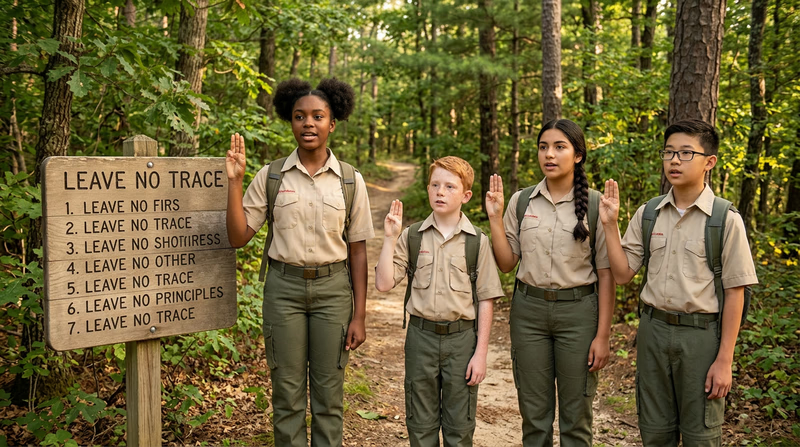
Leave No Trace Seven Principles
The Leave No Trace principles are a direct guide to environmental sustainability in the outdoors — but they apply to daily life too:
Plan Ahead and Prepare — Planning meals reduces food waste. Planning trips reduces unnecessary driving. Planning purchases reduces impulse buying.
Travel and Camp on Durable Surfaces — In daily life, this means using existing infrastructure and pathways rather than damaging new areas.
Dispose of Waste Properly — Recycling, composting, and reducing trash at home is the everyday version of packing out your garbage.
Leave What You Find — Respecting natural spaces, historical sites, and shared resources instead of taking or damaging them.
Minimize Campfire Impacts — Using energy efficiently and minimizing your environmental impact at home mirrors this principle.
Respect Wildlife — Supporting biodiversity, avoiding products that harm wildlife, and keeping pets under control.
Be Considerate of Other Visitors — In daily life, this means being a good neighbor — keeping noise down, maintaining shared spaces, and considering how your actions affect others.
The Outdoor Code
As an American, I will do my best to — Be clean in my outdoor manners, Be careful with fire, Be considerate in the outdoors, and Be conservation-minded.
The Outdoor Code’s call to be conservation-minded is a direct charge to practice sustainability. Conservation — using resources wisely and protecting the natural world — is the heart of sustainability.