Req 8c — Household Behavior Changes
Making Sustainability a Habit
By this point in the badge, you have explored water, food, energy, waste, communities, global challenges, and Scouting values. Now it is time to pull it all together and identify specific changes that you and your family can actually commit to.
The best behavioral changes are ones that are:
- Specific — Not “use less water” but “take showers under 5 minutes”
- Measurable — You can track whether you are doing it
- Achievable — It fits into your family’s lifestyle
- Impactful — It makes a real difference for sustainability
Behavior Change Ideas by Category
Water
- Shorter showers — Set a timer and keep showers to 5 minutes or less. Saves 10–15 gallons per shower.
- Full loads only — Run the dishwasher and washing machine only when they are completely full.
- Fix leaks — Make it a household rule to report and fix dripping faucets and running toilets within 48 hours.
Energy
- Unplug and switch off — Unplug chargers when not in use. Turn off lights when leaving a room. Use a power strip for electronics.
- Adjust the thermostat — Set a household agreement on temperature settings (68°F winter, 76°F summer) and stick to it.
- Line-dry clothes — Air-dry laundry when weather permits, reducing dryer energy use.
Food
- Meal planning — Plan meals for the week before grocery shopping to reduce impulse buys and food waste.
- Eat leftovers first — Before cooking something new, check the fridge for leftovers that need to be eaten.
- Start composting — Set up a compost bin for food scraps and yard waste.
Stuff and Waste
- Bring reusable bags — Keep reusable shopping bags in the car so they are always available.
- Refuse single-use — Say no to plastic straws, disposable utensils, and single-use water bottles.
- One in, one out — For every new item brought into the house, donate or recycle one similar item.
Transportation
- Walk or bike short trips — If a destination is within a mile, walk or bike instead of driving.
- Carpool — Coordinate with neighbors or friends for school drop-offs, sports practices, and Scout meetings.
- Combine errands — Plan car trips to cover multiple stops in one outing.
Getting Your Family on Board
Sustainability works best when the whole household participates. Here are strategies for getting your family involved:
Make It a Team Effort
Present your five changes as a family challenge rather than a lecture. “Hey, let’s see if we can cut our water bill by 10% this month” is more engaging than “We all need to use less water.”
Start with Quick Wins
Begin with changes that save money or make life easier — like meal planning (less food waste = lower grocery bill) or shorter showers (lower water bill). When people see results, they are more motivated to try harder changes.
Track Progress Together
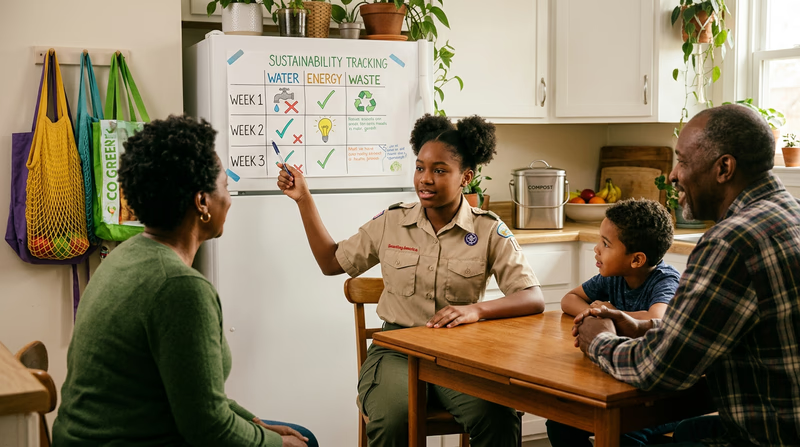
Post a chart on the fridge showing your goals and progress. Celebrate milestones. Make it visible and fun.
Respect Different Comfort Levels
Not everyone will embrace every change immediately. If someone is not ready to give up long showers, maybe they are willing to carpool more. Find each person’s entry point.