Req 9 — Career Exploration
Careers in Sustainability
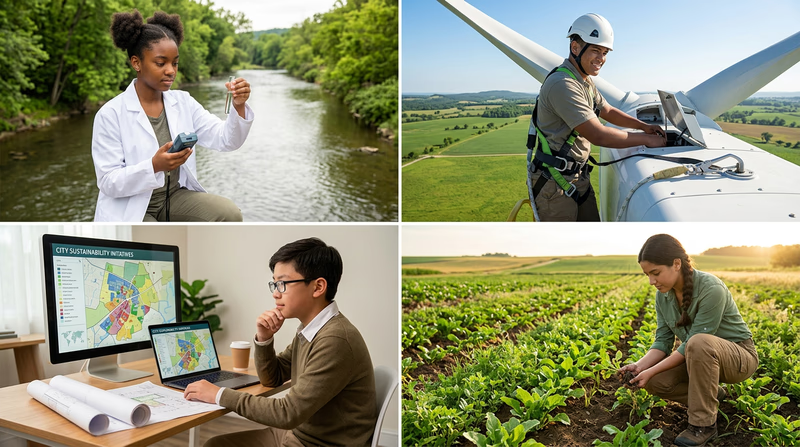
Sustainability is not just a hobby or a badge topic — it is a rapidly growing career field. As businesses, governments, and communities work to reduce their environmental impact, they need professionals who understand sustainability science, policy, engineering, and communication. The U.S. Bureau of Labor Statistics projects that many sustainability-related careers will grow faster than the national average over the coming decade.
Types of Sustainability Careers
Environmental Science and Conservation
Environmental scientists study how humans interact with the natural world. They collect data, analyze environmental problems, and develop solutions.
- Education: Bachelor’s degree in environmental science, biology, or chemistry (some positions require a master’s)
- Training: Fieldwork experience, GIS (geographic information systems), data analysis
- Example roles: Environmental consultant, conservation biologist, water quality specialist, wildlife manager
- Median salary: About $76,000 per year
Renewable Energy
The transition to clean energy is creating thousands of jobs in solar, wind, geothermal, and battery technology.
- Education: Ranges from trade certificates (solar panel installation) to engineering degrees (designing wind turbines)
- Training: Technical training, electrical knowledge, safety certifications
- Example roles: Solar installer, wind turbine technician, energy engineer, battery storage specialist
- Median salary: $48,000–$100,000+ depending on role
Urban Planning and Architecture
Sustainability planners and green architects design buildings, neighborhoods, and cities that minimize environmental impact while maximizing quality of life.
- Education: Bachelor’s or master’s degree in urban planning, architecture, or landscape architecture
- Training: LEED certification (Leadership in Energy and Environmental Design), CAD software, community engagement skills
- Example roles: Urban planner, green building architect, landscape architect, sustainability consultant
- Median salary: $80,000–$110,000
Corporate Sustainability
Many companies now hire sustainability managers to reduce their environmental footprint, meet regulatory requirements, and communicate their efforts to stakeholders.
- Education: Bachelor’s degree in environmental science, business, or sustainability; MBA with a sustainability focus is increasingly valued
- Training: Carbon accounting, supply chain analysis, ESG (Environmental, Social, and Governance) reporting
- Example roles: Chief Sustainability Officer, ESG analyst, corporate sustainability manager, supply chain sustainability specialist
- Median salary: $80,000–$130,000+
Waste Management and Recycling
Waste management professionals design and operate systems that minimize waste, maximize recycling, and safely handle hazardous materials.
- Education: Bachelor’s degree in environmental engineering, environmental science, or related field
- Training: Hazardous waste handling certifications, regulatory compliance, logistics
- Example roles: Recycling coordinator, waste management engineer, composting facility manager, hazardous waste specialist
- Median salary: $60,000–$90,000
Environmental Policy and Law
Environmental lawyers and policy analysts shape the laws and regulations that protect the environment.
- Education: Law degree (for attorneys) or master’s in public policy, environmental policy, or related field
- Training: Understanding of environmental law, regulatory frameworks, policy analysis
- Example roles: Environmental attorney, policy analyst, government regulatory specialist, nonprofit advocacy director
- Median salary: $80,000–$150,000+
Agriculture and Food Systems
Sustainable agriculture specialists work to make food production more environmentally responsible.
- Education: Bachelor’s degree in agriculture, food science, or environmental science
- Training: Soil science, organic farming practices, food safety, supply chain management
- Example roles: Organic farm manager, food systems researcher, agricultural extension agent, aquaculture specialist
- Median salary: $55,000–$85,000
Researching a Career
When you pick a career to research, find out:
Career Research Checklist
Questions to answer for your chosen career
- What does a typical day look like in this job?
- What education is required (degree, certifications)?
- What experience is helpful (internships, volunteer work)?
- What skills are most important (technical, communication, leadership)?
- What is the job outlook (growing, stable, declining)?
- What is the typical salary range?
- Where do people in this career usually work (office, field, lab, outdoors)?
- What organizations or companies hire for this role?
Why This Career Might Interest You
Your counselor will want to know what draws you to the career you chose. Think about:
- Does it connect to something you already enjoy (being outdoors, working with technology, helping people)?
- Does it use skills you are building in Scouting?
- Does it feel meaningful — like work that makes a real difference?
- Can you see yourself doing this kind of work in the future?
You do not need to commit to a career at your age. The goal is to explore the possibilities and see how the topics you have studied in this badge connect to real-world work.