 Getting Started
Introduction & Overview
Swimming is one of the most important life skills you can learn. It keeps you safe around water, builds strength and endurance, and opens the door to a lifetime of aquatic adventures — from lake days with friends to ocean snorkeling trips. The Swimming merit badge is an Eagle-required badge, and for good reason: water is everywhere, and knowing how to handle yourself in it could save your life or someone else’s.
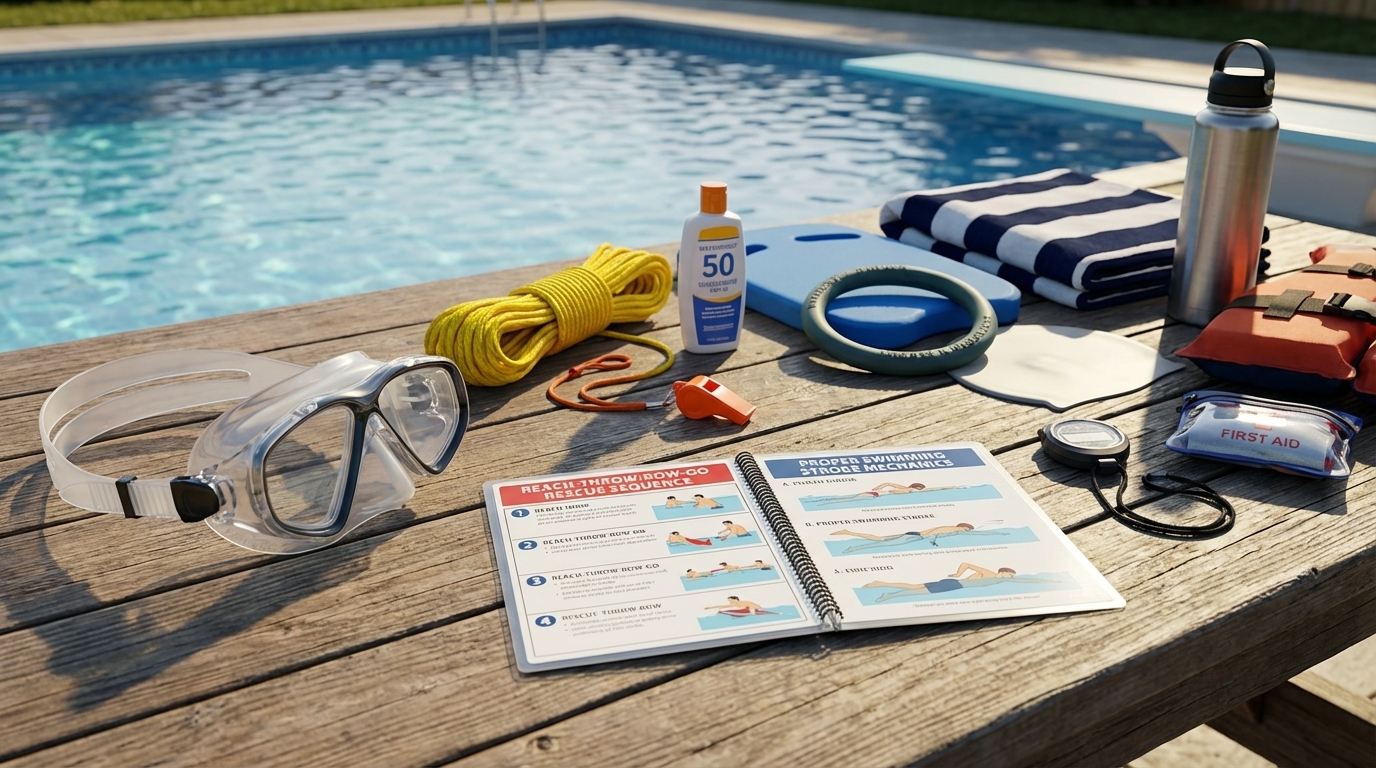
This guide will help you understand water safety, master five essential swimming strokes, learn rescue techniques, and build the confidence to swim in any environment. Whether you are a beginner refining your form or an experienced swimmer pushing your limits, there is something here for you.
Then and Now
Then — Swimming as Survival
Humans have been swimming for thousands of years. Ancient Egyptian wall paintings from around 2500 BCE show people using swimming strokes. Greek and Roman soldiers trained in swimming as part of military preparation — a Roman who could not swim was considered uneducated. In Japan, swimming was a required skill for samurai warriors, and competitive swimming events were held as far back as 36 BCE.
- Purpose: Military training, survival, crossing rivers, fishing
- Mindset: Swimming meant staying alive — there were no lifeguards, no pools, and no flotation devices
Now — Swimming for Safety, Sport, and Fun
Today, swimming is both a major competitive sport and one of the most popular recreational activities in the world. The modern Olympic Games have included swimming since 1896. Community pools, water parks, and open water events bring millions of people into the water every year. At the same time, organizations like the American Red Cross and Scouting America teach water safety skills that prevent drowning — the leading cause of unintentional death for children ages 1–4 and a top cause for older youth.
- Purpose: Recreation, competition, fitness, water safety, therapy
- Mindset: Enjoy the water safely, push your limits, and be prepared to help others
Get Ready! Swimming is a skill that stays with you for life. Once you learn proper technique and water safety, you will be confident in pools, lakes, rivers, and oceans. Let’s dive in!
Kinds of Swimming
Recreational Swimming
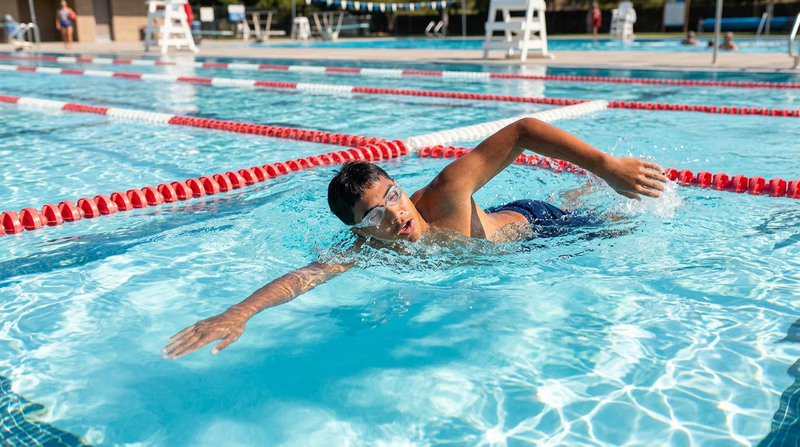
This is what most people think of when they hear “swimming” — jumping in a pool or lake on a hot day, playing water games with friends, or cooling off at the beach. Recreational swimming does not require perfect form, but knowing basic strokes and water safety makes it a lot more enjoyable.
Competitive Swimming
Competitive swimmers race against the clock and each other in pools or open water. Events range from 50-meter sprints to 1500-meter distance races, plus relays and individual medley events that combine multiple strokes. Competitive swimming demands disciplined training, precise technique, and mental toughness. USA Swimming is the national governing body for competitive swimming in the United States.
Open Water Swimming
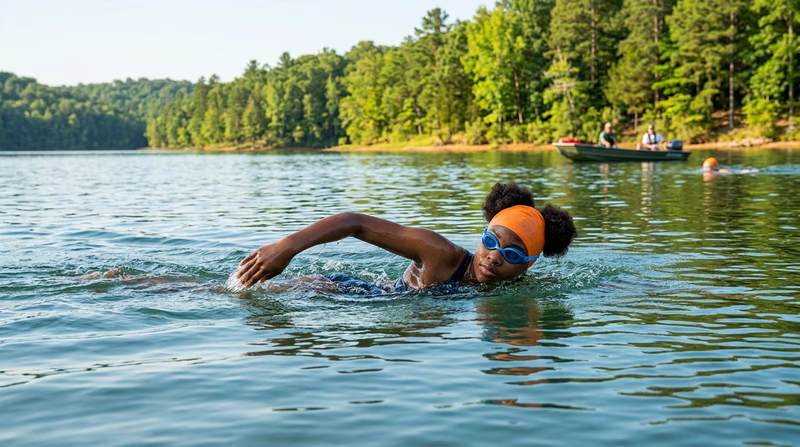
Open water swimming takes place in lakes, rivers, and oceans — anywhere outside a pool. Conditions change constantly: currents, waves, temperature, and visibility all add challenge. Open water swimmers must be comfortable navigating without lane lines or pool walls and must understand how weather and water conditions affect safety.
Survival Swimming
Survival swimming is not about speed or form — it is about staying alive in the water. Skills like treading water, floating, and using the HELP position (Heat Escape Lessening Posture) can keep you safe if you fall into water unexpectedly. The Swimming merit badge teaches several survival techniques that could one day save your life.
Fitness and Therapeutic Swimming
Swimming is one of the best full-body workouts available. It builds cardiovascular endurance, strengthens muscles, and improves flexibility — all without the impact stress that running or jumping puts on your joints. Doctors and physical therapists often recommend swimming for people recovering from injuries, managing chronic conditions, or looking for a low-impact way to stay fit.