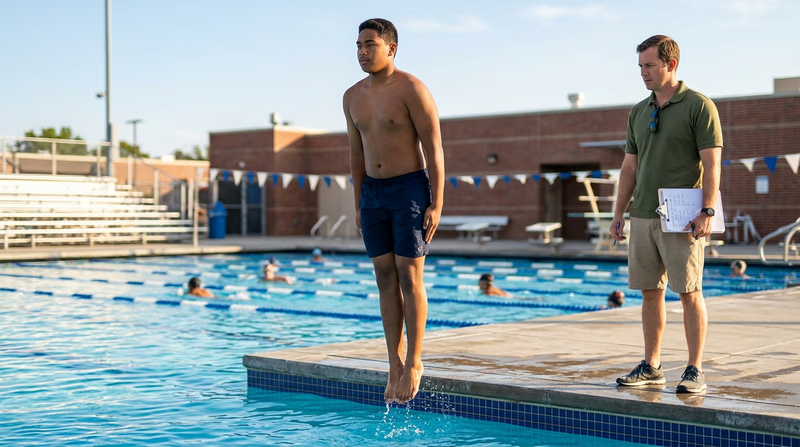
Req 2 — Swimmer Test
What Is the Swimmer Test?
The Scouting America swimmer test is a gateway requirement — you must pass it before you can work on any of the remaining Swimming merit badge requirements. The test confirms that you have the basic swimming ability needed to safely complete the more advanced tasks ahead.
The swimmer test consists of the following:
- Jump feetfirst into water over your head. You must completely submerge and then return to the surface.
- Swim 75 yards in a strong manner using one or more of the following strokes: sidestroke, breaststroke, trudgen, or crawl.
- Swim 25 yards using an easy resting backstroke.
- Float on your back for one minute with minimal movement.
The total swimming distance is 100 yards (75 + 25). The test is not timed for speed — the focus is on demonstrating strong, controlled swimming and the ability to rest and float in the water.
Breaking Down Each Component
The Feetfirst Entry
This is not a fancy dive — it is a simple, safe entry into deep water. Stand at the edge of the pool or dock, step forward, and drop in feetfirst. Keep your body vertical, arms close to your sides or slightly out for balance. Let yourself submerge, then kick to the surface and begin swimming.
Why feetfirst? Entering feetfirst is the safest way to enter water of unknown or limited depth. It also tests your comfort with being fully submerged.
The 75-Yard Swim
You can use any combination of the following strokes for this portion: sidestroke, breaststroke, trudgen, or crawl (front crawl). Choose the stroke you are most comfortable with, or switch between strokes as needed.
The key word is “strong manner.” Your counselor is looking for:
- Steady forward progress
- Recognizable stroke technique
- Controlled breathing
- No signs of distress
The 25-Yard Resting Backstroke
After your 75-yard swim, switch to an easy resting backstroke for the final 25 yards. This portion tests your ability to switch to a relaxed, energy-conserving stroke. The elementary backstroke — a slow, symmetrical stroke performed on your back — is the most common choice here.
Keep your breathing steady and your movements unhurried. This is your chance to recover and demonstrate control.
The One-Minute Float
After swimming 100 yards, you must float on your back for at least one minute with minimal movement. This tests your ability to rest in the water without expending energy.
Tips for floating:
- Lean your head back so your ears are in the water
- Spread your arms out to the sides, palms up
- Keep your hips up by pressing your chest toward the sky
- Take slow, deep breaths — full lungs help you float
- Relax. Tension makes you sink
Preparing for the Test
Swimmer Test Preparation
Practice each component before your merit badge session
- Feetfirst entry into deep water: Practice at your local pool until it feels natural.
- 75 yards of strong swimming: Swim at least 100 yards continuously in practice so 75 feels easy.
- 25 yards of resting backstroke: Practice the elementary backstroke until you can do it smoothly.
- One-minute back float: Time yourself floating at home and work up to two minutes for confidence.
- Full sequence: Run through the entire test from start to finish at least once.