Req 5b — Line Rescue
What Is a Line Rescue?
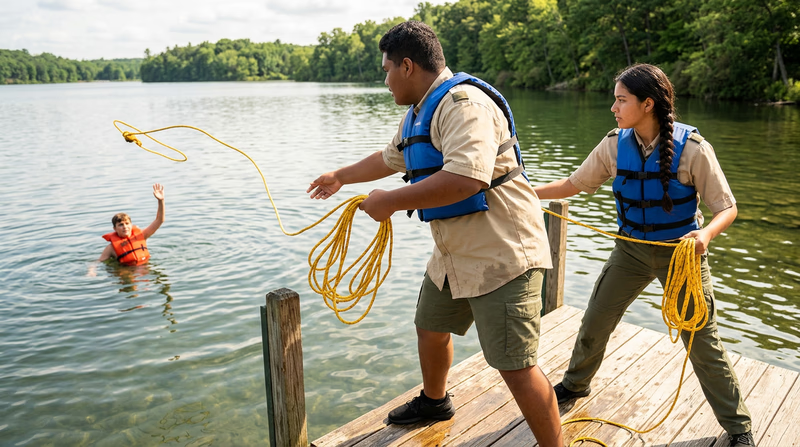
A line rescue is a throwing rescue where a rescuer on shore throws a line (rope) to a victim in the water, then pulls them to safety. It involves three people:
- The rescuer — throws the line to the victim
- The tender — assists the rescuer on shore, helps brace and pull, manages the line
- The victim — the person in the water who grabs the line
For this requirement, you will perform the rescue in both the tender and rescuer roles, with a practice victim (another Scout or your counselor) positioned about 30 feet from shore in deep water.
The Rescuer’s Role
The rescuer is the person who throws the line and directs the rescue.
Step-by-Step
- Assess the situation. Confirm the victim’s location and that a line rescue is the right method (victim is too far to reach, but within throwing distance).
- Prepare the line. Uncoil or remove the line from its bag. Hold one end securely — never let go of your end.
- Get the victim’s attention. Shout clearly: “Hold on! I am throwing you a line!”
- Throw the line. Aim to land the line across the victim or just past them. Use an underhand throw for accuracy. If using a throw bag, throw the entire bag — the rope feeds out as it flies.
- If you miss, re-coil and throw again. Speed matters, but accuracy matters more.
- Once the victim grabs the line, tell them to hold on with both hands and roll onto their back.
- Pull them to shore. Work with your tender to pull steadily. Do not jerk the line.
The Tender’s Role
The tender is the rescuer’s partner on shore. This role is just as important as the rescuer’s.
Step-by-Step
- Brace the rescuer. Stand behind the rescuer and help anchor them so they are not pulled into the water.
- Manage the line. Make sure the line is free of tangles and ready to throw. Feed out line as needed.
- Help pull. Once the victim grabs the line, help the rescuer pull them to shore with steady, even pulls.
- Watch the victim. Keep your eyes on the victim and communicate what you see: “They have the line!” or “They lost it — throw again!”
- Be ready to call for help. If the rescue is not working, the tender should call 911 or get additional help.
Communication Is Key
A successful line rescue depends on clear communication between all three people:
| Who | Says What |
|---|---|
| Rescuer → Victim | “Hold on! I am throwing a line!” |
| Rescuer → Victim | “Grab the line! Roll on your back!” |
| Tender → Rescuer | “Line is clear!” or “Retangle — hold on!” |
| Tender → Rescuer | “They have it — pull!” |
| Rescuer → Victim | “Hold tight! We are pulling you in!” |
Practicing the Line Rescue
Your counselor will set up this scenario with a practice victim in deep water about 30 feet from shore. Here is how to prepare:
Line Rescue Practice
Get comfortable with both roles before your session
- Practice your throw: Set a target 30 feet away on land and practice hitting it with a coiled rope.
- Switch roles: Practice as both rescuer and tender so you are comfortable in each role.
- Communication: Practice calling out commands clearly and loudly.
- Bracing: Practice the tender’s bracing stance — wide feet, low center of gravity, leaning slightly back.
- Pulling technique: Steady hand-over-hand pulls, not jerky tugs.
Connecting to Real Life
The skills you learn in this requirement are real rescue skills. Line rescues are used by firefighters, park rangers, whitewater guides, and lifeguards every day. Knowing how to throw a line accurately and how to work with a partner in a rescue situation could genuinely save someone’s life.
These skills build directly on the reaching and throwing techniques you learned in Req 5a — Rescue Methods.
Scouting America — Aquatics Safety Scouting America's aquatics safety resources, including rescue techniques and waterfront procedures.