Req 7 — Surface Diving
Surface diving is the technique of going from swimming at the surface to diving underwater — without jumping off a board or deck. These skills are essential for recovering objects from the bottom, checking underwater conditions, and advanced swimming activities like snorkeling.
All three parts of this requirement take place in water over your head but no deeper than 10 feet.
7a: Feetfirst Surface Dive
The feetfirst surface dive is the safest way to go underwater from the surface. You descend in a vertical position with your feet pointing down, which lets you see what is below you and control your descent.
Technique
- Start in a vertical treading position. Keep your head above water.
- Press your arms down forcefully from the surface to your sides. This drives your body upward out of the water.
- As your body rises, bring your arms overhead quickly. Your weight and gravity will push you downward, feetfirst.
- As you descend, use your hands to press upward (toward the surface) to drive yourself deeper.
- When you reach the bottom, grab the object.
- Push off the bottom and kick to the surface.
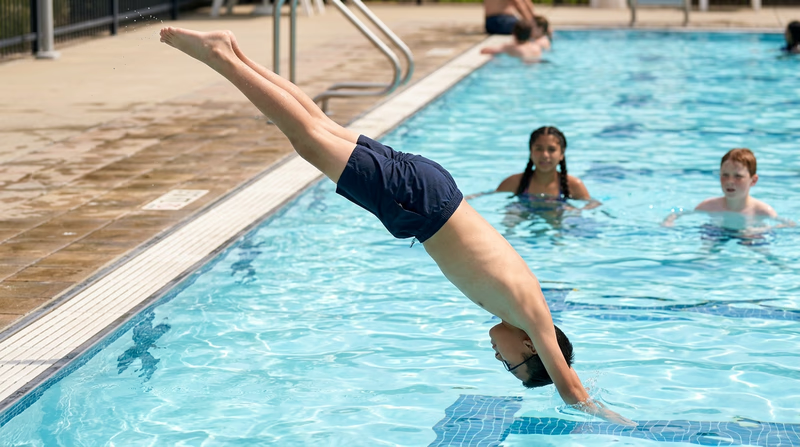
7b: Headfirst Surface Dive (Pike or Tuck)
The headfirst surface dive gets you underwater faster and deeper than the feetfirst method. You can use either the pike or tuck technique.
Pike Dive
The pike dive is performed with straight legs:
- Swim forward at the surface with some momentum.
- Bend sharply at the waist (like touching your toes) so your upper body points straight down.
- Lift your legs straight up out of the water. The weight of your legs above the surface drives you down.
- As you submerge, use a breaststroke pull to swim toward the bottom.
- Grab the object and kick to the surface.
Tuck Dive
The tuck dive is a more compact version:
- Swim forward at the surface.
- Tuck your knees to your chest and roll forward into a ball.
- Extend your body downward as you rotate, straightening your legs above you.
- Swim to the bottom and retrieve the object.
The pike dive is more powerful and gets you deeper, but the tuck dive is easier to learn and works well in shallower water.
7c: Underwater Swimming Sequence
This part tests your ability to dive, swim underwater, surface for air, and repeat. You will do a headfirst surface dive to at least 5 feet, swim three strokes underwater, surface, breathe, and repeat the entire sequence two more times (three total dives).
Technique
- Dive headfirst using the pike or tuck method to at least 5 feet deep.
- Swim three strokes underwater. Use a modified breaststroke pull — it is the most efficient underwater stroke. Keep your movements smooth and your body streamlined.
- Angle upward and kick to the surface.
- Take a full breath. Do not rush — get a complete breath before diving again.
- Dive again and repeat. Three complete dive-swim-surface cycles total.
Key Considerations
Equalize your ears. As you dive deeper, water pressure increases against your eardrums. Pinch your nose and gently blow to equalize the pressure. If your ears hurt, do not force it — return to the surface and try again more slowly.
Do not hyperventilate. Take normal, calm breaths between dives. As discussed in Req 1b — Health Concerns, hyperventilating before underwater swimming is dangerous and can cause blackout.
Pace yourself. You have three dives to complete. Do not rush. Take 15 to 30 seconds at the surface between dives to recover and breathe.
Preparing for Requirement 7
Surface Diving Practice
Build your skills before your session
- Feetfirst surface dive: Practice in the deep end until you can touch the bottom consistently.
- Pike or tuck dive: Practice the entry until you can submerge smoothly without belly-flopping.
- Object retrieval: Practice picking up a weighted object (dive brick, dive ring) from the bottom.
- Underwater swimming: Swim three breaststroke pulls underwater without surfacing.
- Ear equalization: Practice pinching your nose and blowing gently to equalize pressure.
- Full sequence: Do three consecutive headfirst dives with surface breathing in between.