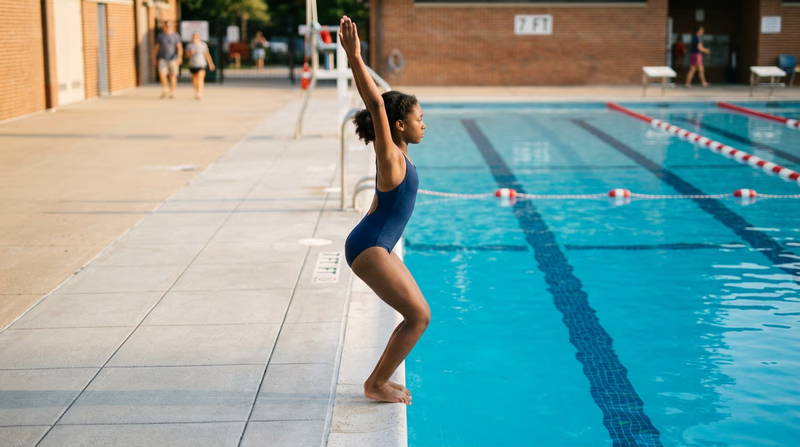
Req 8 — Standing & Shallow Dives
Two Types of Dives
This requirement asks you to demonstrate two different headfirst dives from a dock or pool deck into water at least 7 feet deep (or deeper if local rules require it). Both are standing dives — you start on the deck, not on a diving board.
The Standing Headfirst Dive
This is a basic standing dive — sometimes called a “front dive” — from the edge of a pool or dock.
Setup
- Stand at the edge with your toes curled over the lip of the pool deck or dock.
- Feet together or slightly apart (no wider than shoulder width).
- Arms extended overhead, hands together, biceps squeezing your ears. This creates a streamlined entry shape.
- Head between your arms, eyes looking at the entry point in the water.
Execution
- Bend your knees slightly and lean forward.
- Push off with your legs while keeping your arms locked overhead.
- Aim for a spot about 3 to 4 feet from the edge.
- Enter the water fingertips first, body straight and streamlined.
- Angle your hands slightly upward after entry to guide your body back toward the surface. Do not dive straight to the bottom.
Common Mistakes
- Belly flop: Caused by not bending at the waist enough or pushing out instead of up and over. Focus on your hands entering first.
- Going too deep: Caused by aiming straight down. Aim at a 30 to 45-degree angle and steer up after entry.
- Falling in instead of diving: Caused by not pushing off with your legs. Use your legs to generate forward momentum.
The Long Shallow Dive
A long shallow dive covers more horizontal distance and enters the water at a flatter angle than a standard standing dive. It is used to enter water quickly while staying near the surface — a useful skill for racing starts and rescue entries.
Setup
Same as the standing dive: toes at the edge, arms overhead, hands together.
Execution
- Bend your knees more deeply than for a standard dive.
- Push outward and slightly upward — you want horizontal distance, not depth.
- Keep your body nearly flat as you enter the water. Your entry angle should be very shallow, almost like sliding across the surface.
- Enter fingertips first and immediately angle your hands and head upward to stay near the surface.
- Glide near the surface after entry, then begin swimming.
The goal is to cover distance, not depth. A good long shallow dive should carry you 8 to 12 feet from the edge while keeping you within 2 to 3 feet of the surface.
Differences from the Standing Dive
| Standing Dive | Long Shallow Dive | |
|---|---|---|
| Angle | Steeper (30–45°) | Flat (10–20°) |
| Depth | Moderate | Minimal |
| Distance | Short (3–5 ft) | Long (8–12 ft) |
| Push direction | Forward and slightly down | Forward and slightly up |
| Use case | General entry | Racing starts, rescue entries |
Safety Reminders
Before performing either dive, always verify:
Diving Safety Check
Verify these before every headfirst dive
- Water depth is at least 7 feet (or more if local rules require): Never guess — check.
- The water is clear enough to see the bottom: If you cannot see the bottom, do not dive headfirst.
- The area in front of you is clear of other swimmers: Look before you dive.
- There are no underwater obstructions: No rocks, steps, ledges, or lane lines in your dive path.
- A qualified supervisor is present: Required by Safe Swim Defense for all diving activities.