 Getting Started
Introduction & Overview
Overview
You are surrounded by textiles from the minute you wake up. Your sheets, socks, backpack straps, hoodie, tent rainfly, seat belt, and even some sports gear all depend on fibers turned into useful fabric. The Textile merit badge helps you look past the finished product and understand how those materials are made, why they behave differently, and how people use them in everyday life.
Textiles matter because they solve real problems. Some fabrics keep you warm, some stretch so you can move, some wick sweat away from your skin, and some help protect firefighters, climbers, or astronauts in dangerous conditions. Once you understand fibers, yarns, construction, and finishing, you start noticing why one fabric works better than another.
Then and Now
Then
Textiles are one of humanity’s oldest technologies. Long before factories existed, people twisted plant fibers into cordage, spun animal hair into yarn, and wove cloth on simple looms. Linen from flax, wool from sheep, and silk from silkworms helped shape trade routes, local economies, and even national power. For thousands of years, making cloth took patience and skilled handwork.
Later, spinning wheels, water-powered mills, and mechanized looms changed everything. Fabric that once took days or weeks to produce could now be made much faster. That shift helped fuel the Industrial Revolution and changed what people wore, how goods were traded, and where people worked.
Now
Today, textiles include far more than clothing. Engineers design fabrics for airbags, sails, medical products, outdoor gear, carpeting, geotextiles that stabilize soil, and protective equipment that resists heat or abrasion. Modern mills use computer-controlled machines, but the same core ideas still matter: choose the right fiber, turn it into yarn, build a fabric structure, and finish it for the job it must do.
Textiles also sit at the center of important modern questions. How durable is a garment? How much water or energy did it take to make? Can it be repaired, reused, or recycled? Studying textiles gives you a better eye for quality, waste, and smart design.
Get Ready!
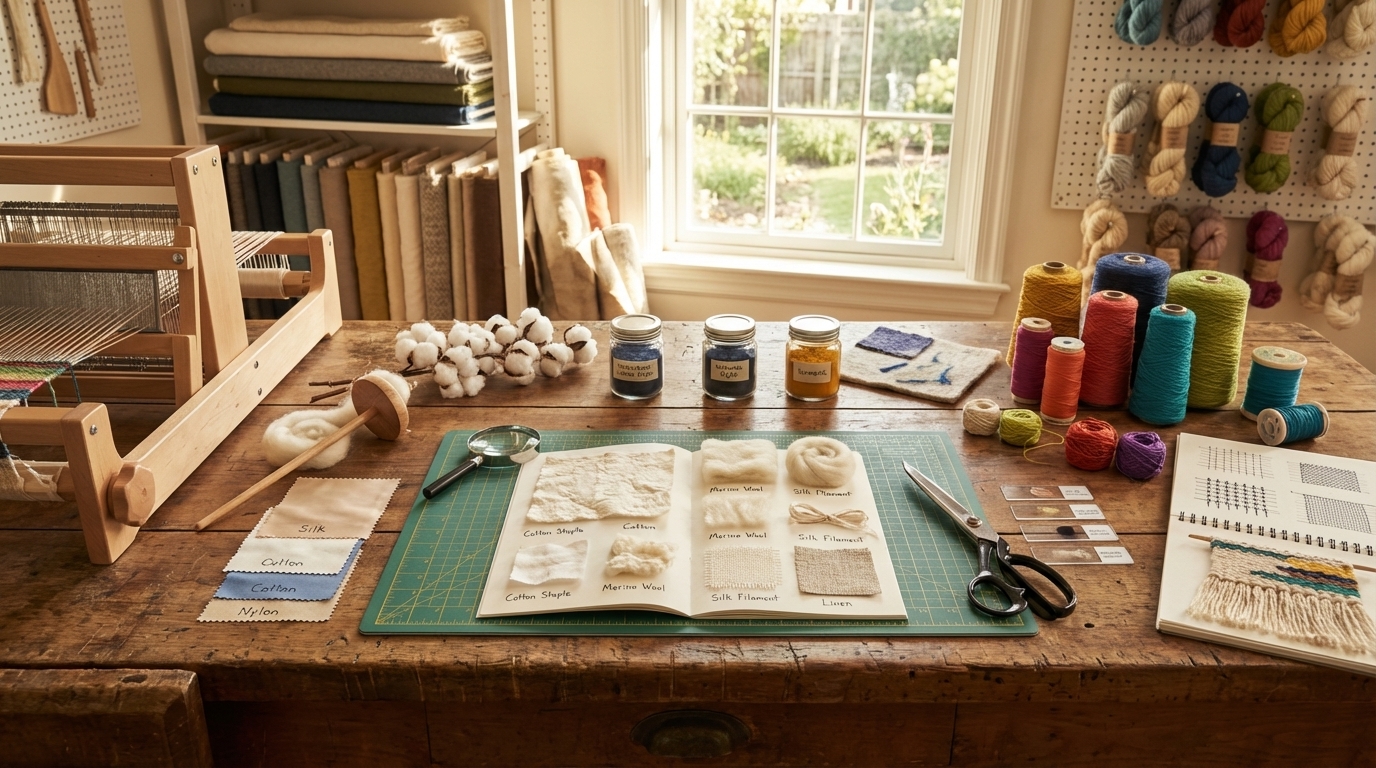
This badge is hands-on. You will collect swatches, compare fibers, look closely at fabric structure, and choose projects that let you make or test textiles yourself. Come ready to touch materials, ask good questions, and explain not just what a fabric is called, but why it acts the way it does.
Kinds of Textiles
Natural Fiber Textiles
These begin with materials that come from plants or animals, such as cotton, flax, wool, and silk. They often feel familiar because they have been used for centuries, but each one behaves differently. Cotton is breathable, wool insulates even when damp, linen is crisp and strong, and silk is smooth and fine.
Manufactured Fiber Textiles
Some fibers start with cellulose from plants, while others are made from chemicals derived from petroleum or natural gas. Rayon, acetate, and lyocell are cellulosic manufactured fibers. Polyester, nylon, acrylic, olefin, and spandex are synthetic manufactured fibers. These materials can be engineered for stretch, wrinkle resistance, weather resistance, or strength.
Woven, Knitted, and Nonwoven Textiles
A fiber alone is not yet fabric. Woven fabrics interlace warp and weft yarns, knitted fabrics form loops, and nonwoven fabrics mat, bond, or fuse fibers together. That construction changes how a textile drapes, stretches, breathes, and wears out.
Performance and Specialty Textiles
Some textiles are built for very specific jobs. Think of felt for padding and craft work, waterproof outdoor shells, firefighter turnout gear, racing suits made with aramid fibers, and carbon-fiber-based materials used in aerospace and sports equipment. In textiles, the right material choice can be the difference between comfort and failure.
Ready to start with the basics? The first requirement helps you explain what textiles are, why they matter, and how they show up in your daily life.