Req 3b — Weave on a Homemade Loom
Weaving looks simple until you try to keep every strand in order. That is what makes this option so valuable. Once you build a loom and weave your own project, terms like warp, weft, shed, and tension stop being vocabulary words and become something you can feel in your hands.
Choose a Project That Fits Your Patience Level
A short headband or belt is usually easier than a large wall hanging or place mat. Your first goal is not perfection. It is to produce a clear, honest piece of weaving that shows you understand the structure.
Build a Simple Loom
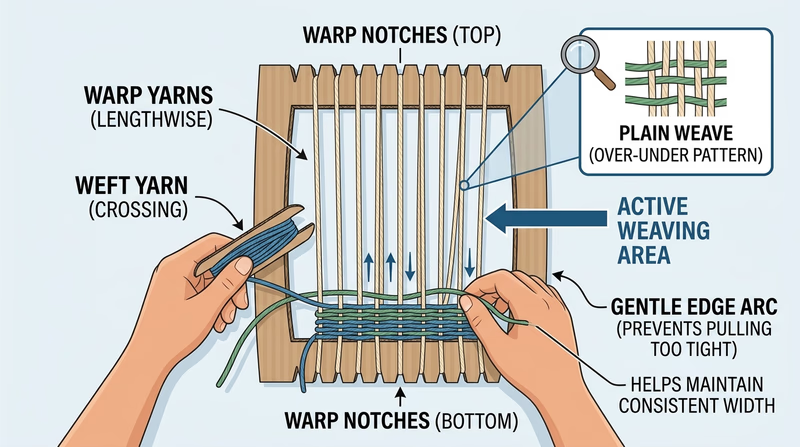
A cardboard loom is a great choice because it is cheap, easy to cut, and good for beginners. Whatever loom you make, it must hold the warp yarns under steady tension.
Basic Setup
- Cut notches evenly along the top and bottom edges.
- Wrap warp yarns from notch to notch so they run lengthwise.
- Choose a weft yarn that will pass over and under the warp.
- Use a shuttle, needle, or your fingers to weave each row.
- Push each row gently into place without packing too hard.
What to Focus On While You Weave
Even Tension
If some warp yarns are tight and others are loose, your project may bow inward or become uneven. Check the loom often while you work.
Consistent Edges
Beginners often pull the weft too tightly at the edges, which narrows the project. Let the yarn curve slightly before you press it into place.
Pattern Awareness
Even a plain weave teaches a lot. Over one, under one, repeated row after row, builds stable fabric. If you want to add stripes or color changes, do that only after the structure is working.
How to Explain the Result to Your Counselor
When you show your woven piece, be ready to discuss:
- what you used for the loom
- what yarn or strips you chose and why
- what type of item you made
- what problems you ran into
- what you learned about weaving structure
A belt or headband that looks slightly uneven is still a success if you can explain how it was made and what you would improve next time.
Weaving teaches how yarn becomes fabric. The next option helps you compare textile structures even more closely by looking at fabrics under magnification.