Req 3c — Compare Fabric Structures
This option trains your eyes. From a few feet away, many fabrics just look like fabric. Under magnification, though, their structure becomes obvious, and that structure explains why one material stretches, another frays, and another feels more like a sheet of pressed fibers than cloth.
Pick Good Samples
Use samples that clearly represent each construction.
- Woven: a cotton shirt, denim scrap, or canvas
- Knitted: a T-shirt jersey, sweater knit, or athletic knit
- Nonwoven: felt, interfacing, some wipes, or some reusable shopping bag material
What to Look For
Woven Fabric
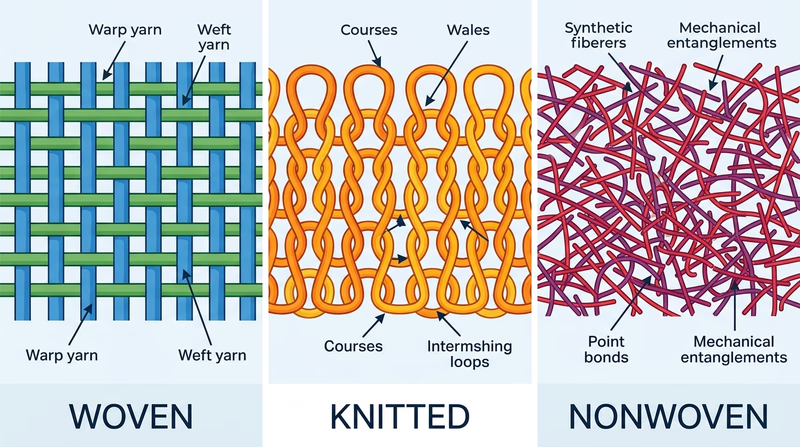
A woven fabric has two sets of yarns crossing at right angles. Under magnification, it often looks like an organized grid or basket. If you tease out a thread at the edge, you can often see the separate warp and weft directions.
Knitted Fabric
A knitted fabric is built from interlocking loops. Under magnification, those loops become the big clue. Knit fabrics usually stretch more than woven fabrics because the loop structure can open and move.
Nonwoven Fabric
A nonwoven fabric does not show an orderly over-under grid or loop pattern. Instead, you see fibers pressed, fused, tangled, or bonded together. Felt is a classic example.
🎬 Video: Woven vs. Knit vs. Non-Woven Fabrics | Textile Talk w/ A Thrifty Notion (video) — https://youtu.be/2Q_04oCLZVs
Use the video to preview what each structure looks like before you inspect your own samples.
How to Sketch What You See
Your sketch does not need to be artistic. It needs to be useful.
What to Include in Your Sketches
Make your observations easy to explain
- Show the overall pattern, such as grid, loops, or random matting.
- Add arrows if you can identify directions like warp and weft.
- Label the sample as woven, knitted, or nonwoven.
- Write one or two notes about what the structure suggests, such as stretch, fraying, thickness, or softness.
How the Constructions Differ
A good explanation connects structure to behavior.
- Woven fabrics are often stable and strong, but some can fray at cut edges.
- Knitted fabrics usually stretch and drape well because loops can move.
- Nonwoven fabrics may resist fraying differently and are often used for special purposes such as filters, felt, padding, or disposable products.
Once you have compared structures, the next option lets you make a nonwoven fabric yourself by turning loose fibers into felt.