Req 3d — Make Felt by Hand
Felt is a great reminder that fabric does not always need to be woven or knitted. Instead of building cloth from yarn, you can mat and lock loose fibers together. That makes felt one of the simplest ways to experience textile construction directly.
What Felt Is
Felt is a nonwoven fabric. It forms when fibers become tangled and bonded into a dense layer. Wool is especially good for wet felting because the tiny scales on wool fibers help them lock together when moisture, soap, friction, and pressure are added.
A Simple Wet-Felting Process
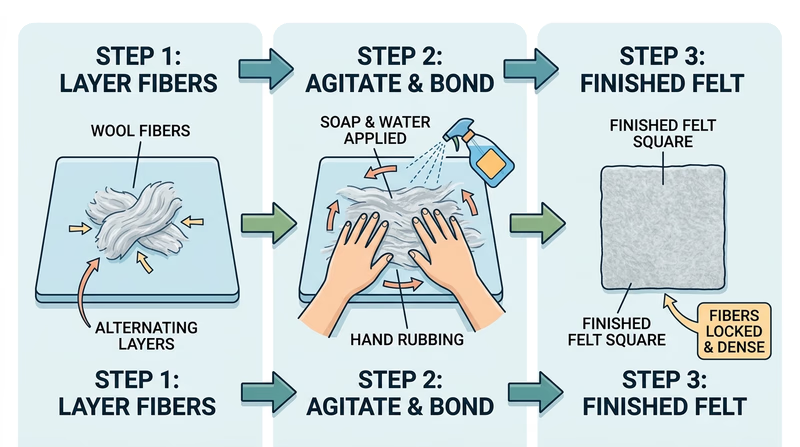
- Lay thin layers of loose fiber in alternating directions.
- Wet the fibers with warm water and a little soap.
- Press gently so the fibers begin to hold together.
- Rub, roll, or agitate the piece so the fibers tighten and mat.
- Rinse and dry the finished felt.
🎬 Video: Wet Felting Tutorial for Beginners (video) — https://youtu.be/3IxCDkh-evs
This video is useful because it shows the change from loose fiber to solid fabric step by step.
What a Good Felt Sample Shows
Your felt does not need to be large. It does need to show that the fibers truly bonded.
A strong sample will:
- stay together when handled
- feel denser than the starting fiber
- show that the surface changed from fluffy to fabric-like
- keep its shape once dry
What to Tell Your Counselor
Explain the difference between loose fiber and finished felt. Describe what materials you used, what process worked best, and how the texture changed as the fibers locked together.
Felting shows one way to build fabric without yarn. The next option explores something different: how color can be added to fabric using natural dyes.