Req 3f — Make Fabric Resist Water
Outdoor gear works only if the fabric helps keep water where it belongs. This project helps you think about finishing, not just fiber content. A fabric may start out absorbent, but a finish or coating can change how water behaves on the surface.
Waterproof vs. Water-Resistant
These terms are close, but not identical.
- Water-resistant fabric slows water down or sheds light moisture.
- Waterproof fabric blocks water from passing through much more completely, often by closing pores or using coatings, membranes, or sealed seams.
For this requirement, be ready to explain what method you used and how well it worked.
🎬 Video: A Simple DIY Way to Waterproof Anything (video) — https://youtu.be/y83uXupu5tY
🎬 Video: DIY Seam Seal (video) — https://youtu.be/UlHfbltn6hI
These resources are useful because they show that seams and stitch holes can matter just as much as the fabric itself.
Ways You Might Approach the Project
You might use a commercial waterproofing spray or treatment, wax a fabric such as canvas, or seal seams on a textile item. Whatever you choose, test the result instead of assuming it worked.
How to Test Your Result
Simple Waterproofing Test
Show that your project changed the fabric's performance
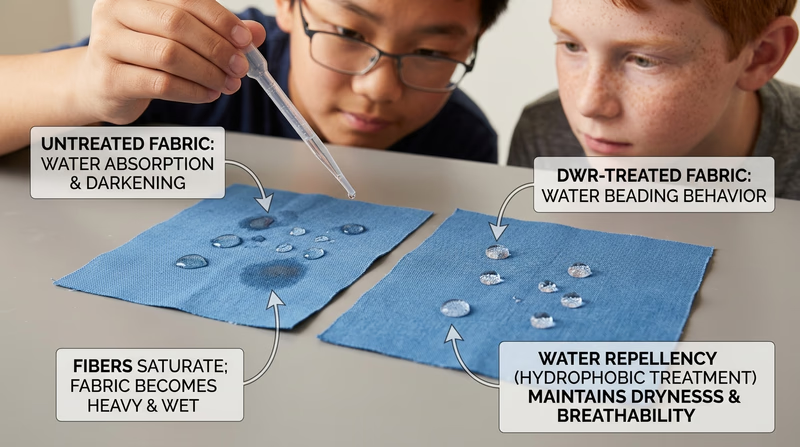
- Start with a dry sample and observe how untreated fabric behaves with a few drops of water.
- Apply your waterproofing method according to directions.
- Let the sample cure or dry fully.
- Add water again and compare beading, absorption, and leakage.
- Record what improved and what did not.
What to Explain to Your Counselor
A strong explanation includes:
- what fabric you treated
- what waterproofing method you used
- whether you treated only the fabric or also the seams
- how you tested the result
- whether the fabric became stiffer, darker, less breathable, or more effective
Waterproofing is about how a textile performs after finishing. The next option focuses on identifying what a fiber actually is.