Req 4 — Talk Like a Textile Maker
You only need to explain 10 terms, but learning more than 10 will make the rest of the badge much easier. These words describe the materials, tools, and processes that textile makers use all the time. If you can connect each term to a clear image or example, you will remember it much better.
Terms Connected to Weaving
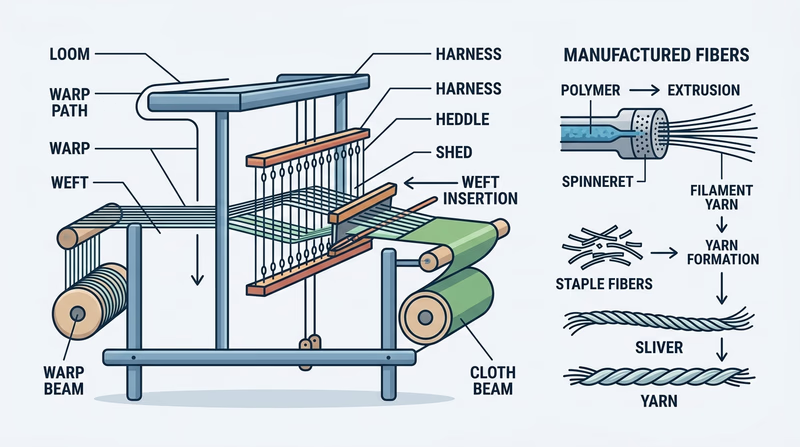
Warp
Warp yarns run lengthwise in a woven fabric. They stay under tension on the loom and act like the fabric’s basic framework.
Harness
A harness is the frame on a loom that holds heddles. By raising or lowering harnesses, the loom changes which warp yarns move.
Heddle
A heddle is the part that guides individual warp yarns and helps keep them separated and controlled.
Shed
The shed is the opening created between raised and lowered warp yarns. That opening allows the filling yarn to pass through.
Loom
A loom is the device used to weave fabric. It can be hand-operated or power-driven.
Yarn
Yarn is a continuous strand made by twisting fibers together. It is the material most weaving and knitting processes use to build fabric.
Spindle and Distaff
A spindle is a rod used in hand spinning to twist and wind yarn. A distaff holds the loose fibers that are being drawn out and spun.
🎬 Video: Loom and Weaving Terminology (video) — https://youtu.be/QNEB-fjMauc?si=zEm50ZTr7PgymZCE
This video is most useful for the loom-related words: warp, harness, heddle, shed, and loom.
Terms Connected to Fiber Types
Aramid
Aramid is a very strong synthetic fiber that resists high temperatures. The pamphlet glossary points to Kevlar and Nomex as examples. These fibers show up in protective gear such as firefighter clothing and other high-performance products.
Spandex
Spandex is a highly elastic synthetic fiber. It can stretch far and then recover toward its original length.
Carbon Fibers
Carbon fibers are strong, stiff, lightweight fibers made from nearly pure carbon. They are used where high strength and low weight matter.
Cellulose
Cellulose is a natural substance found in plant cell walls. It is the raw material behind cotton and flax, and it is also used to make fibers such as rayon, acetate, and lyocell.
Sericulture
Sericulture means raising silkworms to make silk. It connects a finished luxury fabric back to an agricultural and biological process.
Terms Connected to Fiber Preparation and Manufacturing
Sliver
A sliver is a loose rope of fibers produced during carding or combing before the fibers are fully spun into yarn.
Staple
Staple means short fiber length. Cotton, wool, and flax are staple fibers. Manufactured fibers can also be cut into staple lengths.
Spinneret
A spinneret is a nozzle or plate with tiny holes through which a liquid is extruded to make manufactured fibers. The pamphlet compares it to a shower head.
Extrusion
Extrusion is the process of forcing material through an opening to form a shape. In textiles, it often refers to pushing a fiber-forming liquid through a spinneret.
Terms Connected to Fabric Construction and Finishing
Nonwoven
A nonwoven fabric is made by matting, tangling, fusing, gluing, or melting fibers together rather than weaving or knitting them.
Worsted
Worsted refers to a tightly woven wool fabric made from long, combed fibers. The result is smoother and firmer than bulkier woolen fabrics.
Greige Goods
Greige goods, also spelled gray goods, are unfinished fabric straight from the loom or knitting machine before finishing treatments such as bleaching, dyeing, or waterproofing.
An Easy Way to Study the Terms
Group the words instead of memorizing them randomly
- Loom parts and weaving action: warp, harness, heddle, shed, loom
- Fiber formation and prep: sliver, staple, spindle, distaff, yarn, spinneret, extrusion
- Fiber types: aramid, spandex, carbon fibers, cellulose
- Special textile concepts: sericulture, nonwoven, worsted, greige goods
Once you can talk like a textile maker, the next step is to compare the strengths, weaknesses, and environmental concerns tied to different fiber groups.