Req 5 — Compare Fibers and Their Footprint
There is no perfect fiber category. Every textile choice involves tradeoffs in comfort, durability, cost, care, and environmental impact. This requirement is about comparing those tradeoffs honestly.
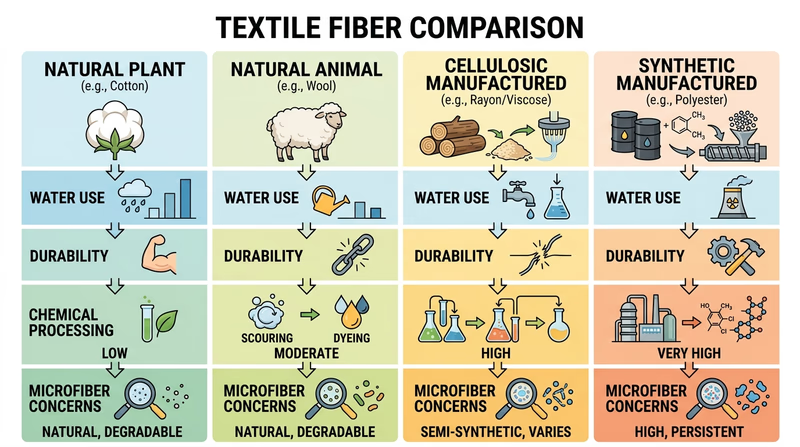
Compare the Main Fiber Categories
| Fiber category | Advantages | Disadvantages |
|---|---|---|
| Natural plant fibers | breathable, often absorbent, familiar feel | may wrinkle, may shrink, some crops need lots of water or chemicals |
| Natural animal fibers | warm, resilient, often excellent insulation | can be expensive, may need special care, involves animal production systems |
| Cellulosic manufactured fibers | soft, drapey, often absorbent, plant-based source | processing can be chemical-intensive, some versions wrinkle or weaken when wet |
| Synthetic manufactured fibers | durable, quick-drying, stretch or weather performance can be engineered | often petroleum-based, may trap odor or heat, may shed microfibers |
What Each Group Does Well
Natural Plant Fibers
Cotton and linen are comfortable, breathable, and common. They work well for warm-weather clothing and home textiles. Their downside is that they may wrinkle, shrink, or take time to dry, and some plant-fiber agriculture can use large amounts of water, fertilizer, and pesticides.
Natural Animal Fibers
Wool and silk show how strong natural fibers can be. Wool insulates well and can recover its shape nicely. Silk is smooth and strong for its weight. Their downsides often include price, special-care needs, and questions about land use, animal treatment, and processing.
Cellulosic Manufactured Fibers
Rayon, acetate, and lyocell begin with cellulose, usually from wood pulp or other plant sources. They often feel soft and drape well. Their main tradeoff is that turning cellulose into fiber may require significant processing, solvents, and water.
Synthetic Manufactured Fibers
Polyester, nylon, acrylic, olefin, and spandex are some of the workhorses of modern textiles. They are durable and can be engineered for stretch, water resistance, or strength. The drawbacks often include dependence on petrochemicals and the shedding of synthetic microfibers during wear and washing.
🎬 Video: The Ultimate Fabric Guide - The Differences Between Natural vs Synthetic vs Semi-Synthetic Fibers (video) — https://youtu.be/lcq9tPI-W-c?si=7pT187LPR6ZCW2c0
Use this video to compare categories, but do not stop at repeating its points. Tie the tradeoffs back to real products you use.
Ecological Concerns to Discuss
You need at least four. Here are several strong ones:
1. Water Use
Growing some textile crops and processing some fabrics can require large amounts of water. Dyeing and finishing can also use a lot of water.
2. Chemical Use
Pesticides, fertilizers, dyes, finishes, and processing chemicals can affect soil, air, and water if they are not handled well.
3. Energy Use and Carbon Emissions
Manufacturing fibers, running mills, transporting materials, and caring for clothing all require energy. Repeated washing, drying, and ironing add more over a textile item’s lifetime.
4. Microfiber Pollution
Synthetic textiles can release tiny fibers during washing. Those microfibers can move into waterways and the environment.
5. Waste and Fast Fashion
Cheap, short-lived garments are often thrown away quickly. That creates landfill waste and increases the demand for more raw materials and more production.
6. Durability and Repair
A textile that lasts longer and can be repaired may create less impact over time than a cheaper item that fails quickly.
A Better Textile Decision
Think beyond price alone
- Will it last a long time?
- Is the fiber choice right for the job?
- Can it be washed and dried efficiently?
- Can it be repaired, reused, or handed down?
- Does it avoid unnecessary blends that make recycling harder?
Once you understand materials and impact, the badge ends by asking you to look ahead at the people who build careers around textiles every day.