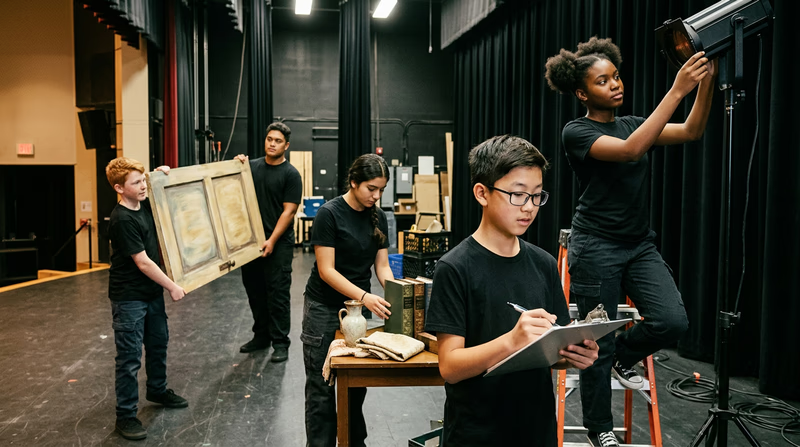
Req 3 — Theater Safety
A theater is an exciting place, but it is also a workspace full of potential hazards. Heavy scenery, electrical equipment, elevated platforms, power tools, and dark backstage areas all require careful attention to safety. Before you dive into any of the hands-on options in Requirement 3, you need to understand how to keep yourself and everyone around you safe.
Common Theater Hazards
Falls and Trips
Backstage areas are often dark, cluttered with props, and crisscrossed with cables. Stages may have trapdoors, elevated platforms, or stairs without railings. Falling is the most common theater injury.
- Always use a work light when moving backstage
- Never run on stage or backstage
- Keep walkways and emergency exits clear of props and equipment
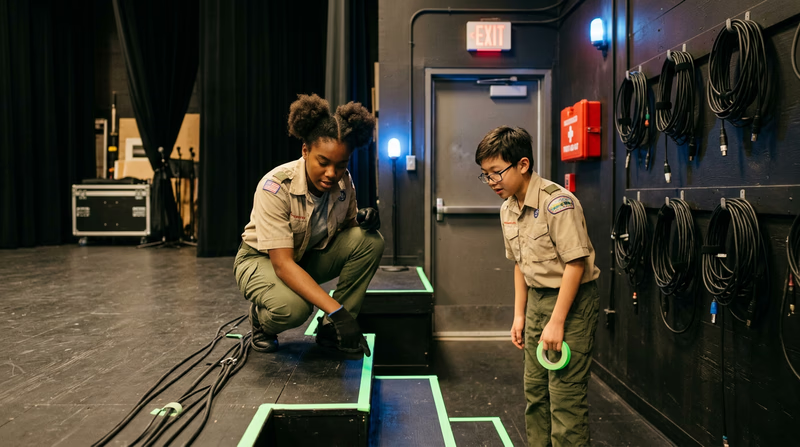
- Use glow tape on step edges and obstacles in dark areas
Electrical Hazards
Theaters use a huge amount of electrical equipment — lighting instruments, sound systems, power tools, and fog machines all draw significant power.
- Never handle electrical connections with wet hands
- Report frayed cables, sparking connections, or burning smells immediately
- Only qualified people should work on electrical panels and circuits
- Keep water and liquids away from all electrical equipment
Falling Objects
Scenery pieces, lighting instruments, and tools are often suspended above the stage. The fly system (used to raise and lower scenery) involves heavy counterweights.
- Never stand directly under scenery being raised or lowered
- Always call out “heads!” before lowering anything from above
- Secure all tools and hardware when working at height
- Wear a hard hat when working below active rigging
Tool and Construction Safety
Building scenery involves power saws, drills, paint, and other shop tools.
- Wear safety glasses when cutting, drilling, or painting overhead
- Use hearing protection around loud power tools
- Keep your workspace clean and organized
- Never use a tool you have not been trained on — ask for instruction first
Theater Safety Basics
Know these before you start any theater work
- Location of all emergency exits and fire extinguishers.
- Location of the first-aid kit.
- Who is the designated safety supervisor for this production.
- How to call for help in an emergency.
- Where the main electrical shutoff is located.
- The meaning of common backstage calls (“Heads!”, “Clear!”, “Hold!”).
Choose Your THREE Options
For this requirement, you will choose three of the following ten options. Each option represents a different role in a theater production. Take a moment to read through all of them before deciding which three interest you most. Click through to each page to learn what is involved and how to prepare.
Performance Roles:
- Req 3a — Acting — Perform a major role in a full-length play or parts in three one-act plays
- Req 3b — Directing — Direct, cast, rehearse, and stage a play of at least 10 minutes
- Req 3j — Musical Direction — Serve as musical director for a musical theater production
Design Roles:
- Req 3c — Set Design — Design and build a model of a set
- Req 3d — Costume Design — Design costumes for five characters in a historical production
- Req 3e — Hair & Makeup — Create a character look using hair and makeup techniques
Technical Roles:
- Req 3f — Scenery Building — Help build and paint scenery for a production
- Req 3g — Lighting Design — Design or help operate lighting for a production
- Req 3h — Sound Design — Help install and operate sound for a production
- Req 3i — Stage Management — Serve as stage manager and maintain a calling script
Explore More Resources
OSHA — Theater Safety The federal Occupational Safety and Health Administration's guidelines for performing arts workplaces.