Req 3a — Acting
Standing on stage in front of a live audience is one of the most thrilling things you can do. Acting is not about pretending — it is about truthfully living as another person in imagined circumstances. Whether you are playing a king, a detective, or a talking animal, your job is to make the audience believe.
This requirement gives you two paths: a major role in one full-length play, or parts in three shorter one-act plays. Either way, you will go through the full process of preparing, rehearsing, and performing.
Getting the Part: Auditions
Most productions start with auditions, where the director sees what each actor can do. Here is how to prepare:
- Read the play first. Know the story and the characters before you walk in. If scripts are available, read the whole thing, not just the parts you want.
- Prepare a monologue if the audition calls for one. Choose something age-appropriate that shows range — comedy and drama are both good.
- Be ready to cold read. The director may hand you a scene you have never seen and ask you to perform it. Stay calm, read the stage directions, and make bold choices.
- Be yourself. Directors are looking for someone who brings something unique to a role. Do not try to imitate a famous actor.
Building Your Character
Once you have been cast, your real work begins. Building a character means understanding who this person is beyond what is written in the script.
Ask yourself these questions about your character:
- What do they want? Every character in every scene wants something. This is called your “objective.”
- What is in their way? The obstacle creates the drama.
- How do they talk? Fast or slow? Formal or casual? Do they have a catchphrase or a habit?
- How do they move? Do they stand tall or slouch? Rush around or move carefully?
- What happened to them before the play starts? Their backstory affects how they react to everything in the script.
The Rehearsal Process
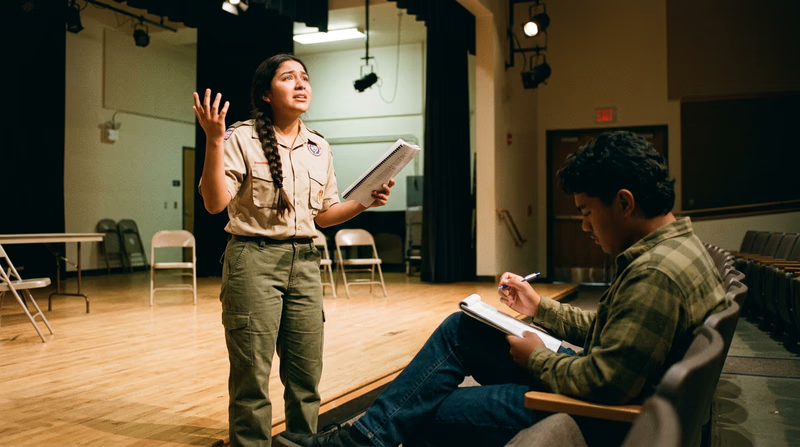
Rehearsals are where you transform from someone reading lines into a living character. Here is what the process typically looks like:
- Table read — The whole cast sits around a table and reads the script aloud together for the first time
- Blocking rehearsals — The director tells you where to move on stage (your “blocking”) and you write it in your script
- Working rehearsals — You dig deeper into scenes, experiment with choices, and refine your performance
- Off-book deadline — The day you must have your lines memorized (no more scripts on stage)
- Run-throughs — You perform the entire play without stopping
- Tech rehearsals — Lights, sound, and set changes are added
- Dress rehearsal — A full performance with costumes, makeup, and everything — the final practice before opening night
Memorizing Your Lines
Learning your lines is not optional — it is essential. Here are proven techniques:
- Write them out by hand. The physical act of writing helps your brain retain the words.
- Record your cue lines (the lines other characters say right before yours) and practice responding.
- Run lines with a partner. Have a friend read the other characters while you practice yours.
- Learn them in small chunks. Master one page at a time rather than trying to swallow the whole script at once.
- Connect the lines to the action. If you understand why your character says something, the words stick better.
Performance Tips
When opening night arrives, remember these essentials:
Performance Night Checklist
Set yourself up for a great show
- Arrive early and complete your pre-show routine (warm-ups, costume, makeup).
- Stay in character from the moment you step on stage until you exit.
- Project your voice to the back row — do not shout, but support your voice with your breath.
- Listen to your scene partners. Reacting honestly is as important as delivering your own lines.
- If something goes wrong (a missed line, a prop that breaks), stay in character and adapt.
- Save your celebration for after the curtain call.
Explore More Resources
Educational Theatre Association The leading organization for theater education, with resources for student actors, teachers, and school programs.