Req 3c — Set Design
When the curtain opens, the set is the first thing the audience sees — before a single word is spoken. A great set design instantly tells the audience where and when the story takes place, and it sets the emotional tone for everything that follows. Is the play set in a cozy kitchen? A spooky forest? A king’s palace? The set designer makes that world real.
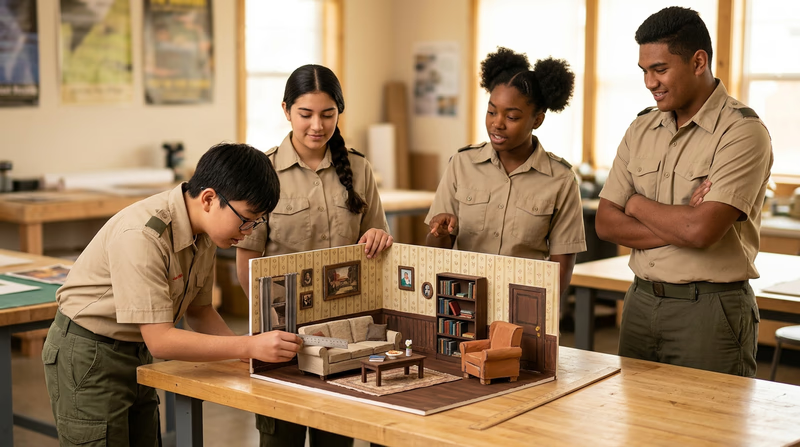
For this requirement, you will design a set and then build a physical scale model of it.
What Does a Set Designer Do?
A set designer works closely with the director to create the physical environment of the play. Their job includes:
- Reading the script carefully to understand every location, every entrance and exit, and every piece of furniture or prop the story requires
- Researching the time period and setting to make the design accurate and believable
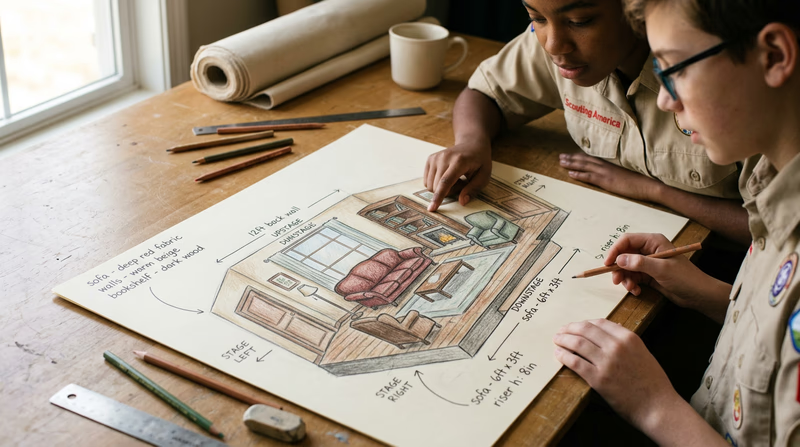
- Creating sketches and renderings that show what the finished set will look like
- Drawing a ground plan (a bird’s-eye view showing where everything sits on stage)
- Building a scale model so the director and crew can see the set in three dimensions before construction begins
Starting Your Design
Step 1: Read the Play
Go through the entire script and make a list of everything the set needs to include:
- How many locations are there? (One room? Multiple scenes?)
- What entrances and exits do the characters use?
- What furniture is mentioned in the script or stage directions?
- Are there any special requirements? (A window to look through, a door that slams, stairs)
Step 2: Research and Gather Inspiration
If the play is set in a specific time period or place, look at photographs, paintings, and other references. What did rooms look like in that era? What materials and colors were common?
Step 3: Sketch Your Ideas
Start with rough sketches — quick drawings that explore different arrangements. Do not worry about artistic skill; these are thinking tools. Try at least three different layouts before settling on one.
Consider these design principles:
- Sightlines — Can every audience member see the important action? (You will learn more about sightlines in Requirement 5.)
- Flow — Can actors enter, exit, and move around naturally?
- Focus — Where does the audience’s eye go first? Make sure the most important areas are prominent.
- Practicality — Can this set actually be built with the time, space, and budget available?
Building Your Model
Your model brings your flat sketches into three dimensions. Here is how to build one:
Materials you will need:
- Foam board or cardboard for walls and platforms
- A ruler and pencil for measuring
- A craft knife or scissors (with adult supervision for sharp tools)
- Glue (white glue or hot glue)
- Paint or colored paper for decoration
- Small items for furniture (you can make these from cardboard, clay, or found objects)
Building steps:
- Make a base — Cut a piece of foam board to represent your stage floor. Mark the front edge (where the audience sits) and the back wall.
- Add walls — Cut and glue walls at the back and sides. Include openings for doors and windows.
- Add platforms and levels — If your set has stairs, raised areas, or different levels, build these up with stacked foam board.
- Add furniture — Build miniature versions of tables, chairs, beds, or whatever your set requires.
- Paint and detail — Add color, texture, and small details that bring the model to life. Wallpaper patterns, wood grain, and even tiny picture frames make a difference.
The Ground Plan
In addition to your model, create a simple ground plan — a top-down view of the stage showing where every piece of scenery sits. Label the walls, doors, furniture, and any important props. Use the stage direction terms you will learn in Requirement 5 (stage right, stage left, upstage, downstage) to orient your plan.
Explore More Resources
United States Institute for Theatre Technology (USITT) The national association for theater design and technology professionals, with student resources and design competitions. Set Design Resources — TheatreLinks A curated collection of set design tutorials, inspiration galleries, and professional examples.