Req 3d — Costume Design
Costumes do far more than just dress an actor. They are visual storytelling tools that instantly communicate who a character is — their social status, personality, occupation, and even their emotional state. When an audience sees a character walk on stage, their costume is the first clue about who that person is before they say a single word.
For this requirement, you will design costumes for five characters in a production set in a historical time period. This means you need to research what people actually wore during that era and then make creative choices about how to use that information to tell your story.
The Costume Design Process
Step 1: Read the Script and Talk to the Director
Start by understanding what the play needs. Look for:
- What time period is the play set in?
- What clues does the script give about each character’s appearance?
- Are there costume changes? (Does a character need to change quickly between scenes?)
- Are there practical requirements? (Does a character dance, fight, or get wet?)
Step 2: Research the Historical Period
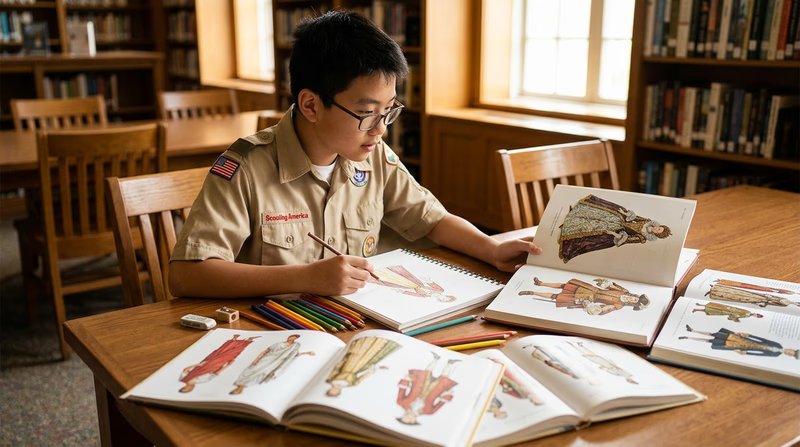
This is where the real fun begins. Your costumes need to look believable for the time period. Head to the library or search online for images of clothing from that era. Look at:
- Paintings and portraits from the period
- Museum collections and fashion history books
- Photographs (for more recent historical periods)
- Film and TV adaptations set in the same era (for inspiration, not copying)
What to Include in Your Designs
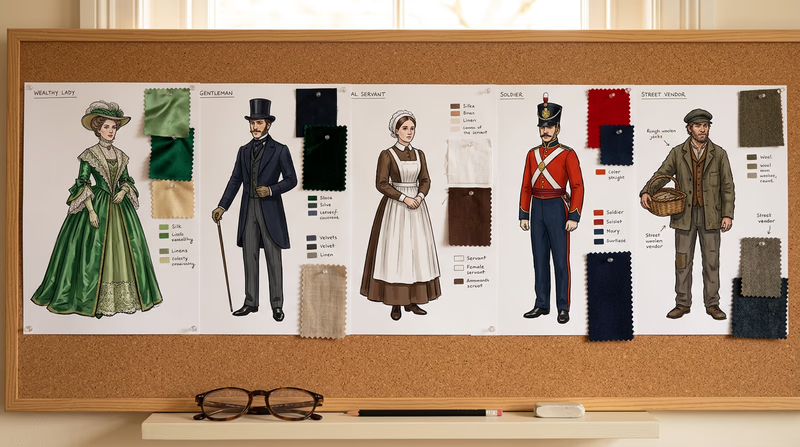
For each of your five characters, create a costume design that includes:
Costume Design Elements
Include these for each character
- A sketch or illustration of the full costume (front view at minimum, side or back view if helpful).
- Color choices with specific reasoning (Why this color for this character?).
- Fabric suggestions (What textures and materials would be used?).
- Accessories (Hats, jewelry, gloves, shoes, bags, weapons — whatever fits the character and era).
- Notes on how the costume reflects the character’s personality, status, or role in the story.
Using Color and Texture Intentionally
Professional costume designers use color theory to help tell the story:
- Warm colors (red, orange, yellow) can suggest passion, power, or danger
- Cool colors (blue, green, purple) can suggest calm, mystery, or sadness
- Neutrals (brown, gray, beige) can suggest everyday life, poverty, or simplicity
- Black often signals authority, villainy, or mourning
- White can suggest innocence, purity, or wealth (historically, white fabric was expensive to keep clean)
Think about how your five characters relate to each other. If two characters are allies, their color palettes might be similar. If they are rivals, contrasting colors can make that tension visible.
Practical Considerations
Theater costumes are not museum pieces — they need to work under stage conditions:
- Quick changes — If a character needs to change costumes between scenes, design for speed. Velcro, snaps, and breakaway seams are common tricks.
- Durability — Costumes get worn, washed, and handled night after night. Choose materials that can take the abuse.
- Movement — Actors need to move freely. A beautiful gown that an actor cannot walk in is a failed design.
- Visibility — Stage lighting can change how colors look. Bright white can be blinding under stage lights, and some colors “wash out” entirely.
- Budget — Professional-looking costumes can be assembled from thrift stores, costume rental houses, and creative alterations of existing clothing. You do not need to sew everything from scratch.
Historical Periods to Consider
If you do not already have a production in mind, here are some popular historical periods for theater:
- Ancient Greece or Rome — Togas, draped fabric, sandals, laurel wreaths
- Medieval Europe — Tunics, cloaks, armor, simple dresses
- Elizabethan England (1558–1603) — Ruffs, doublets, elaborate gowns, rich fabrics
- American Colonial era (1600s–1700s) — Breeches, waistcoats, bonnets, aprons
- Victorian era (1837–1901) — Top hats, corsets, bustles, long coats
- American Civil War (1861–1865) — Uniforms, hoop skirts, suspenders
- Roaring Twenties (1920s) — Flapper dresses, fedoras, suits with wide lapels
Explore More Resources
Costume Designer's Guild The professional organization for costume designers in entertainment, with galleries of professional work and career resources. The Metropolitan Museum of Art — Costume Institute Explore thousands of real historical garments from the Met's world-class collection.