Req 3f — Scenery Building
Every set starts as a design on paper — but somebody has to actually build it. Scenery builders are the carpenters, painters, and craftspeople who turn sketches and models into the full-size, three-dimensional world the audience sees on stage. This is hands-on work that combines construction skills, artistic ability, and creative problem-solving.
For this requirement, you will help build and paint scenery for an actual production. Work with your merit badge counselor to find a school play, community theater, or other production that needs help in the scene shop.
What Scenery Builders Do
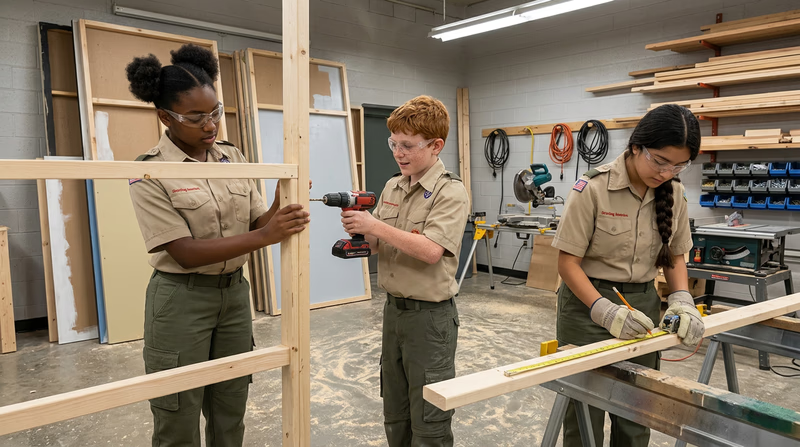
A scene shop (the workspace where scenery is built) looks a lot like a woodworking shop. Scenery builders:
- Construct flats (lightweight wall units made of wood frames covered with fabric or plywood)
- Build platforms and risers to create different stage levels
- Assemble door units, window units, and stair units
- Create special pieces like trees, rocks, or architectural details
- Paint everything to look realistic — or intentionally stylized
Basic Construction: The Flat
The most common piece of stage scenery is the flat — a lightweight frame covered with muslin (a type of fabric) or thin plywood. Flats are used to create walls, building exteriors, and backdrops.
A standard flat is built from 1x3 lumber (pine or poplar) and assembled with butt joints, corner blocks, and keystones (small plywood reinforcing pieces). The frame is then covered with muslin that is stretched, stapled, and sealed with a base coat of paint.
Scenic Painting
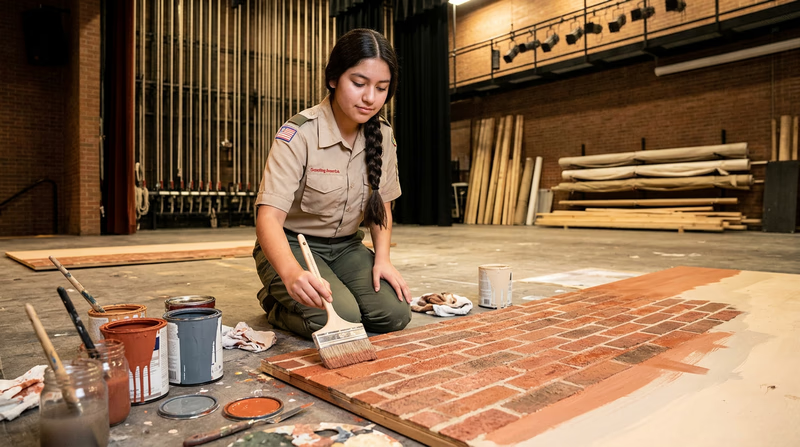
Painting scenery is very different from painting a bedroom wall. Scenic painters use special techniques to create the illusion of texture, depth, and age on flat surfaces.
Key techniques:
- Base coat — A solid first layer of color applied to the entire surface
- Spattering — Flicking paint from a brush to create a textured, aged look
- Dry brushing — Lightly dragging a nearly dry brush across the surface to create highlights and wood grain
- Sponging — Dabbing paint with a sponge for stone or stucco textures
- Trompe l’oeil — “Fool the eye” painting that creates the illusion of three-dimensional details (molding, bricks, wood paneling) on a flat surface
Tools of the Trade
Here are the basic tools you will encounter in a scene shop:
Scene Shop Tools
Common tools used in scenery construction
- Tape measure: For accurate measurements (measure twice, cut once).
- Speed square: For marking straight lines and right angles.
- Cordless drill/driver: The most-used tool in the shop — for driving screws.
- Circular saw or miter saw: For cutting lumber to length (adult supervision required).
- Staple gun: For attaching muslin to flat frames.
- Clamps: For holding pieces together while glue dries or screws are driven.
- Paintbrushes: Various sizes from 1-inch trim brushes to 4-inch wall brushes.
- Paint rollers: For covering large areas with base coats quickly.
- Bamboo extensions: Long sticks that hold brushes for painting while standing.
Working as Part of a Crew
Scenery building is teamwork. You will be part of a crew working under the direction of a technical director or master carpenter. Here is how to be a great crew member:
- Show up on time. Build calls (scheduled work sessions) are planned around deadlines.
- Ask questions. It is always better to ask how to do something than to guess and waste materials.
- Follow instructions carefully. Measurements matter — a flat that is half an inch too wide will not fit on stage.
- Clean as you go. Sweep sawdust, pick up scraps, and put tools back where they belong.
- Volunteer for tasks. Even if a job seems boring (like priming a wall for the third time), it all contributes to the final product.
Explore More Resources
USITT — Scenic Design & Technology The United States Institute for Theatre Technology offers resources on scenic construction, painting, and design for students and professionals.