Req 3g — Lighting Design
Lighting is one of the most powerful tools in theater. It tells the audience where to look, what time of day it is, what the mood should be, and how to feel. A scene lit in warm golden tones feels completely different from the same scene lit in cold blue — even though nothing else on stage has changed. Lighting designers and operators work behind the scenes to create this invisible magic.
This requirement gives you two paths: design the lighting for a play, or help with the hands-on technical work of installing and operating the lighting for a production. Either way, you will learn how light shapes the theater experience.
What Lighting Does in Theater
Lighting serves four essential functions:
- Visibility — The audience needs to see the actors. This is the most basic job of stage lighting.
- Focus — Light draws the eye. A spotlight on one actor tells the audience exactly who to watch.
- Mood — Color, intensity, and angle all create emotional atmosphere. Bright, warm light feels happy. Dim, cool light feels mysterious or sad.
- Time and Place — Lighting can suggest morning sunlight through a window, a moonlit night, or a stormy sky.
Types of Stage Lighting Instruments
Stage lights (called “instruments”) come in several types, each designed for a specific purpose. You will learn more about spotlights, floodlights, and the lighting control board in Requirement 5, but here is a practical overview:
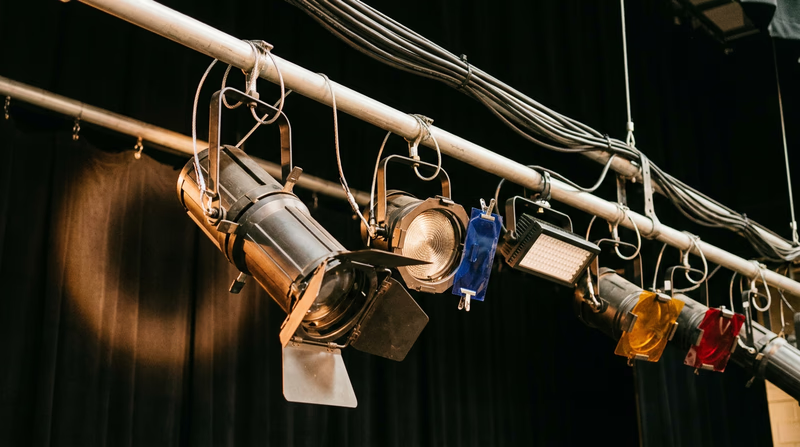
- Ellipsoidal (ERS or Leko) — The workhorse of theater lighting. Produces a sharp, focused beam that can be shaped with shutters. Used for front lighting, specials, and gobos (metal patterns that project shapes).
- Fresnel — Produces a soft-edged wash of light. Named after the Fresnel lens inside it. Good for general stage washes and blending areas together.
- PAR can — Produces a powerful, slightly oval beam. Simple, affordable, and bright. Common in school theaters.
- LED fixtures — Modern instruments that can change color electronically without gels. Energy-efficient and increasingly common.
- Follow spot — A powerful, manually operated spotlight that follows a performer around the stage. Often used in musicals.
The Hands-On Work
If you choose the technical path, here is what the work involves:
Hanging and Circuiting
Lighting instruments are mounted on metal pipes (called “battens” or “pipes”) above and around the stage. Hanging involves clamping each instrument to the pipe and connecting its power cable to a dimmer circuit.
Focusing
Focusing means aiming each instrument at its assigned area of the stage and adjusting its beam. One person stands on a ladder at the instrument while another stands on stage as a “body” (a stand-in the designer uses to check the light’s position). The designer calls out adjustments: “Pan left,” “Tilt down,” “Sharpen the edge.”
Coloring (Gelling)
Color is added to instruments using thin sheets of heat-resistant colored plastic called “gels” (or “color media”). Gels slide into a frame on the front of the instrument. Combining different colors on different instruments creates the overall color palette for each scene.
Programming
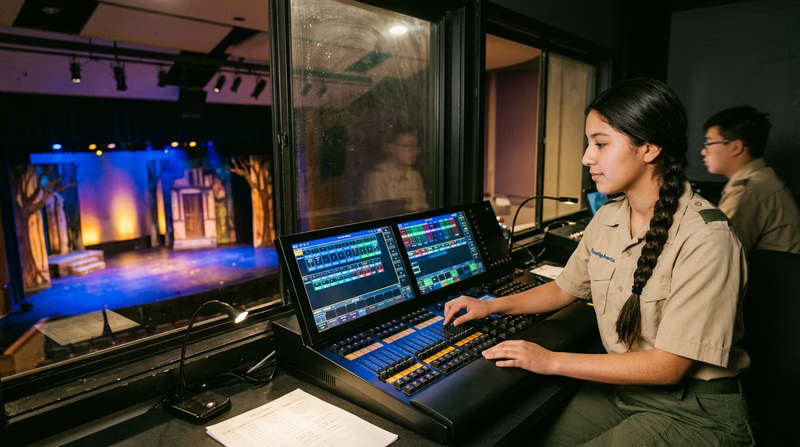
Modern theaters use computerized lighting control boards to save and recall lighting states called “cues.” Each cue stores the intensity of every light in the system. Programming involves:
- Building each cue by adjusting individual lights
- Setting fade times (how fast lights transition between cues)
- Recording cues in sequence to match the show
Operating
During performances, the lighting operator sits at the control board and executes cues on command from the stage manager. When the stage manager says “Go,” the operator presses a button to trigger the next cue. Timing and focus are critical.
Designing a Light Plot
If you take the design path, you will create a light plot — a scale drawing showing where every instrument hangs, what direction it points, what color it uses, and what circuit it connects to. A light plot includes:
- A plan view (top-down) of the stage and lighting positions
- Symbols for each type of instrument
- Channel numbers, colors, and focus areas labeled
- A color key and instrument schedule
Explore More Resources
USITT — Lighting Design Resources for student and professional lighting designers from the United States Institute for Theatre Technology. ETC Learning Center ETC is a leading manufacturer of stage lighting equipment and offers free training resources and tutorials.