Req 3h — Sound Design
Sound design is the invisible art of theater. When it is done well, the audience does not even think about it — they just feel the thunder rumble through the seats, hear every word the actors say clearly, and get swept away by the music. When it is done poorly, it can ruin an otherwise great production. Sound designers and operators are the people who make sure every audience member hears exactly what they need to hear.
For this requirement, you will get hands-on experience with the full sound process: installing equipment, focusing speakers, equalizing the system, programming cues, and operating sound during a live performance.
What Sound Designers Handle
Sound in theater falls into three categories:
Reinforcement — Making the actors’ voices louder so every audience member can hear them clearly. This involves microphones, amplifiers, and speakers. Some theaters rely on natural acoustics without reinforcement, but most modern productions (especially musicals) use wireless microphones.
Sound Effects — Creating or playing recorded sounds that support the story: a doorbell, a thunderstorm, a car horn, a gunshot, birds singing at dawn. These can be pre-recorded or produced live.
Music — Playing pre-show music, scene change music, underscoring (background music during scenes), and curtain call music. In a musical, this also involves amplifying the orchestra or band.
The Equipment
Microphones
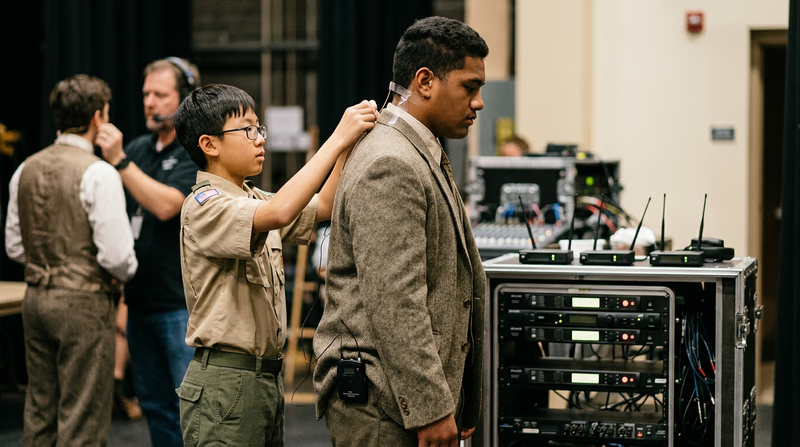
- Wireless lavalier (lav) mics — Tiny microphones clipped near an actor’s hairline or hidden in their costume. Each actor gets their own mic and wireless transmitter pack.
- Handheld microphones — Used for special moments like a character singing a solo.
- Area microphones — Microphones placed along the front edge of the stage to pick up general sound from the cast.
- Condenser microphones — Used to capture orchestra or band instruments.
Speakers
Speakers are placed carefully around the theater so sound reaches every seat evenly. Main speakers typically hang above or beside the stage, with additional speakers along the walls or ceiling for surround effects.
The Sound Mixing Desk
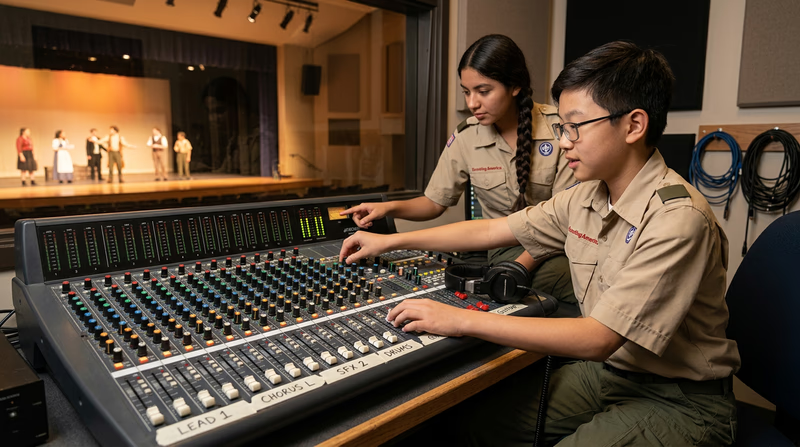
The mixing desk (or mixing board) is the nerve center of the sound system. Each microphone and sound source has its own channel with controls for volume, tone, and effects. The sound operator monitors all channels simultaneously during the show.
The Technical Process
Installing
Installation means setting up all the sound equipment for a production:
- Hanging and positioning speakers
- Running cables from microphones and speakers to the mixing desk
- Setting up wireless microphone systems and checking frequencies
- Testing every connection for signal and clarity
Focusing
Focusing speakers means aiming them so sound covers the audience area evenly. Walk through the house (audience seating) while playing test tones or music, listening for dead spots (areas that are too quiet) and hot spots (areas that are too loud).
Equalizing (EQ)
Equalization adjusts the tone of the sound system. Every room has its own acoustic characteristics — some rooms boost bass frequencies, others make voices sound harsh. An equalizer lets you cut or boost specific frequency ranges so the system sounds natural and clear in that specific space.
Programming
Sound cues are programmed into playback software on a computer connected to the mixing desk. Each cue has:
- A cue number matching the stage manager’s calling script
- The audio file or effect to be played
- Volume level
- Fade-in and fade-out times
- Which speakers the sound plays through
Operating
During the show, the sound operator:
- Monitors all microphone levels in real time, adjusting as actors move around the stage
- Fires sound effect cues on the stage manager’s call
- Manages music playback and volume
- Troubleshoots problems instantly (a dead microphone, feedback, a missed cue)
Common Sound Challenges
Explore More Resources
Theatrical Sound Designers and Composers Association The professional organization for theatrical sound designers, with resources on techniques and career paths in theater sound.