Req 3i — Stage Management
If the director is the architect of a production, the stage manager is the general contractor who makes everything actually happen. The stage manager is the most organized person in the building — they track every detail, manage every rehearsal, coordinate every department, and during performances, they call every single cue. Without a good stage manager, even the most talented cast and crew would be lost.
This is one of the most challenging and rewarding roles in theater. If you are detail-oriented, organized, and good under pressure, stage management might be your calling.
What a Stage Manager Does
Before Rehearsals Begin:
- Create a contact sheet with everyone’s information
- Prepare a rehearsal schedule and distribute it to the cast and crew
- Set up the rehearsal space (tape out the set on the floor, arrange furniture)
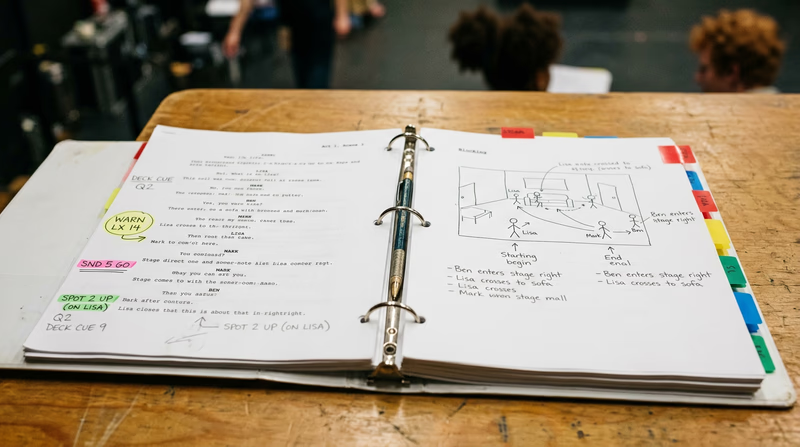
- Prepare a prompt book (your master copy of the script with room for notes)
During Rehearsals:
- Take attendance and manage sign-in sheets
- Record all blocking (actor movements) in the prompt book
- Track props — what is needed, where it goes, and who carries it
- Note any changes the director makes
- Keep rehearsals running on time
- Communicate director’s decisions to designers and crew
During Technical Rehearsals:
- Coordinate lighting, sound, and set change cues with the technical crew
- Write every cue into your calling script with exact timing
- Run “cue-to-cue” rehearsals where you practice transitions without the full performance in between
During Performances:
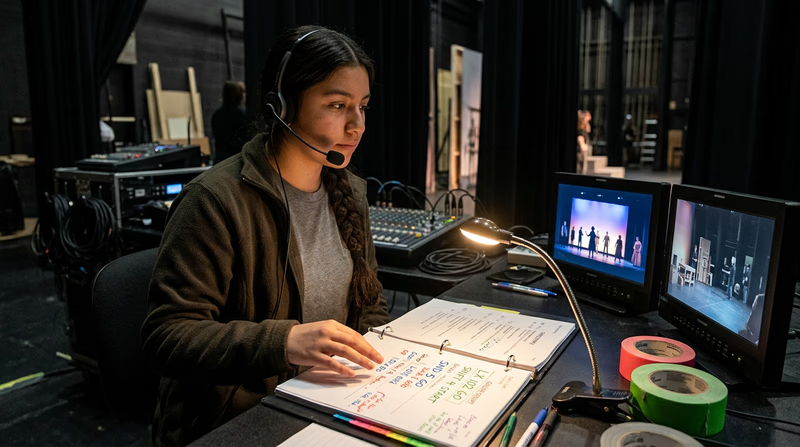
- Call every cue over headset (“Standby lights cue 12… Lights cue 12, go.”)
- Manage backstage traffic — actors and crew moving in darkness
- Handle emergencies calmly and decisively
- Ensure the show runs identically every night
The Calling Script
The calling script (also called the prompt book) is the stage manager’s most important tool. It is a copy of the script with every technical cue written in the margins. Here is how to build one:
Set Up Your Book:
- Print the script single-sided with wide margins
- Place each page in a three-ring binder
- Add blank facing pages for notes, blocking diagrams, and cue lists
Recording Cues:
For each cue, note:
- Cue type — LX (lights), SND (sound), FLY (fly system), SPOT (follow spot)
- Cue number — Sequential within each department (LX 1, LX 2, SND 1, SND 2)
- Warning — Mark where you will call “standby” (usually half a page before the cue)
- Go point — The exact word, action, or moment when you say “go”
A typical cue sequence in your script margin might look like:
WARN LX 15, SND 8
(Actor crosses to the window)
LX 15 GO (on “I never thought I’d see you again”)
SND 8 GO (on door slam)
Calling Cues: The Language
Stage managers use a precise verbal protocol when calling cues. This ensures that operators know exactly what is coming and when:
- Warning: “Warning, lights cue 15 and sound cue 8.” (Operators prepare.)
- Standby: “Standby, lights cue 15 and sound cue 8.” (Operators hover over their buttons.)
- Go: “Lights cue 15… go.” (Operator executes.)
Staying Organized
Stage Manager's Toolkit
Items to keep in your kit at all times
- Prompt book with calling script.
- Multiple pencils and a good eraser (everything is written in pencil so it can change).
- Spike tape in several colors (for marking actor positions and furniture placement on the stage floor).
- A stopwatch or timer (for tracking scene lengths and intermission).
- A flashlight with a blue gel (blue light is invisible to the audience but lets you see backstage).
- First-aid kit location memorized.
- Emergency procedures posted and reviewed.
- Contact list for all cast and crew.
The Stage Manager’s Mindset
Great stage managers share certain qualities:
- Calm under pressure — When things go wrong (and they will), you are the person everyone looks to. Stay calm, assess the situation, and make a decision.
- Detail-oriented — You track hundreds of details. Nothing is too small to notice.
- Diplomatic — You work with every department and every personality. Tact and professionalism matter.
- Prepared for everything — Have backup plans. What if an actor is late? What if a prop breaks? What if a cue is missed?
Explore More Resources
Stage Managers Association A professional network for stage managers with resources, mentorship programs, and career guidance.