Req 3j — Musical Direction
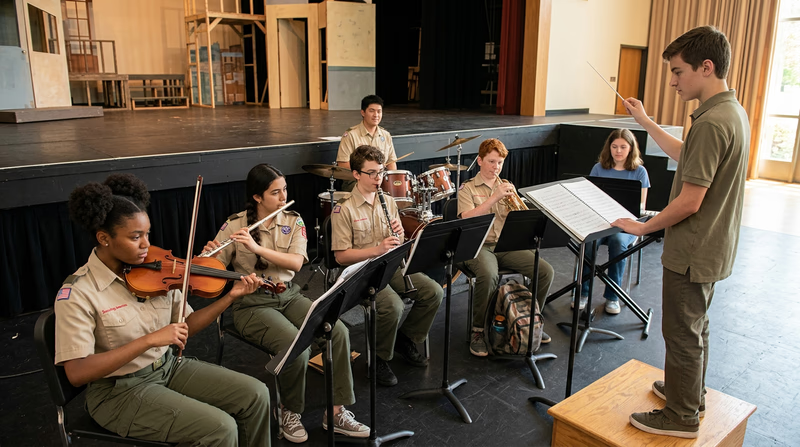
The musical director is the person responsible for everything the audience hears musically in a production — from the opening overture to the final curtain call. They teach the cast their songs, lead the orchestra or band, and ensure the music and the dramatic action work together seamlessly. If you play an instrument, sing, or have a strong ear for music, this role lets you combine your musical skills with the excitement of live theater.
What a Musical Director Does
The musical director wears many hats throughout a production:
Pre-Production:
- Study the entire score (the written music for the show)
- Work with the director to understand the dramatic intent behind each musical number
- Plan the rehearsal schedule for music learning
- Recruit and audition musicians for the orchestra or band (if applicable)
Rehearsals:
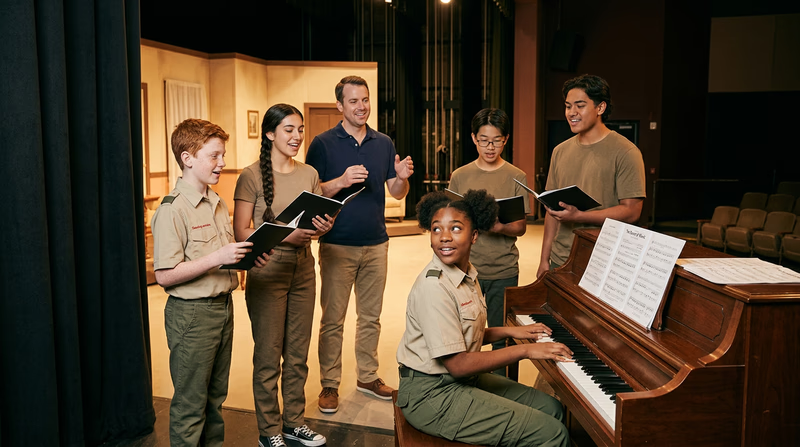
- Teach songs to the cast, including melody, harmony, rhythm, and lyrics
- Work on vocal blend and balance in group numbers
- Rehearse the orchestra or band separately, then with the cast
- Collaborate with the choreographer to ensure music and movement align
Performances:
- Conduct the orchestra or band during the show
- Set tempos and dynamics for each number
- Keep the music synchronized with the action on stage
- Watch for problems (a singer losing pitch, an instrument out of tune) and address them between shows
Teaching Music to a Cast
Not every actor reads music, and many cast members may be more comfortable acting than singing. Your job is to make everyone sound their best. Here is a practical approach:
- Start with the melody. Teach the tune first, without lyrics, using “la” or “da” sounds. This lets singers focus on the notes without worrying about words.
- Add lyrics gradually. Once the melody is secure, layer in the words.
- Work in sections. Break songs into manageable chunks — verse, chorus, bridge — rather than trying to learn the whole song at once.
- Teach parts separately. In songs with harmony, teach each vocal part (soprano, alto, tenor, bass) on its own before combining them.
- Use a piano or keyboard. Playing the melody while singers learn it gives them a pitch reference and confidence.
Working with Musicians
If your production has a live pit orchestra or band, you will also need to:
- Hold separate music rehearsals with the musicians before combining them with the cast
- Create a rehearsal schedule that respects everyone’s time
- Mark the score with tempo changes, fermatas (holds), cuts, and repeats specific to your production
- Conduct clearly so musicians can follow your beat, especially during transitions between dialogue and music
Key Musical Terms to Know
Musical Director's Vocabulary
Terms you will use frequently
- Score: The complete written music for a show, including all vocal and instrumental parts.
- Vocal score: A version of the score showing just the vocal parts with piano accompaniment.
- Overture: The instrumental music played before the show begins, usually a medley of the show’s songs.
- Vamp: A short musical passage repeated until the conductor signals the next section (used to accommodate stage action).
- Button: A sharp musical ending that signals applause.
- Underscoring: Background music played softly under dialogue.
- Reprise: A shorter repeat of a song heard earlier in the show, often with different emotional context.
- Cut-off: A hand signal from the conductor that tells musicians and singers when to stop on a held note.
Collaborating with the Director and Choreographer
A musical is a three-way collaboration between the director (dramatic storytelling), the choreographer (movement and dance), and the musical director (music). These three must work closely together to create a unified vision.
- Tempo decisions are often shared — the choreographer may need a song faster or slower to match the dance
- Dramatic moments may require the music to pause, stretch, or accelerate to match the actors’ emotional beats
- Transitions between spoken scenes and musical numbers need to be smooth and natural
Explore More Resources
Music Theatre International (MTI) One of the largest licensors of musicals for schools and community theaters, with educational resources and show guides.