Req 2 — Vehicle Safety Basics
Some crashes are prevented by smart driving. Others happen anyway, and then the question becomes: how well does the vehicle protect the people inside it? This requirement focuses on the basics every passenger should understand first — proper restraint and the safety features that help reduce injury.
Requirement 2a
A seat belt works by spreading crash forces across stronger parts of the body and keeping a person from hitting the dashboard, windshield, steering wheel, or another passenger. In a sudden stop, your body keeps moving at the car’s original speed until something stops it. A properly worn belt makes sure that “something” is the restraint system, not hard interior surfaces.
How to wear a seat belt properly
- Lap belt: Low and snug across the hips, not across the stomach
- Shoulder belt: Across the center of the chest and over the shoulder, not under the arm or behind the back
- Fit: Tight enough to stay in place, with the seat upright so the belt lies correctly
Children need a restraint that matches their age, size, and stage of development. Infants and younger children need car seats or booster seats because adult seat belts do not fit their bodies correctly yet.
🎬 Video: How to Wear a Seat Belt Properly (video) — https://youtu.be/Cq1auN7xtlo
🎬 Video: Car Seat Safety (video) — https://youtu.be/TPGjlzUenL0
Requirement 2b
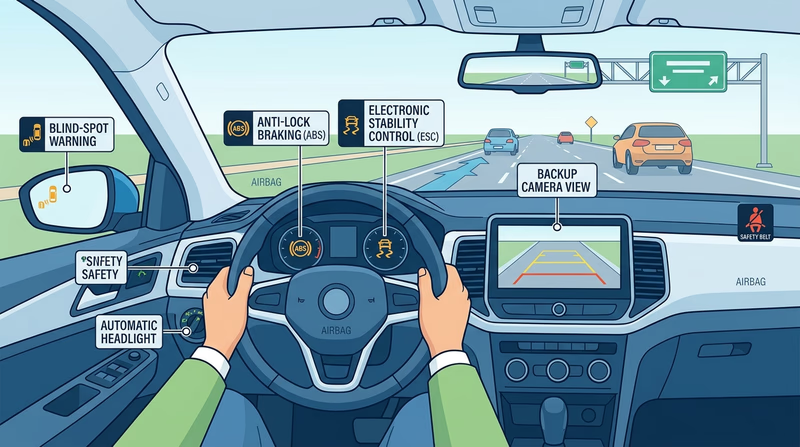
Seat belts and child seats are restraint systems, so this requirement asks you to look beyond them. Modern vehicles use many other safety features to avoid crashes, reduce severity, or protect the passenger compartment.
Five common safety features to know
Anti-lock braking system (ABS) — ABS keeps the wheels from locking during hard braking. That helps the driver keep steering control while slowing down.
Electronic stability control (ESC) — Sensors notice when the vehicle is not going where the driver intends, such as during a skid. The system can apply brakes to specific wheels and reduce power to help the vehicle stay under control.
Backup camera — A camera view behind the vehicle helps the driver notice children, pets, bicycles, or low objects that may be hard to see through mirrors alone.
Blind-spot warning — Sensors watch areas beside and slightly behind the car and alert the driver when another vehicle is there.
Daytime running lights or automatic headlights — These make the vehicle easier for others to see and help reduce the chance of an unnoticed approach.
You could also talk about lane-departure warnings, traction control, crumple zones, collapsible steering columns, tire-pressure monitoring systems, or automatic emergency braking.
How to describe a safety feature
Use this pattern when talking with your counselor
- Name it: What is the feature called?
- What problem does it address? Skidding, poor visibility, unseen vehicles, hard braking, and so on
- How does it work? Sensor, warning, stronger structure, or automatic control
- Why does it matter? Prevents a crash, lowers crash severity, or protects occupants
🎬 Video: 10 Car Safety Features That Every Car Must Have (video) — https://youtu.be/D2kM8gEoGYY
The best vehicle safety systems work together. A careful driver, properly worn restraints, and a well-equipped vehicle create layers of protection. Up next, you will check whether a vehicle is actually road-ready before the trip begins.