Req 5a — Safer Roads by Design
A safer road is not an accident. Engineers shape roads so drivers get clearer information, fewer surprise conflicts, and more space to recover from mistakes. This requirement asks you to look at common road features and explain how each one reduces risk.
Intersections
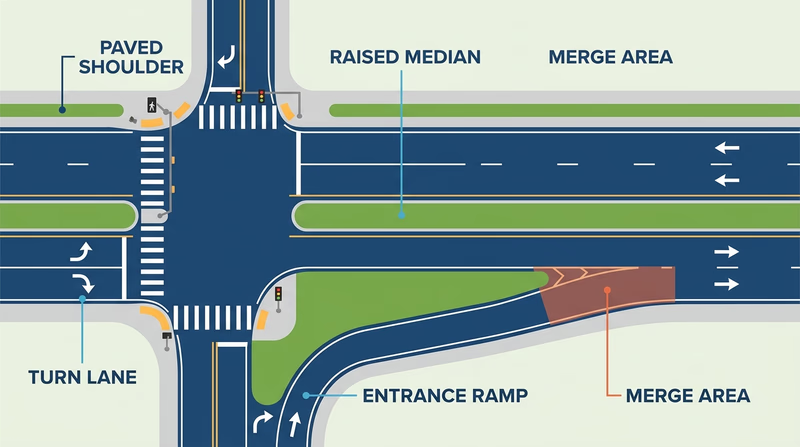
Intersections are conflict points because vehicles, bicycles, and pedestrians may all want the same space at the same time. Good intersection design improves visibility and helps road users understand who moves first.
Examples include turn lanes, traffic signals, stop controls, roundabouts, marked crosswalks, and protected left-turn phases. The goal is to organize movement so drivers have fewer sudden decisions to make.
Medians
Medians separate opposite directions of travel. That reduces the chance of head-on crashes and gives turning vehicles a refuge space on some roads. A raised median can also discourage unsafe passing or random midblock turns.
Road shoulders
Shoulders provide recovery space. If a driver drifts out of the lane, a shoulder may give them room to correct without instantly hitting a ditch, guardrail, or another vehicle. Shoulders also provide space for disabled vehicles, emergency stops, bicyclists in some areas, and maintenance work.
Interstate safety features
Interstates are designed for higher speeds, so they need strong safety features.
- Limited access reduces cross traffic and surprise intersections.
- Entrance and exit ramps manage merging more gradually.
- Wide lanes and shoulders give drivers more recovery space.
- Clear signage warns drivers early about exits, speed changes, and lane use.
- Guardrails and barriers help prevent vehicles from leaving the roadway or crossing into opposing lanes.
- Rumble strips warn drifting drivers with vibration and sound.
🎬 Video: How Highways Are Designed and Built (video) — https://youtu.be/SdYilULmeAc
In the other option, you will study the messages roads send through signs, signals, and markings. Whether you choose this path or not, remember the big lesson: good design helps ordinary people make safer decisions.