 Getting Started
Introduction & Overview
Every grocery shelf, hardware store aisle, and camp dining hall depends on trucks. Truck transportation connects farms, factories, ports, warehouses, and stores so people can get the things they need when they need them. This merit badge helps you see the system behind those moving trailers and understand why trucking matters to everyday life.
Truck transportation is not just about driving a big rig down the highway. It includes planning routes, maintaining equipment, tracking shipments, following safety rules, and solving problems when weather, traffic, or damaged freight get in the way. As you work through this guide, you will learn how the industry keeps commerce moving and how many people it takes to do that well.
Then and Now
Then — Hauling Freight Before Modern Highways
Long before interstate highways and satellite tracking, freight still had to move. Early truckers hauled goods on rough roads between rail depots, farms, mills, and town markets. In the early 1900s, trucks often handled short local trips because railroads did the long-distance work. As roads improved and engines became stronger, trucks started taking on more regional and cross-country shipments.
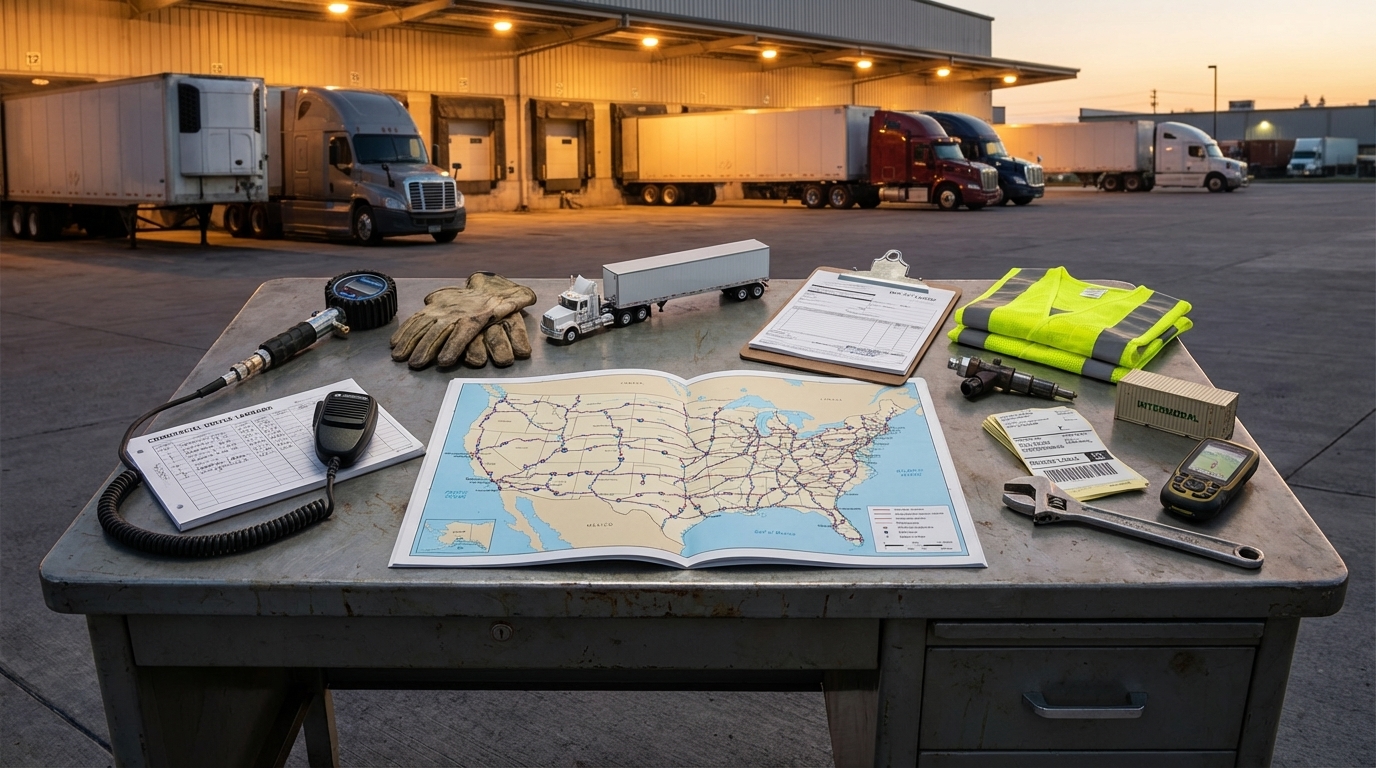
At first, trucking was slower, less reliable, and much harder on both drivers and machines. Breakdowns were common. Weather could stop a trip for hours or days. Paper maps, phone calls, and handwritten logs were essential tools. Even so, trucks offered one huge advantage: they could deliver freight directly from one place to another without unloading it onto a train in the middle.
Now — A Fast, Connected Freight Network
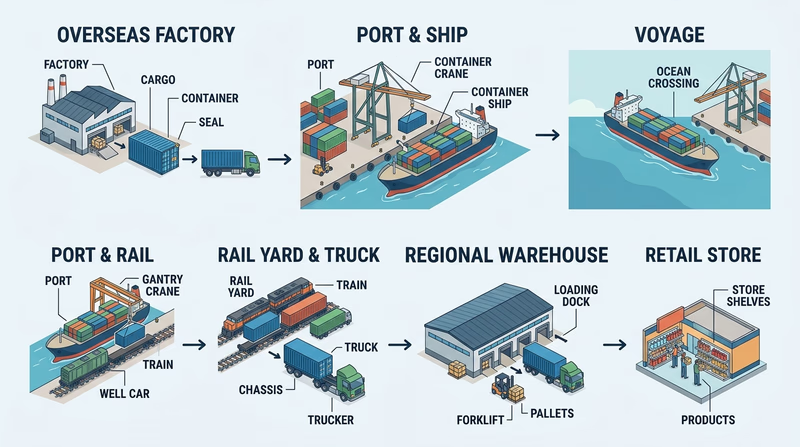
Today, trucking is the backbone of much of the supply chain in the United States. Modern trucks use diesel engines, GPS navigation, onboard computers, electronic logging systems, and dispatch software to move freight more safely and efficiently. A shipment might begin in an overseas container, travel through a port, move by rail for part of the trip, then finish the final leg by truck to a warehouse or store.
Modern trucking also depends on teamwork. Drivers, dispatchers, mechanics, safety managers, loaders, warehouse workers, and government agencies all help keep freight moving. When trucking works well, stores stay stocked, factories keep running, and emergency supplies can reach communities quickly.
Get Ready!
This badge will help you notice the freight world that is already all around you. As you learn the language of trucking, visit a terminal, and plan a shipment of your own, you will start seeing how many moving parts must work together to deliver something as simple as a box on a shelf.
Kinds of Truck Transportation
Truck transportation includes several different kinds of work. Knowing these categories will help you make sense of later requirements.
Local Delivery
Local trucks handle short trips within a city or region. These trucks restock grocery stores, deliver construction materials, and bring packages to homes and businesses. Their routes usually involve many stops, tight turns, and careful scheduling.
Long-Haul Freight
Long-haul trucking moves goods hundreds or even thousands of miles. These trips often follow interstate highways and connect major freight hubs such as ports, rail yards, and distribution centers. Long-haul drivers must pay close attention to fatigue, regulations, and trip planning.
Less-Than-Truckload and Full Truckload
A full truckload shipment fills most or all of a trailer with freight from one shipper. Less-than-truckload, often called LTL, combines freight from multiple shippers in one trailer. LTL can save money, but it also requires careful sorting, labeling, and terminal handling.
Specialized Hauling
Some trucks carry freight that needs special equipment or special rules. Refrigerated trailers keep food and medicine cold. Tankers carry liquids. Flatbeds haul large loads such as steel, lumber, or machinery. Hazardous materials shipments must follow strict safety and packaging rules.
Intermodal Freight
Intermodal freight uses more than one type of transportation during a single shipment. A container might cross the ocean by ship, travel inland by rail, and then go by truck for the final delivery. Trucks are often the part of the system that connects all the others.
Now you have a big-picture view of how trucking supports modern life. Next, you will look closer to home and find the major truck lines that serve your own community.