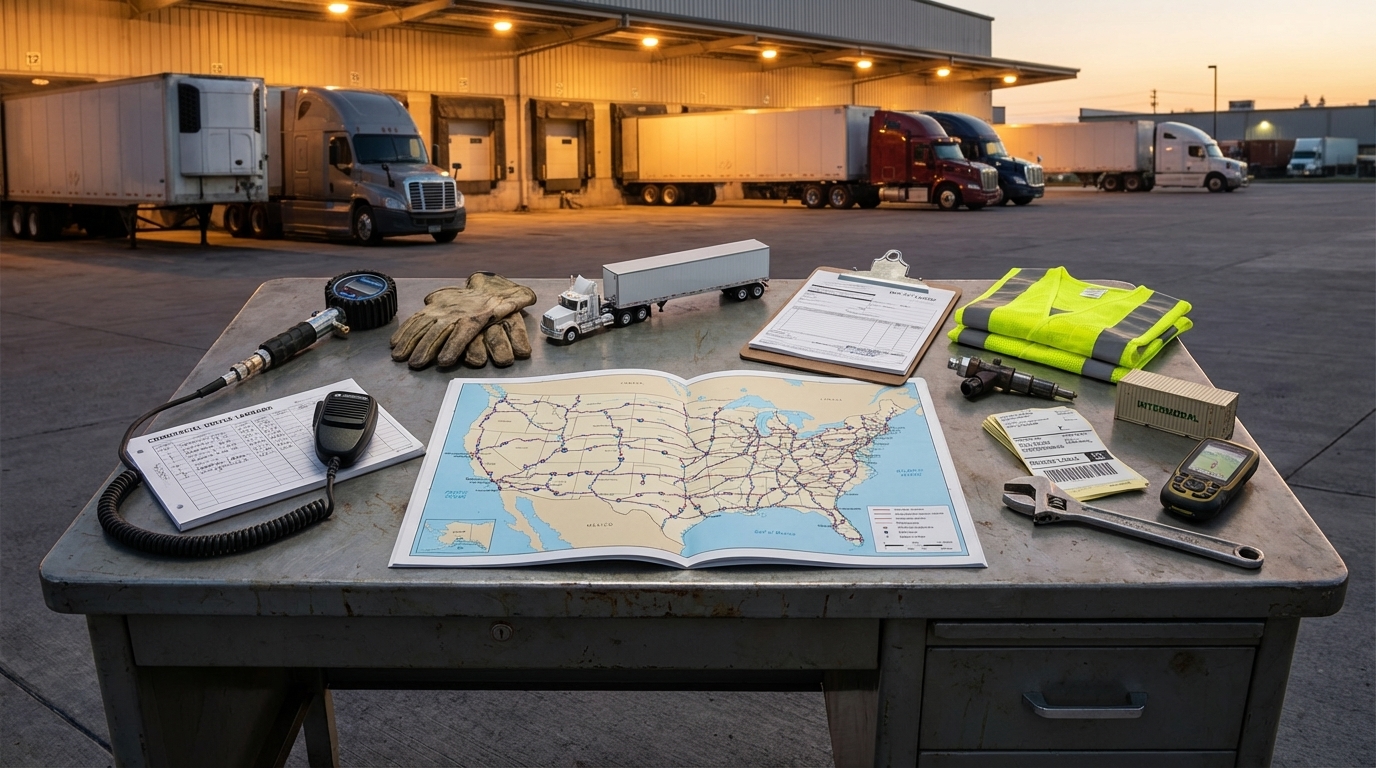
Truck Transportation Merit Badge — Complete Digital Resource Guide
https://merit-badge.university/merit-badges/truck-transportation/guide/
Introduction & Overview
Every grocery shelf, hardware store aisle, and camp dining hall depends on trucks. Truck transportation connects farms, factories, ports, warehouses, and stores so people can get the things they need when they need them. This merit badge helps you see the system behind those moving trailers and understand why trucking matters to everyday life.
Truck transportation is not just about driving a big rig down the highway. It includes planning routes, maintaining equipment, tracking shipments, following safety rules, and solving problems when weather, traffic, or damaged freight get in the way. As you work through this guide, you will learn how the industry keeps commerce moving and how many people it takes to do that well.
Then and Now
Then — Hauling Freight Before Modern Highways
Long before interstate highways and satellite tracking, freight still had to move. Early truckers hauled goods on rough roads between rail depots, farms, mills, and town markets. In the early 1900s, trucks often handled short local trips because railroads did the long-distance work. As roads improved and engines became stronger, trucks started taking on more regional and cross-country shipments.
At first, trucking was slower, less reliable, and much harder on both drivers and machines. Breakdowns were common. Weather could stop a trip for hours or days. Paper maps, phone calls, and handwritten logs were essential tools. Even so, trucks offered one huge advantage: they could deliver freight directly from one place to another without unloading it onto a train in the middle.
Now — A Fast, Connected Freight Network
Today, trucking is the backbone of much of the supply chain in the United States. Modern trucks use diesel engines, GPS navigation, onboard computers, electronic logging systems, and dispatch software to move freight more safely and efficiently. A shipment might begin in an overseas container, travel through a port, move by rail for part of the trip, then finish the final leg by truck to a warehouse or store.
Modern trucking also depends on teamwork. Drivers, dispatchers, mechanics, safety managers, loaders, warehouse workers, and government agencies all help keep freight moving. When trucking works well, stores stay stocked, factories keep running, and emergency supplies can reach communities quickly.
Get Ready!
This badge will help you notice the freight world that is already all around you. As you learn the language of trucking, visit a terminal, and plan a shipment of your own, you will start seeing how many moving parts must work together to deliver something as simple as a box on a shelf.
Kinds of Truck Transportation
Truck transportation includes several different kinds of work. Knowing these categories will help you make sense of later requirements.
Local Delivery
Local trucks handle short trips within a city or region. These trucks restock grocery stores, deliver construction materials, and bring packages to homes and businesses. Their routes usually involve many stops, tight turns, and careful scheduling.
Long-Haul Freight
Long-haul trucking moves goods hundreds or even thousands of miles. These trips often follow interstate highways and connect major freight hubs such as ports, rail yards, and distribution centers. Long-haul drivers must pay close attention to fatigue, regulations, and trip planning.
Less-Than-Truckload and Full Truckload
A full truckload shipment fills most or all of a trailer with freight from one shipper. Less-than-truckload, often called LTL, combines freight from multiple shippers in one trailer. LTL can save money, but it also requires careful sorting, labeling, and terminal handling.
Specialized Hauling
Some trucks carry freight that needs special equipment or special rules. Refrigerated trailers keep food and medicine cold. Tankers carry liquids. Flatbeds haul large loads such as steel, lumber, or machinery. Hazardous materials shipments must follow strict safety and packaging rules.
Intermodal Freight
Intermodal freight uses more than one type of transportation during a single shipment. A container might cross the ocean by ship, travel inland by rail, and then go by truck for the final delivery. Trucks are often the part of the system that connects all the others.
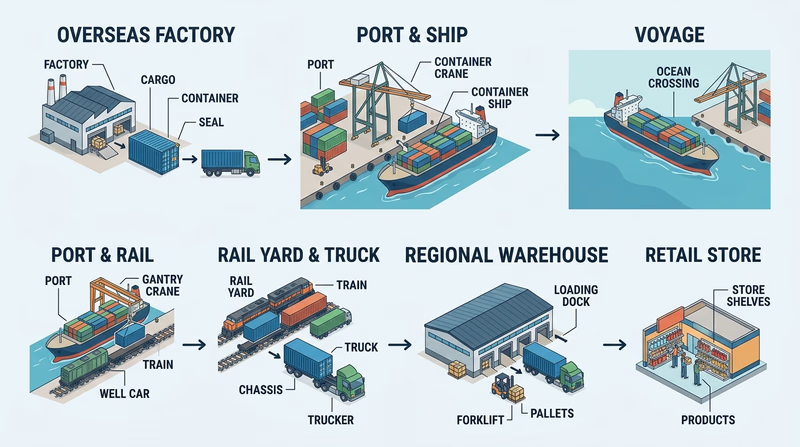
Now you have a big-picture view of how trucking supports modern life. Next, you will look closer to home and find the major truck lines that serve your own community.
Req 1 — Truck Lines in Your Town
The trucks you see on the highway are only part of the story. Your town is probably served by a mix of national carriers, regional freight companies, package delivery services, local construction haulers, fuel distributors, food-service fleets, and specialized carriers. This requirement is really about learning who connects your community to the wider freight network.
Start by deciding what counts as a major truck line in your area. In most towns, that means companies that have terminals, regular routes, delivery yards, or a strong visible presence. A small town may be served mostly by regional carriers and parcel companies. A larger city may have many national less-than-truckload carriers, dedicated contract fleets, and intermodal drayage companies.
How to Build Your List
A good list does not have to be perfect, but it should be thoughtful. Aim for carriers that clearly provide regular freight service near you.
Finding truck lines
Use more than one source so your list is based on evidence- Look for terminals or yards in your town or nearby industrial areas.
- Notice company names on trailers, straight trucks, and delivery vans you see often.
- Check local business parks, warehouse districts, and freight corridors.
- Ask an adult, a school transportation contact, or a local business that receives shipments which carriers they use.
- Keep track of whether each company seems national, regional, or local.
One smart way to organize your answer is to make a short table in your notes with three columns: company name, evidence that it serves your town, and type of service. That helps you show your counselor that you did more than guess from a passing truck on the road.
What Kinds of Carriers Might You Find?
Your town may be served by several different categories of trucking companies:
- Package carriers move small shipments and home deliveries.
- LTL carriers combine freight from many shippers in one trailer.
- Full truckload carriers haul large shipments for one customer at a time.
- Specialized carriers move fuel, food, building materials, cars, heavy equipment, or refrigerated freight.
- Local service fleets may belong to a grocery chain, utility company, beverage distributor, or construction supplier.
Official Resource
Search Trucking Companies - Find Carriers By City And State Search carriers by city and state to identify trucking companies that operate near your town and compare the kinds of service they provide. Link: Search Trucking Companies - Find Carriers By City And State — https://www.quicktransportsolutions.com/quickfreight/loadboard/carrier-searchby-citystate.phpHow to Talk About Your Results
When you share your list with your counselor, do more than read off names. Explain what each company seems to do.
For example, one carrier might handle parcel deliveries, another might serve local stores with palletized freight, and another might haul fuel or construction materials. If you can connect a company to a visible part of daily life in your town, your answer becomes much stronger.
This local list will help you think bigger in the next requirement. Once you know which companies serve your town, the next step is understanding how trucking fits into commerce and the supply chain.
Req 2 — How Freight Moves
This requirement connects three ideas that belong together: why trucking matters to commerce, where trucks fit in the supply chain, and how a shipment can move from another country all the way to a store in the United States. Think of it as zooming from the big picture to one specific freight trip.
- 2a explains why trucking matters to commerce.
- 2b shows where trucks fit into a business’s supply chain.
- 2c asks you to map a real freight journey from overseas to a retailer.
Requirement 2a
Truck transportation is one of the main ways commerce happens in daily life. Commerce is more than buying and selling. It includes the movement of goods, funds, and information. Trucks touch all three.
- Goods move when trucks carry products from farms, factories, ports, and warehouses to stores and customers.
- Funds move because every truck trip is tied to payment. Someone is paying for the freight, the fuel, the driver’s time, the warehouse work, and the goods themselves.
- Information moves through dispatch messages, shipment tracking, bills of lading, invoices, delivery confirmations, and inventory systems.
A store cannot sell what has not arrived. A factory cannot keep building products if parts do not show up. A hospital cannot restock supplies if deliveries stop. That is why trucking plays such a central role in commerce: it turns plans and purchases into actual delivered goods.
🎬 Video: 10 Advantages of Road Transport — https://youtu.be/j4EfFO-MAoY
Requirement 2b
A supply chain is the full path goods take from raw materials to the final customer. Trucks fit into almost every stage of that path because they are flexible. They can go where trains, ships, and planes cannot: directly to farms, factories, warehouses, loading docks, and stores.
Here is one simple supply chain example for a retailer:
- A factory makes the product.
- A truck carries it to a port, rail yard, or warehouse.
- Another truck moves it to a regional distribution center.
- A local delivery truck takes it to the store.
- Sometimes a final van or straight truck takes it to a home or job site.
A manufacturer may depend on trucks to bring in parts and ship out finished products. An importer may use trucks to move containers from a seaport to a warehouse. A wholesaler may use trucks to distribute pallets of goods to many stores. A retailer may use trucks for daily restocking so shelves do not go empty.
Where trucks fit in the supply chain
Look for these roles when explaining your answer- Pickup from a factory, farm, or supplier.
- Transfer to a warehouse, rail yard, or port.
- Delivery from a distribution center to a store.
- Return of damaged goods, packaging, or reusable containers.
- Fast replacement shipments when a store runs low on an item.
🎬 Video: Transportation & Logistics Industry Overview - Introduction — https://youtu.be/kMm-13EdnqA
🎬 Video: How Does Trucking Fit Into the Supply Chain? — https://youtu.be/6ScpuV1aStM
Requirement 2c
This part asks you to turn a supply chain into a clear step-by-step route. Your map does not need to be artistic. It needs to show the sequence of the shipment and the points where responsibility changes.
A strong answer usually includes these stages:
- Factory overseas — Goods are manufactured and packaged.
- Origin port or inland transfer point — The shipment is loaded into a container.
- Ocean voyage — The container travels by ship to the United States.
- U.S. port — The shipment is unloaded, inspected if needed, and released.
- Drayage or rail movement — A truck or rail service moves the container inland.
- Warehouse or distribution center — Goods are sorted, stored, or repacked.
- Retail delivery — A truck takes the freight to the store.
- Store shelf — The product is stocked for customers.
🎬 Video: Global Supply Chain Management Explained: Key Players, Risks & Incoterms — https://youtu.be/fdg9nhmZuJw
When you explain this page to your counselor, connect all three parts. Commerce needs goods, funds, and information to move. Supply chains organize that movement. Trucks are the part of the system that most often handles pickup, transfer, and final delivery.
Now that you understand how freight moves through commerce and the supply chain, the next step is to compare the engines that power many of those trucks.
Req 3 — Gasoline vs. Diesel
A truck engine has to do hard work: move heavy weight, climb hills, pull away from stops, and keep running for long hours. That is why many trucks use diesel engines, while some lighter trucks use gasoline engines. Both are internal combustion engines, which means they create power by burning fuel inside the engine. The big difference is how they do it and what jobs they are best suited for.
How They Work
A gasoline engine mixes fuel with air, then uses a spark plug to ignite that mixture. This design is common in passenger cars, pickups, and some lighter-duty trucks.
A diesel engine compresses air much more tightly. The air gets hot from that compression, and then diesel fuel is injected into the cylinder. The heat of the compressed air ignites the fuel. Diesel engines usually create more torque, which is the turning force that helps a truck move heavy loads.
Why Diesel Is So Common in Trucks
Heavy trucks often need strong pulling power and long engine life. Diesel engines are good at both.
Advantages of diesel engines
Why many larger trucks use diesel power- Higher torque for pulling heavy freight.
- Better fuel efficiency on long trips.
- Strong performance under heavy loads.
- Often built for long service life when maintained well.
- Common in long-haul and vocational trucks, so support and training are widespread.
Diesel engines also tend to perform well when a truck spends long periods at highway speeds or hauls heavy cargo day after day. That makes them a strong match for semitrucks, dump trucks, and other work vehicles.
Where Gasoline Still Makes Sense
Gasoline engines still have important advantages, especially for lighter trucks and fleets that do not need heavy towing power every day.
Advantages of gasoline engines
Why some trucks still use gas engines- Lower purchase cost in many cases.
- Quieter and smoother operation.
- Easier cold-weather starting in some situations.
- Good fit for lighter-duty trucks and shorter routes.
- Maintenance and fueling may be simpler for smaller fleets.
For example, a local delivery company using smaller box trucks may choose gasoline engines because the loads are lighter and the routes are shorter. A construction fleet hauling heavy materials all day may prefer diesel for its pulling power.
🎬 Video: Diesel vs. Gasoline Engines: Key Differences Explained — https://youtu.be/3G9x6U3VkwQ
A Simple Way to Compare Them
Think of the choice this way:
- Gasoline is often better for lighter, less demanding truck work.
- Diesel is often better for heavier, longer, and more demanding truck work.
Neither engine is “best” in every situation. The better engine depends on the job, the weight of the load, the distance traveled, fuel costs, and how the fleet will be maintained.
That leads naturally into the next requirement. Engines matter, but safe trucking also depends on maintenance, dispatch, rules, and people working together at a terminal.
Req 4 — Inside a Truck Terminal
A truck terminal is where freight, equipment, drivers, maintenance staff, and dispatch all come together. This requirement works best if you treat your visit like a field study. Bring a notebook, pay attention to safety rules, and ask clear questions so you can explain what you learned later.
Requirement 4a
A trucking company’s maintenance program is one of its biggest safety tools. Safe fleets do not wait for breakdowns. They use preventive maintenance, which means inspecting and servicing trucks on a planned schedule.
Look for answers to questions like these:
- How often are trucks inspected?
- What items are checked most often?
- How are repairs tracked?
- What happens if a driver reports a problem before a trip?
A strong maintenance program usually includes tire checks, brake inspections, fluid checks, lighting repairs, steering and suspension checks, trailer inspections, and regular recordkeeping. Drivers also help by doing pre-trip and post-trip inspections and reporting defects quickly.
🎬 Video: How To Properly Maintain Fleets? — https://youtu.be/bQcm9irqKIk
🎬 Video: How Trucking Companies Manage Fleet Maintenance Effectively | Part 1 — https://youtu.be/7dXo-RlPc8A
🎬 Video: How Trucking Companies Manage Fleet Maintenance Effectively | Part 2 — https://youtu.be/tGrxcFCukJs
Requirement 4b
Dispatchers help keep drivers informed, legal, and on schedule. They may use phones, radios, satellite systems, messaging apps, onboard computers, and fleet-management software. Their communication is not just about asking, “Where are you?” It also includes weather updates, routing changes, pickup instructions, delay notices, breakdown help, and safety alerts.
Good dispatcher communication is clear and timely. Drivers need accurate information about delivery times, traffic conditions, customer requirements, and rest breaks. Dispatchers also need updates from drivers about delays, damage, mechanical issues, or unsafe conditions.
🎬 Video: Communication with Dispatch — https://youtu.be/Pv9-ZKoWNww
Requirement 4c
The pamphlet’s safety section makes the driver’s first priority very clear: safety comes before speed, convenience, or schedule pressure. A professional driver has to protect the truck, the cargo, and everyone else on the road.
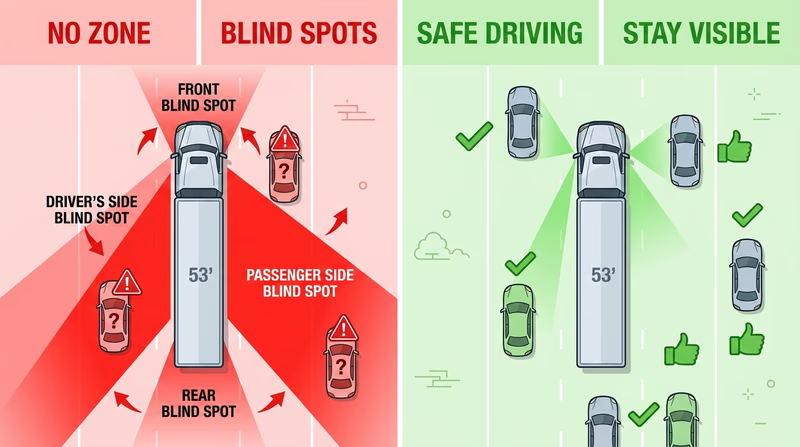
Here are five strong safe-driving rules you can discuss with your counselor:
- Scan constantly for hazards ahead, beside the truck, and behind it.
- Signal intentions early so other drivers know when the truck will slow, stop, or change lanes.
- Adjust speed for road conditions such as rain, ice, traffic, or poor visibility.
- Always wear a safety belt.
- Keep a safe following distance because heavy trucks need much more room to stop.
The pamphlet also highlights two more major safety ideas: never exceed the speed limit and stay out of blind-spot situations whenever possible. Safe trucking depends on alertness, preparation, and predictability.
🎬 Video: Top 6 Safety Tips for Truck Drivers — https://youtu.be/poVtx0v1TG4
🎬 Video: Essential Safety Tips, Every Female Trucker Needs to Stay Safe — https://youtu.be/aQi1QlMQv4Q
Requirement 4d
The driver log is a safety record, not just paperwork. The pamphlet explains that every interstate driver must complete a driver’s log for each day worked so hours-of-service rules can be followed. It says the daily log shows the driver’s name, the date, and the number of miles driven that day, and that drivers keep a logbook containing all their daily logs.
In practice, a driver log may also show duty status changes such as driving, on duty but not driving, off duty, and sleeper berth time. Modern fleets often use electronic logging devices, but the goal is the same: create a record that shows whether the driver stayed within the legal limits.
How to Fill Out a Logbook for CDL Drivers Use this guide to see the kinds of entries drivers record and how log information supports legal and safe operations. Link: How to Fill Out a Logbook for CDL Drivers — https://www.safetyvideos.com/how-to-fill-out-a-logbook-for-cdl-driversRequirement 4e
Federal regulations exist because trucking affects everyone on the road. The pamphlet points to the U.S. Department of Transportation and several agencies under it that directly affect trucking safety.
Important examples include:
- Department of Transportation (DOT): Sets broad transportation policy and safety rules.
- Federal Motor Carrier Safety Administration (FMCSA): Enforces trucking safety regulations and works to prevent crashes, injuries, and deaths.
- Federal Highway Administration (FHWA): Helps improve the nation’s highways.
- National Highway Traffic Safety Administration (NHTSA): Sets and enforces safety standards for motor vehicles and equipment.
- Pipeline and Hazardous Materials Safety Administration (PHMSA): Regulates safe transportation and packaging of hazardous materials.
The pamphlet also describes hours-of-service rules. It says a driver may not drive more than 11 hours in a day, may not work more than 14 straight hours in a day, must have 10 straight hours off each day, and cannot work more than 60 hours in a seven-day period. These rules are meant to reduce fatigue and keep tired drivers off the road.
Federal Motor Carrier Safety Administration (FMCSA) - Regulations Overview Review the main federal trucking regulations and agency guidance that support driver, vehicle, and roadway safety. Link: Federal Motor Carrier Safety Administration (FMCSA) - Regulations Overview — https://www.fmcsa.dot.gov/regulations🎬 Video: Federal Safety Regulations Limit a Long-Haul Truck Driver's Time on the Road — https://youtube.com/shorts/aHI1-vEt2qE
🎬 Video: Federal Regulations Every Truck Driver Should Know! — https://youtube.com/shorts/SpmOiaa64LQ
By the end of your terminal visit, you should be able to explain how maintenance, dispatch, safety habits, logs, and regulations all work together. That is a perfect bridge to the next requirement, which looks at how a trucking company is organized behind the scenes.
Req 5 — Company Departments and Jobs
A trucking company may look simple from the highway, but behind every truck is a network of people doing different jobs. This requirement asks you to understand both the departments that keep the company running and the positions people hold inside those departments.
- 5a is about the company’s organization.
- 5b is about individual jobs inside that organization.
Requirement 5a
Not every trucking company has the exact same structure, but most have several core departments.
Common trucking company departments
These are the areas most fleets need in some form- Operations or dispatch: Assigns loads, communicates with drivers, and keeps freight on schedule.
- Safety and compliance: Makes sure the company follows regulations, driver rules, and accident-prevention procedures.
- Maintenance: Inspects, services, and repairs trucks and trailers.
- Sales or customer service: Works with shippers, handles quotes, and solves delivery problems.
- Billing or accounting: Processes freight charges, payroll, fuel costs, and claims.
- Human resources or recruiting: Hires drivers and office staff and helps with training and records.
- Warehouse or dock operations: Loads, unloads, sorts, and stages freight.
In a small company, one person may do several of these jobs. In a large carrier, each department may have many employees and specialized managers. The important idea is that trucking is a team effort. Drivers are highly visible, but they rely on many people behind the scenes.
Requirement 5b
You can choose many different positions, but it helps to pick jobs from different parts of the company so your answer shows the full picture. Here are five strong examples:
Truck Driver
Moves freight safely from pickup to delivery. Drivers inspect equipment, manage time, follow safety rules, communicate with dispatch, and protect the cargo.
Dispatcher
Matches drivers with loads, updates routes and schedules, shares customer instructions, and helps solve problems on the road.
Fleet Mechanic or Technician
Inspects, maintains, and repairs trucks and trailers so they stay safe and reliable.
Safety Manager
Helps the company follow regulations, reviews incidents, supports training, and monitors compliance with driver and equipment rules.
Dockworker or Warehouse Associate
Loads and unloads freight, verifies paperwork, stages shipments, and helps keep cargo moving accurately through the terminal.
Other good choices might include recruiter, customer-service representative, billing specialist, load planner, terminal manager, logistics coordinator, and owner-operator.
14 Jobs in the Trucking Industry Other Than Driving Use this overview to see how many important trucking careers exist beyond the driver seat and compare different roles in the industry. Link: 14 Jobs in the Trucking Industry Other Than Driving — https://www.bestyetexpresstrucking.com/jobs-in-the-trucking-industry/?utm_source=chatgpt.comUnderstanding company structure makes the next requirement easier. Once you know who does the work inside a trucking company, you can better understand the government agencies that regulate and support the industry from the outside.
Req 6 — Government Agencies and Their Roles
Trucking is a private industry, but it operates on public roads and affects public safety every day. That is why government agencies help set rules, inspect equipment, improve highways, and enforce the law. The truck transportation pamphlet points to several agencies under or connected to the U.S. Department of Transportation that directly affect trucking.
Here are five strong examples you can use.
Five Key Agencies
Department of Transportation (DOT)
The DOT is the broad federal department that plans and coordinates transportation policy and projects. It also sets safety rules for major forms of transportation. In trucking, it acts as the umbrella under which several specialized agencies operate.
Federal Motor Carrier Safety Administration (FMCSA)
FMCSA focuses directly on commercial motor vehicle safety. Its mission is to reduce crashes, injuries, and deaths involving trucks and buses. FMCSA enforces many of the safety regulations that drivers and carriers must follow.
Federal Highway Administration (FHWA)
FHWA helps improve and maintain the nation’s highways. Trucking depends on safe, efficient roads, bridges, and freight corridors, so this agency matters even though it does not manage daily trucking operations.
National Highway Traffic Safety Administration (NHTSA)
NHTSA sets and enforces safety standards for motor vehicles and equipment. That includes safety performance standards that affect trucks, trailers, and other highway vehicles.
Pipeline and Hazardous Materials Safety Administration (PHMSA)
PHMSA regulates the safe transportation and packaging of hazardous materials. This matters when trucks move fuel, chemicals, or other dangerous cargo that needs special labels, containers, and handling rules.
The pamphlet also mentions the Surface Transportation Board, plus state public utility commissions, state motor vehicle departments, and police agencies. Those are also worth knowing because trucking regulation happens at more than one level.
How to describe an agency well
Go beyond naming it- Say what the agency is responsible for.
- Explain how its work affects trucking safety or operations.
- Give a real example, such as rules, road safety, inspections, or hazardous cargo.
Knowing the agencies helps you understand the rules of the industry. Next, you will shift from regulation back to equipment and look at the different kinds of trucks and the jobs they are built to do.
Req 7 — Trucks and the Work They Do
The trucking industry uses many truck designs because freight comes in many forms. A truck built for milk, gasoline, or frozen food will not look or work the same as one hauling lumber or furniture. This requirement is about matching the truck type to the service it provides.
Here are five strong examples.
Five Common Truck Types
Tractor-Trailer
This is the classic semitruck: a tractor pulling a trailer. It is used for long-haul freight, regional deliveries, and large-volume shipping. A tractor-trailer can move palletized goods, packaged products, retail freight, and many other types of cargo.
Box Truck or Straight Truck
A box truck has the cargo area attached directly to the truck frame. It is often used for local deliveries, moving services, route sales, and city freight where a smaller vehicle is easier to handle.
Tanker Truck
A tanker carries liquids or gases such as fuel, milk, chemicals, or water. Its service is specialized because the cargo can shift while the truck moves, and some loads require strict safety rules.
Flatbed Truck
A flatbed has an open trailer with no fixed sides or roof. It is used for cargo that is large, heavy, or awkwardly shaped, such as steel beams, lumber, machinery, or construction equipment.
Refrigerated Truck
A refrigerated truck, often called a reefer, carries cargo that must stay cold or frozen. Its service is essential for food, medicine, flowers, and other temperature-sensitive goods.
Other good choices include dump trucks, car carriers, concrete mixers, tow trucks, garbage trucks, and intermodal chassis trucks.
How to explain each truck type
Use the same pattern each time- Name the truck type.
- Describe what makes it different from other trucks.
- Explain the kind of freight or job it handles.
- Give a real example of where you might see it.
🎬 Video: Different Types of Trucks and Their Uses — https://youtu.be/wMil4tzaOcU
Understanding truck types leads naturally into shipment planning. Once you know what kinds of trucks exist, you can make better decisions about how to prepare, compare, and insure a shipment.
Req 8 — Shipping 500 Pounds by Truck
This requirement puts you in the shipper’s role. You need to think through the whole process: how to prepare the freight, how to compare carriers, how to choose one, and how to protect the shipment if something goes wrong. The pamphlet explains that class rate systems, tariffs, bills of lading, and carrier insurance all matter when freight is moving.
Requirement 8a
Preparing the shipment well is one of the best ways to avoid delays and damage. For a 500-pound shipment, many shippers would use a pallet if the goods can be stacked safely. The freight should be packed so it can be moved by forklift, identified clearly, and protected from shifting during transit.
Key preparation steps include:
- package the goods securely,
- place them on a pallet if appropriate,
- shrink-wrap or band the load,
- label the shipment clearly,
- measure and weigh it accurately,
- and prepare the shipping paperwork.
If the cargo is fragile, bulky, or sensitive to moisture, your packaging needs to reflect that. Carriers can move freight efficiently, but they still need the shipper to prepare it correctly.
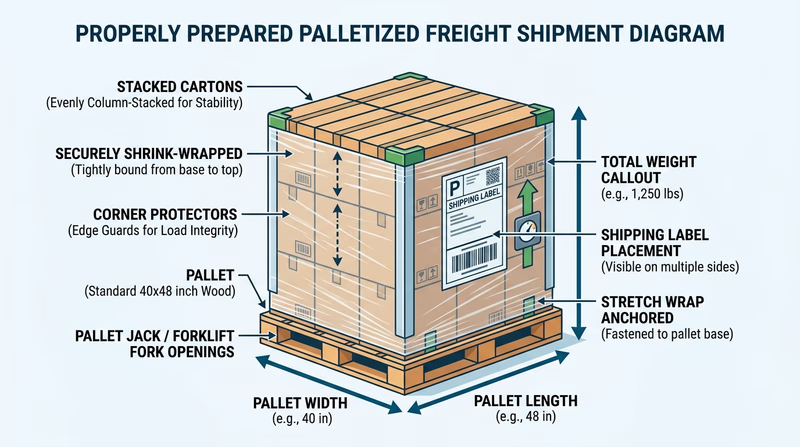
Shipment preparation checklist
What to get right before pickup- Confirm the weight is about 500 pounds.
- Measure length, width, and height accurately.
- Use sturdy packaging suited to the product.
- Prevent shifting with straps, wrap, blocking, or cushioning.
- Attach labels showing shipper, destination, and handling notes.
- Keep the paperwork with the shipment details ready.
🎬 Video: How to Prepare Freight for Shipping to Avoid Damages — https://youtu.be/xZqB2-jTows?si=AtPDbOqNDr8aWCLi
🎬 Video: How To Ship A Pallet: Preparing A Palletized LTL Freight Shipment Warehousing Tutorial — https://youtu.be/UEaNCBHQVZc?si=UrYkr7yNQgw-6Te3
🎬 Video: How to Package Freight for Shipping — https://youtu.be/478XjiLWg80?si=nplGRI0kARBcrtE9
Requirement 8b
The pamphlet says freight charges are found in tariffs, which are schedules of rates, and that almost every carrier has its own set of rates. That means comparison matters. For this shipment, you are not only looking for the lowest price. You also need the freight to arrive within three days.
A strong comparison should include at least these points:
- quoted price,
- estimated transit time,
- pickup availability,
- insurance coverage or limits,
- and the carrier’s ability to handle freight class 65.
You could organize your answer in a small comparison table with one row per carrier.
🎬 Video: Mastering Load Board Bookings: A Step-by-Step Guide to Efficient Load Booking — https://youtu.be/CGhqH0849cs
🎬 Video: Truck Dispatcher and Broker Call Simulation - Negotiation Scenario #1 — https://youtu.be/-yppE9CJ2Yk
Requirement 8c
After you compare three carriers, you need a reasoned choice. The best carrier is the one that meets the delivery deadline, handles the freight safely, and offers a fair overall value.
For example, a cheaper carrier is not really the best choice if it cannot deliver within three days. A very fast carrier may not be worth the extra price if the shipment is not urgent. Your explanation should show how you balanced cost, time, reliability, and service quality.
Requirement 8d
The pamphlet explains that reputable carriers carry insurance, but the level of protection can vary. That means a shipper should not assume every loss will automatically be covered in full. To insure the shipment, you would first ask what liability coverage the carrier already includes, then decide whether extra cargo insurance or declared-value coverage is needed.
Your explanation can include these points:
- find out the shipment’s value,
- check the carrier’s basic liability coverage,
- ask what kinds of damage or loss are excluded,
- decide whether to buy extra coverage,
- and keep records such as the bill of lading, shipment description, and photos if needed.
This requirement ties together many ideas from earlier pages: truck types, freight planning, rates, paperwork, and safety. Next, you will learn the vocabulary that makes those shipping conversations easier to understand.
Req 9 — Freight Terms You Should Know
Trucking has its own working vocabulary. If you understand these words, freight paperwork, terminal conversations, and shipment planning all make much more sense. Several of these definitions are given directly in the truck transportation pamphlet, and others become clearer when you connect them to real shipping situations.
Core Terms
Bill of Lading
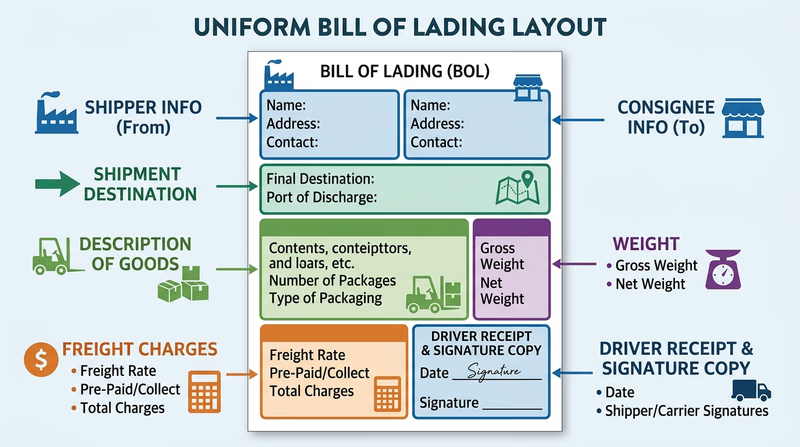
The pamphlet says a bill of lading is a shipping document that lists the goods in the shipment. It also explains that it tells the driver what is being picked up, where it is going, how much it weighs, and who is paying the freight charge. It acts as a receipt and an important record if a shipment is lost or damaged.
ETA
ETA means estimated time of arrival. It is the expected delivery time for a shipment, truck, or driver.
Logbook
The pamphlet defines a logbook as the book maintained by a truck driver showing the hours driven and the places the driver has been. Earlier in the pamphlet, the daily log is also tied to hours-of-service rules, which makes the logbook an important safety record.
Intermodal
The pamphlet defines intermodal as moving freight stowed in truck trailers or ocean containers via rail. More broadly, the idea is that freight uses more than one mode of transportation during one trip, often ship, rail, and truck.
Containers
A container is a large steel box, usually 20 to 40 feet long, used mainly in ocean freight transportation. Containers protect cargo from weather and make it easier to transfer freight between ships, trains, and trucks.
Pricing and People
Tariff
A tariff is a schedule of freight rates. The pamphlet explains that carriers use tariffs to list the charges that apply to different kinds of shipments.
Shipper
A shipper is the person or company that sends the freight. In other words, the shipper is handing the cargo over to the carrier for transportation.
Carrier
The pamphlet defines a carrier as a trucking company. The carrier is the business responsible for moving the freight.
Consignee
The pamphlet defines a consignee as the company receiving a shipment. If a store is waiting for a delivery, that store may be the consignee.
Movement Near Ports and Terminals
Drayage
Drayage is the short-distance movement of freight, often containers, between places such as a seaport, rail yard, warehouse, or trucking terminal. It is usually one link in a larger intermodal shipment.
Cartage
The pamphlet defines cartage as moving freight to and from an airport or seaport. It is another short-haul transfer term, often used for local freight handling connected to larger shipping systems.
A simple way to remember the terms
Group them by what they describe- Paperwork: bill of lading, tariff, logbook.
- People or companies: shipper, carrier, consignee.
- Equipment or methods: containers, intermodal.
- Timing and movement: ETA, drayage, cartage.
🎬 Video: Decoding Freight Abbreviations, Acronyms and Initialisms — https://youtu.be/0H0Q0VNLMu4?si=91WiYyuzDzCTWV2r
🎬 Video: What's That? Bill of Lading (BOL) — https://youtu.be/cSp3ryfdyFM?si=rPSekMOLuDdcueKb
🎬 Video: What's That? Intermodal & Multimodal — https://youtu.be/GSWxDr6mt8c?si=b1VrZKtrLyYmUMLm
🎬 Video: What's That? Container vs. Trailer — https://youtu.be/UlstPHRwhA8?si=DJa8Oa9evpW0wc7B
Now that you know the language of trucking, you are ready for the final requirement: exploring careers in this industry and deciding which ones sound interesting to you.
Req 10 — Exploring Trucking Careers
Truck transportation offers far more careers than most people realize. Some jobs are on the road, but many happen in offices, terminals, repair shops, warehouses, and planning centers. This requirement is your chance to look past the stereotype of “truck driver only” and see the wider career field.
Career Paths to Consider
Here are a few careers connected to this badge:
- truck driver
- dispatcher
- diesel technician
- fleet maintenance manager
- logistics coordinator
- safety manager
- warehouse supervisor
- load planner
- terminal manager
- freight broker
Each one uses different strengths. Some roles are hands-on and mechanical. Some focus on communication and scheduling. Others involve problem-solving, compliance, data, or customer service.
What to Research
For the one career you choose, organize your research around the exact areas named in the requirement.
Career research checklist
Cover each of these in your notes- Training and education needed: CDL school, technical training, college program, certifications, or on-the-job training.
- Costs: Tuition, licensing fees, tools, uniforms, or certification expenses.
- Job prospects: Is the field growing, stable, or very competitive?
- Salary: What is the pay range for beginners and experienced workers?
- Job duties: What does the person do in a normal day?
- Career advancement: What jobs could come next after gaining experience?
One Strong Example: Dispatcher
A dispatcher is a great research example because the job connects people, equipment, and time.
- Training and education: Often learned through company training, logistics courses, or industry experience.
- Costs: Usually lower than careers requiring a CDL or technical school, though training courses may still cost money.
- Job prospects: Dispatch and logistics work remains important wherever freight moves.
- Salary: Varies by region, company size, and experience.
- Job duties: Assign loads, communicate with drivers, solve delays, update customers, and keep freight moving on schedule.
- Advancement: Could lead to operations management, logistics planning, safety work, or terminal supervision.
You do not have to pick dispatcher. It is just one example of how to build a complete answer.
🎬 Video: What Career Opportunities are in Trucking? A LOT! — https://youtu.be/TJGXJwNyw8U?si=y5Qr4fDUORdf3lZY
🎬 Video: What Life Is Like for a Trucker on the Road | NewsNation — https://youtu.be/CiAbSIXwMSs?si=YT7HzX_P99DskdIn
🎬 Video: How to Become a Truck Dispatcher in 5 Steps? - Beginner Training — https://youtu.be/hbJqSgcQWj8?si=pwS-oHaKebXXdijD
🎬 Video: Logistics Coordinator Job Description — https://youtu.be/MbmX3ZAjHbw?si=ddep_jZOj9FLgQEC
🎬 Video: 5 Must Have Skills to earn $10,000 a month as a Truck Dispatcher — https://youtu.be/zVZ3RASiXoA?si=FhUizvScSxHerKZy
You have reached the end of the badge requirements. Next, go beyond the badge and explore how trucking connects to technology, infrastructure, and future opportunities.
Extended Learning
Congratulations
You have worked through the systems, people, equipment, safety rules, and careers that make truck transportation possible. That already puts you ahead of many people who see trucks every day but never think about the planning and teamwork behind them. If this badge sparked your curiosity, there is a lot more to explore.
How Freight Hubs Shape Communities
Freight does not move randomly. It gathers around ports, rail yards, interstates, warehouses, and industrial parks. Those places shape where businesses build, where jobs grow, and how goods move across a region.
A good next step is to notice the freight geography around you. Is your town near an interstate? A rail terminal? A port, airport, or distribution center? Those features affect what kinds of trucking companies are active nearby. They also shape traffic patterns, business development, and local jobs.
New Technology in Trucking
Modern trucking uses far more technology than many people expect. Fleets now rely on GPS routing, electronic logging devices, onboard diagnostics, collision-warning systems, backup cameras, and software that tracks equipment, loads, and delivery times.
Technology helps companies reduce wasted fuel, avoid delays, and improve safety. It also changes the kinds of careers available. A fleet may need people who understand data, telematics, maintenance software, and logistics systems as much as it needs people who can drive or repair trucks.
Why Infrastructure Matters
A truck’s job depends on infrastructure that most drivers never think about closely enough: bridges with enough weight capacity, roads with safe turning space, loading docks, rest areas, fueling locations, and truck parking. If any one of those is missing, freight movement becomes harder, slower, or less safe.
That is one reason trucking connects so strongly to public policy and engineering. Road design, bridge repair, and traffic planning all affect how well freight moves.
Careers That Blend Skills
Some of the most interesting trucking careers combine different kinds of knowledge. A safety manager uses regulations, communication, and data. A diesel technician uses mechanical skill and electronic diagnostics. A logistics coordinator combines planning, customer service, and problem-solving.
If you are trying to imagine your own future, look for roles that match what you enjoy doing now. If you like tools, systems, maps, schedules, teamwork, or machines, there may be a trucking-related career that fits you.
Real-World Experiences
Visit a Freight Corridor
Tour a Diesel Shop or Fleet Garage
Observe a Loading Dock
Interview a Logistics Professional
Organizations
National trade organization that shares industry information, safety efforts, and career pathways in trucking.
Organization: American Trucking Associations — https://www.trucking.org/
Federal agency focused on improving safety in commercial motor vehicle operations.
Organization: Federal Motor Carrier Safety Administration — https://www.fmcsa.dot.gov/
Industry group that supports smaller carriers with education, compliance help, and business resources.
Organization: National Association of Small Trucking Companies — https://www.nastc.com/
Organization that supports inspections, enforcement, and safety standards for commercial vehicles across North America.
Organization: Commercial Vehicle Safety Alliance — https://www.cvsa.org/