Req 4 — Inside a Truck Terminal
A truck terminal is where freight, equipment, drivers, maintenance staff, and dispatch all come together. This requirement works best if you treat your visit like a field study. Bring a notebook, pay attention to safety rules, and ask clear questions so you can explain what you learned later.
Requirement 4a
A trucking company’s maintenance program is one of its biggest safety tools. Safe fleets do not wait for breakdowns. They use preventive maintenance, which means inspecting and servicing trucks on a planned schedule.
Look for answers to questions like these:
- How often are trucks inspected?
- What items are checked most often?
- How are repairs tracked?
- What happens if a driver reports a problem before a trip?
A strong maintenance program usually includes tire checks, brake inspections, fluid checks, lighting repairs, steering and suspension checks, trailer inspections, and regular recordkeeping. Drivers also help by doing pre-trip and post-trip inspections and reporting defects quickly.
🎬 Video: How To Properly Maintain Fleets? — https://youtu.be/bQcm9irqKIk
🎬 Video: How Trucking Companies Manage Fleet Maintenance Effectively | Part 1 — https://youtu.be/7dXo-RlPc8A
🎬 Video: How Trucking Companies Manage Fleet Maintenance Effectively | Part 2 — https://youtu.be/tGrxcFCukJs
Requirement 4b
Dispatchers help keep drivers informed, legal, and on schedule. They may use phones, radios, satellite systems, messaging apps, onboard computers, and fleet-management software. Their communication is not just about asking, “Where are you?” It also includes weather updates, routing changes, pickup instructions, delay notices, breakdown help, and safety alerts.
Good dispatcher communication is clear and timely. Drivers need accurate information about delivery times, traffic conditions, customer requirements, and rest breaks. Dispatchers also need updates from drivers about delays, damage, mechanical issues, or unsafe conditions.
🎬 Video: Communication with Dispatch — https://youtu.be/Pv9-ZKoWNww
Requirement 4c
The pamphlet’s safety section makes the driver’s first priority very clear: safety comes before speed, convenience, or schedule pressure. A professional driver has to protect the truck, the cargo, and everyone else on the road.
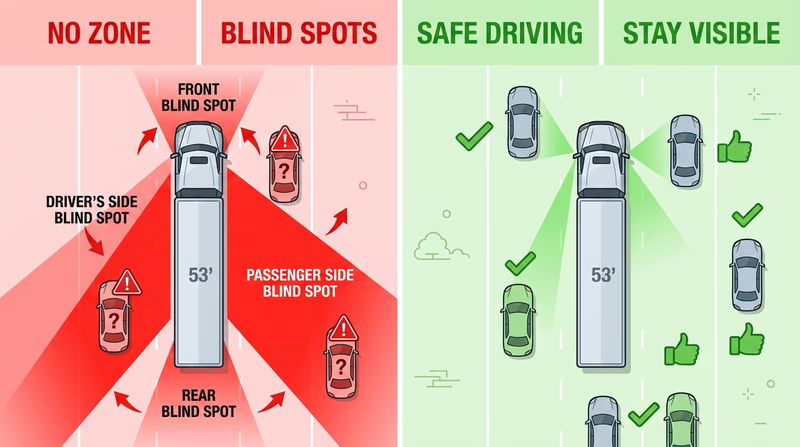
Here are five strong safe-driving rules you can discuss with your counselor:
- Scan constantly for hazards ahead, beside the truck, and behind it.
- Signal intentions early so other drivers know when the truck will slow, stop, or change lanes.
- Adjust speed for road conditions such as rain, ice, traffic, or poor visibility.
- Always wear a safety belt.
- Keep a safe following distance because heavy trucks need much more room to stop.
The pamphlet also highlights two more major safety ideas: never exceed the speed limit and stay out of blind-spot situations whenever possible. Safe trucking depends on alertness, preparation, and predictability.
🎬 Video: Top 6 Safety Tips for Truck Drivers — https://youtu.be/poVtx0v1TG4
🎬 Video: Essential Safety Tips, Every Female Trucker Needs to Stay Safe — https://youtu.be/aQi1QlMQv4Q
Requirement 4d
The driver log is a safety record, not just paperwork. The pamphlet explains that every interstate driver must complete a driver’s log for each day worked so hours-of-service rules can be followed. It says the daily log shows the driver’s name, the date, and the number of miles driven that day, and that drivers keep a logbook containing all their daily logs.
In practice, a driver log may also show duty status changes such as driving, on duty but not driving, off duty, and sleeper berth time. Modern fleets often use electronic logging devices, but the goal is the same: create a record that shows whether the driver stayed within the legal limits.
How to Fill Out a Logbook for CDL Drivers Use this guide to see the kinds of entries drivers record and how log information supports legal and safe operations. Link: How to Fill Out a Logbook for CDL Drivers — https://www.safetyvideos.com/how-to-fill-out-a-logbook-for-cdl-driversRequirement 4e
Federal regulations exist because trucking affects everyone on the road. The pamphlet points to the U.S. Department of Transportation and several agencies under it that directly affect trucking safety.
Important examples include:
- Department of Transportation (DOT): Sets broad transportation policy and safety rules.
- Federal Motor Carrier Safety Administration (FMCSA): Enforces trucking safety regulations and works to prevent crashes, injuries, and deaths.
- Federal Highway Administration (FHWA): Helps improve the nation’s highways.
- National Highway Traffic Safety Administration (NHTSA): Sets and enforces safety standards for motor vehicles and equipment.
- Pipeline and Hazardous Materials Safety Administration (PHMSA): Regulates safe transportation and packaging of hazardous materials.
The pamphlet also describes hours-of-service rules. It says a driver may not drive more than 11 hours in a day, may not work more than 14 straight hours in a day, must have 10 straight hours off each day, and cannot work more than 60 hours in a seven-day period. These rules are meant to reduce fatigue and keep tired drivers off the road.
Federal Motor Carrier Safety Administration (FMCSA) - Regulations Overview Review the main federal trucking regulations and agency guidance that support driver, vehicle, and roadway safety. Link: Federal Motor Carrier Safety Administration (FMCSA) - Regulations Overview — https://www.fmcsa.dot.gov/regulations🎬 Video: Federal Safety Regulations Limit a Long-Haul Truck Driver's Time on the Road — https://youtube.com/shorts/aHI1-vEt2qE
🎬 Video: Federal Regulations Every Truck Driver Should Know! — https://youtube.com/shorts/SpmOiaa64LQ
By the end of your terminal visit, you should be able to explain how maintenance, dispatch, safety habits, logs, and regulations all work together. That is a perfect bridge to the next requirement, which looks at how a trucking company is organized behind the scenes.