Req 8 — Shipping 500 Pounds by Truck
This requirement puts you in the shipper’s role. You need to think through the whole process: how to prepare the freight, how to compare carriers, how to choose one, and how to protect the shipment if something goes wrong. The pamphlet explains that class rate systems, tariffs, bills of lading, and carrier insurance all matter when freight is moving.
Requirement 8a
Preparing the shipment well is one of the best ways to avoid delays and damage. For a 500-pound shipment, many shippers would use a pallet if the goods can be stacked safely. The freight should be packed so it can be moved by forklift, identified clearly, and protected from shifting during transit.
Key preparation steps include:
- package the goods securely,
- place them on a pallet if appropriate,
- shrink-wrap or band the load,
- label the shipment clearly,
- measure and weigh it accurately,
- and prepare the shipping paperwork.
If the cargo is fragile, bulky, or sensitive to moisture, your packaging needs to reflect that. Carriers can move freight efficiently, but they still need the shipper to prepare it correctly.
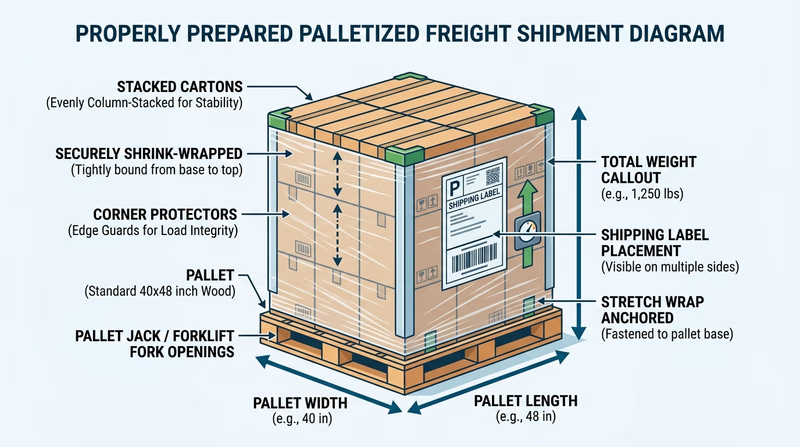
Shipment preparation checklist
What to get right before pickup
- Confirm the weight is about 500 pounds.
- Measure length, width, and height accurately.
- Use sturdy packaging suited to the product.
- Prevent shifting with straps, wrap, blocking, or cushioning.
- Attach labels showing shipper, destination, and handling notes.
- Keep the paperwork with the shipment details ready.
🎬 Video: How to Prepare Freight for Shipping to Avoid Damages — https://youtu.be/xZqB2-jTows?si=AtPDbOqNDr8aWCLi
🎬 Video: How To Ship A Pallet: Preparing A Palletized LTL Freight Shipment Warehousing Tutorial — https://youtu.be/UEaNCBHQVZc?si=UrYkr7yNQgw-6Te3
🎬 Video: How to Package Freight for Shipping — https://youtu.be/478XjiLWg80?si=nplGRI0kARBcrtE9
Requirement 8b
The pamphlet says freight charges are found in tariffs, which are schedules of rates, and that almost every carrier has its own set of rates. That means comparison matters. For this shipment, you are not only looking for the lowest price. You also need the freight to arrive within three days.
A strong comparison should include at least these points:
- quoted price,
- estimated transit time,
- pickup availability,
- insurance coverage or limits,
- and the carrier’s ability to handle freight class 65.
You could organize your answer in a small comparison table with one row per carrier.
🎬 Video: Mastering Load Board Bookings: A Step-by-Step Guide to Efficient Load Booking — https://youtu.be/CGhqH0849cs
🎬 Video: Truck Dispatcher and Broker Call Simulation - Negotiation Scenario #1 — https://youtu.be/-yppE9CJ2Yk
Requirement 8c
After you compare three carriers, you need a reasoned choice. The best carrier is the one that meets the delivery deadline, handles the freight safely, and offers a fair overall value.
For example, a cheaper carrier is not really the best choice if it cannot deliver within three days. A very fast carrier may not be worth the extra price if the shipment is not urgent. Your explanation should show how you balanced cost, time, reliability, and service quality.
Requirement 8d
The pamphlet explains that reputable carriers carry insurance, but the level of protection can vary. That means a shipper should not assume every loss will automatically be covered in full. To insure the shipment, you would first ask what liability coverage the carrier already includes, then decide whether extra cargo insurance or declared-value coverage is needed.
Your explanation can include these points:
- find out the shipment’s value,
- check the carrier’s basic liability coverage,
- ask what kinds of damage or loss are excluded,
- decide whether to buy extra coverage,
- and keep records such as the bill of lading, shipment description, and photos if needed.
This requirement ties together many ideas from earlier pages: truck types, freight planning, rates, paperwork, and safety. Next, you will learn the vocabulary that makes those shipping conversations easier to understand.