Req 9 — Freight Terms You Should Know
Trucking has its own working vocabulary. If you understand these words, freight paperwork, terminal conversations, and shipment planning all make much more sense. Several of these definitions are given directly in the truck transportation pamphlet, and others become clearer when you connect them to real shipping situations.
Core Terms
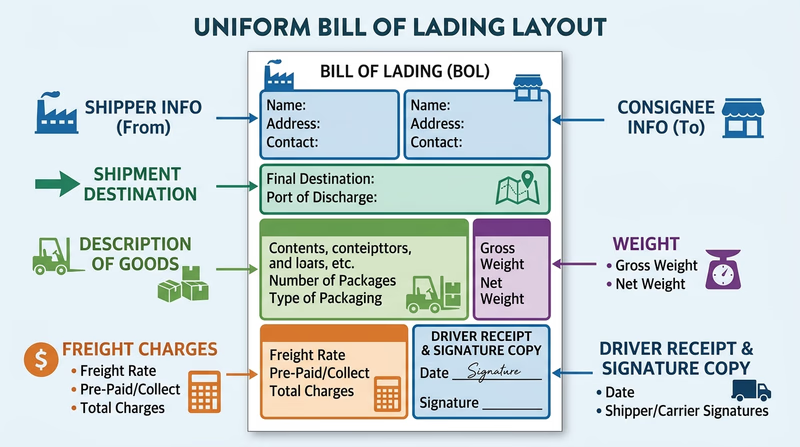
Bill of Lading
The pamphlet says a bill of lading is a shipping document that lists the goods in the shipment. It also explains that it tells the driver what is being picked up, where it is going, how much it weighs, and who is paying the freight charge. It acts as a receipt and an important record if a shipment is lost or damaged.
ETA
ETA means estimated time of arrival. It is the expected delivery time for a shipment, truck, or driver.
Logbook
The pamphlet defines a logbook as the book maintained by a truck driver showing the hours driven and the places the driver has been. Earlier in the pamphlet, the daily log is also tied to hours-of-service rules, which makes the logbook an important safety record.
Intermodal
The pamphlet defines intermodal as moving freight stowed in truck trailers or ocean containers via rail. More broadly, the idea is that freight uses more than one mode of transportation during one trip, often ship, rail, and truck.
Containers
A container is a large steel box, usually 20 to 40 feet long, used mainly in ocean freight transportation. Containers protect cargo from weather and make it easier to transfer freight between ships, trains, and trucks.
Pricing and People
Tariff
A tariff is a schedule of freight rates. The pamphlet explains that carriers use tariffs to list the charges that apply to different kinds of shipments.
Shipper
A shipper is the person or company that sends the freight. In other words, the shipper is handing the cargo over to the carrier for transportation.
Carrier
The pamphlet defines a carrier as a trucking company. The carrier is the business responsible for moving the freight.
Consignee
The pamphlet defines a consignee as the company receiving a shipment. If a store is waiting for a delivery, that store may be the consignee.
Movement Near Ports and Terminals
Drayage
Drayage is the short-distance movement of freight, often containers, between places such as a seaport, rail yard, warehouse, or trucking terminal. It is usually one link in a larger intermodal shipment.
Cartage
The pamphlet defines cartage as moving freight to and from an airport or seaport. It is another short-haul transfer term, often used for local freight handling connected to larger shipping systems.
A simple way to remember the terms
Group them by what they describe
- Paperwork: bill of lading, tariff, logbook.
- People or companies: shipper, carrier, consignee.
- Equipment or methods: containers, intermodal.
- Timing and movement: ETA, drayage, cartage.
🎬 Video: Decoding Freight Abbreviations, Acronyms and Initialisms — https://youtu.be/0H0Q0VNLMu4?si=91WiYyuzDzCTWV2r
🎬 Video: What's That? Bill of Lading (BOL) — https://youtu.be/cSp3ryfdyFM?si=rPSekMOLuDdcueKb
🎬 Video: What's That? Intermodal & Multimodal — https://youtu.be/GSWxDr6mt8c?si=b1VrZKtrLyYmUMLm
🎬 Video: What's That? Container vs. Trailer — https://youtu.be/UlstPHRwhA8?si=DJa8Oa9evpW0wc7B
Now that you know the language of trucking, you are ready for the final requirement: exploring careers in this industry and deciding which ones sound interesting to you.