Veterinary Medicine Merit Badge — Complete Digital Resource Guide
https://merit-badge.university/merit-badges/veterinary-medicine/guide/
Introduction & Overview
Veterinary medicine is the science of keeping animals healthy, relieving suffering, and protecting the people who depend on them. A veterinarian might treat a puppy with an ear infection in the morning, advise a dairy farm before lunch, and help stop a disease outbreak before dinner. This badge matters because it shows you how animal care, public health, science, and service all connect.
Then and Now
Then
Long before modern clinics existed, people still depended on healthy animals for food, travel, farming, and protection. Early animal healers relied on practical experience, local remedies, and careful observation. As farming, cities, and trade grew, animal disease became a community problem, not just an individual one.
Now
Today, veterinary medicine combines biology, surgery, imaging, laboratory science, epidemiology, animal behavior, and communication skills. Veterinarians still treat individual animals, but they also protect food supplies, study diseases that can spread between animals and people, support wildlife recovery, and guide families through hard medical decisions.
Get Ready!
If you like animals, science, solving problems, and helping people, this badge gives you a real look at the profession. You do not need to know everything yet. You just need curiosity, good questions, and a willingness to look closely at how animals and humans affect each other.
Kinds of Veterinary Medicine
Companion animal practice
This is the kind of veterinary medicine most people know best. It focuses on pets such as dogs, cats, rabbits, and other small animals. These veterinarians do exams, vaccines, surgery, dental care, and emergency treatment while also helping owners make smart daily care choices.
Large animal and equine practice
Large-animal veterinarians may work with cattle, sheep, goats, pigs, or horses. Their patients often live on farms, ranches, or training facilities, so the veterinarian may travel to the animal instead of the other way around. This kind of work mixes medicine with business, agriculture, and herd management.
Exotic, wildlife, and marine care
Some veterinarians care for parrots, reptiles, zoo animals, marine mammals, fish, or injured wild animals. These fields often require special housing, special handling, and special knowledge because each species has its own body systems, behaviors, and risks.
Next Steps
Your first requirement looks at the biggest branches of clinical practice. As you read, notice how the job changes when the patient, setting, and human goals change.
Req 1 — Clinical Practice Settings
This requirement is an umbrella page. The main job is to compare how the same profession changes from one setting to another. A veterinarian always uses science, observation, communication, and problem-solving, but the daily work looks different depending on the species, the place, and the people involved. This page covers six major practice areas:
- 1a — Companion or small animal medicine, and equine medicine
- 1b — Food animal or large animal medicine
- 1c — Exotic animal medicine
- 1d — Marine animal medicine
- 1e — Poultry medicine
- 1f — Wildlife medicine and aquaculture medicine
Requirement 1a
Clinical roles in companion and equine practice
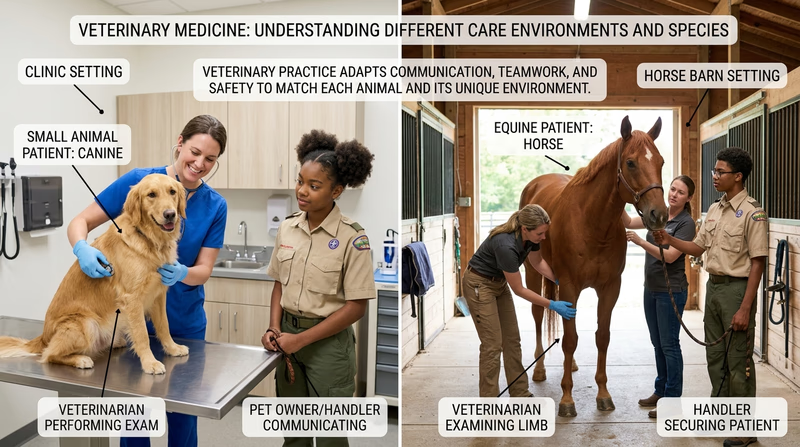
Companion-animal veterinarians care for pets that live closely with people, so they do much more than emergency treatment. They give vaccines, diagnose illness, perform surgery, manage chronic problems like diabetes or arthritis, help with nutrition and behavior, and guide owners through end-of-life decisions. Equine veterinarians do many of those same things for horses, but their work often happens at barns, ranches, tracks, or show grounds instead of inside a clinic.
What makes this setting different
In small-animal practice, the veterinarian often sees one patient at a time and explains choices directly to a family. In equine medicine, the veterinarian may work around a much larger animal, in a less controlled environment, and with owners who depend on the horse for sport, work, breeding, or recreation. That means good communication matters just as much as medical skill.
Roles You Could Mention
Key jobs in companion and equine practice- Preventive care: Vaccines, wellness exams, parasite control, dental care, and nutrition advice.
- Diagnosis and treatment: Finding the cause of limping, coughing, skin disease, colic, infections, or injuries.
- Surgery and procedures: Spay/neuter, wound repair, imaging, dental procedures, and emergency treatment.
- Owner education: Helping people understand daily care, training, housing, and when a problem needs fast attention.
Requirement 1b
Clinical roles in food-animal medicine
Food-animal veterinarians work with herds and flocks as well as individual animals. They may treat a single calf with pneumonia, but they also look at the bigger picture: housing, sanitation, breeding, nutrition, vaccination schedules, and disease patterns across the whole operation. Their goal is animal welfare and good production at the same time.
Why herd thinking matters
Large-animal medicine often asks, “What is affecting this whole group?” instead of only, “What is wrong with this one patient?” A veterinarian may track abortion storms in cattle, lameness in dairy cows, or respiratory disease in feedlot animals. They also advise producers on records, biosecurity, and how to prevent small problems from becoming expensive outbreaks.
Requirement 1c
Clinical roles in exotic practice
Exotic-animal veterinarians care for species such as birds, reptiles, amphibians, small mammals, and zoo animals. These patients cannot tell you what hurts, and many hide signs of illness until they are very sick. That means the veterinarian must pay close attention to behavior, appetite, droppings, temperature needs, enclosure setup, and species-specific anatomy.
What owners need from this veterinarian
A large part of exotic medicine is prevention through education. Many exotic pets become ill because their environment is wrong: the wrong temperature, wrong ultraviolet light, wrong humidity, wrong diet, or unsafe handling. A veterinarian in this field teaches owners how to build the right habitat as much as how to treat disease.
Requirement 1d
Clinical roles in marine medicine
Marine veterinarians may work with dolphins, seals, sea lions, manatees, sharks, reef fish, or large aquarium collections. Some help stranded wild animals. Others work in aquariums, rehabilitation centers, research facilities, or fisheries. Their patients live in water, so the veterinarian must think about water quality, filtration, salinity, temperature, and group behavior as part of every case.
Why environment is part of the patient
For marine mammals and fish, the habitat can be as important as the body. If the water chemistry is wrong, many animals can become stressed or sick at once. A marine veterinarian often works with trainers, aquarists, biologists, and rescue teams to solve health problems safely.
Requirement 1e
Clinical roles in poultry medicine
Poultry veterinarians work with chickens, turkeys, ducks, and other birds raised for eggs, meat, breeding, or conservation. In this field, veterinarians often think at flock level rather than bird level. They monitor disease, ventilation, feed, water systems, litter conditions, vaccination programs, and biosecurity.
Why prevention matters so much
Birds live close together in many poultry settings, so disease can spread fast. A poultry veterinarian helps spot trouble early, tests for infection, and makes plans to protect both animal welfare and the food supply. That means careful records and prevention are central parts of the job, not extra tasks.
Requirement 1f
Clinical roles in wildlife medicine
Wildlife veterinarians care for free-ranging animals, animals in rehabilitation, and species involved in conservation programs. They may treat injuries, investigate disease outbreaks, collect samples in the field, help with relocation or release decisions, and work with biologists on population health.
Clinical roles in aquaculture medicine
Aquaculture veterinarians focus on fish and other aquatic animals raised in controlled systems for food, stocking, or conservation. Their work may include checking fish behavior, growth, parasites, oxygen levels, water chemistry, nutrition, and disease prevention across ponds, tanks, or net pens.
What these fields share
Both wildlife and aquaculture medicine require thinking beyond one animal. The veterinarian has to consider habitat, population health, transport stress, public health, and ecosystem impact. That makes these fields a good bridge into Req 2, where you will look more closely at public-service and research roles.
AVMA — Veterinary Career Center A broad overview of veterinary career paths, including companion, equine, food-animal, public-health, and specialty settings. Link: AVMA — Veterinary Career Center — https://www.avma.org/resources-tools/careers/veterinary-career-centerBefore you move on, make sure you can explain not just where each veterinarian works, but how the goal of the job changes from pet care to herd health to wildlife, fish, and conservation work.
Req 2 — Public Service and Specialized Careers
Req 1 focused on clinical settings where veterinarians care directly for animals. This requirement shifts outward. These careers still depend on animal health, but they also protect communities, support national service, improve science, and shape public policy. This page covers five big areas:
- 2a — Public health medicine and zoonotic disease surveillance and control
- 2b — The military
- 2c — Food safety and inspection
- 2d — Laboratory animal medicine and research
- 2e — Teaching and government
Requirement 2a
Roles in public health medicine
Public-health veterinarians protect people by watching what is happening in animals, food systems, and the environment. They investigate outbreaks, track disease patterns, advise agencies, and help stop problems before they spread widely.
Roles in zoonotic disease surveillance and control
A zoonotic disease is one that can spread between animals and people. Rabies, some flu strains, salmonella, and West Nile virus are examples. Veterinarians in this field collect samples, interpret lab results, trace where exposure may have happened, and help design prevention plans.
CDC One Health The CDC explains how human, animal, and environmental health connect, especially when tracking zoonotic disease. Link: CDC One Health — https://www.cdc.gov/one-health/Requirement 2b
Roles in the military
Military veterinarians care for working animals such as dogs and horses, inspect food supplies, support public-health efforts, and help with research and readiness. They may serve on bases in the United States or overseas. Their patients can include patrol dogs, ceremonial horses, or animals involved in training and detection work.
Why this role is broader than pet medicine
In the military, a veterinarian may switch quickly between clinical medicine, leadership, inspection, and logistics. The mission is not only to keep one animal healthy. It is also to protect service members, support operations, and maintain safe food and animal programs.
Requirement 2c
Roles in food safety and inspection
Veterinarians in food safety watch for disease, contamination, and animal-welfare problems that could affect what people eat. They inspect animals before and after processing, monitor signs of illness, review sanitation systems, and help prevent unsafe products from reaching stores and homes.
What this veterinarian is really protecting
This field protects both animals and people. A veterinarian may never meet the family eating dinner that night, but their work helps make that dinner safer. They also help keep confidence in the food supply by catching problems early and enforcing standards.
Food-Safety Questions
What a veterinarian may be watching for- Are animals healthy before processing? Signs of disease matter.
- Is the facility sanitary? Clean equipment and safe handling reduce contamination risk.
- Are records complete? Good records help trace a problem back to its source.
- Could this issue affect the public? Even one missed problem can have wide consequences.
Requirement 2d
Roles in laboratory animal medicine
These veterinarians oversee the health and humane care of animals involved in research or teaching. They help design housing, enrichment, feeding, anesthesia, surgery support, and pain management. They also make sure animal care follows strict ethical and legal standards.
Roles in research
Some veterinarians are researchers themselves. They may study infectious disease, genetics, toxicology, cancer, nutrition, behavior, or new treatments. Their training across species makes them strong investigators when science needs both medical knowledge and animal-care expertise.
Requirement 2e
Roles in teaching
Veterinarians who teach may work at colleges, veterinary schools, technician programs, or extension services. They teach anatomy, surgery, pathology, animal handling, or public-health topics. Some still practice while teaching so students can connect classroom learning to real cases.
Roles in government
Government veterinarians work for city, state, tribal, or federal agencies. They may write regulations, inspect facilities, respond to outbreaks, oversee animal-import rules, support wildlife programs, or advise leaders during emergencies. In this role, communication and policy knowledge matter almost as much as medicine.
How these careers fit together
Teaching and government both multiply a veterinarian’s impact. Instead of helping one patient at a time, they help shape how many other people care for animals, make decisions, and protect the public.
USDA APHIS — Careers and Animal Health Work USDA Animal and Plant Health Inspection Service shows how veterinarians work in federal animal-health, wildlife, and regulatory roles. Link: USDA APHIS — Careers and Animal Health Work — https://www.aphis.usda.gov/You have now seen how veterinarians move from clinics into public-health, military, research, and policy work. Next, you will focus on the education path that prepares someone for those careers.
Req 3 — Becoming a Veterinarian
Wanting to work with animals is a good start, but veterinary medicine is also a science-heavy profession that asks you to keep learning for years. The training path is long because veterinarians need to understand anatomy, disease, surgery, pharmacology, communication, ethics, and public health across many species.
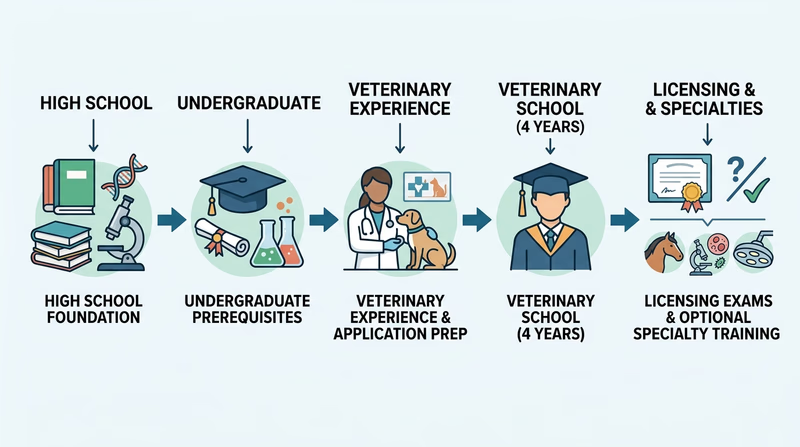
According to the Veterinary Medicine merit badge pamphlet, a doctorate in veterinary medicine usually means six to eight years of education after high school. That path usually looks like this:
- Build a strong high-school foundation in biology, chemistry, physics, math, writing, and communication.
- Complete undergraduate study at a college or university. Many students earn a science-focused bachelor’s degree, though the exact major can vary.
- Meet the prerequisites required by each veterinary college you want to apply to.
- Gain veterinary experience by volunteering or working in clinics, shelters, farms, ranches, or animal programs.
- Apply to veterinary school and complete four years of professional training leading to a D.V.M. or V.M.D. degree.
- Pass licensing exams before practicing.
What veterinary school looks like
The pamphlet describes the four professional-school years in stages:
- Years 1–2: Heavy classroom work in anatomy, physiology, microbiology, pathology, and other core sciences.
- Year 3: More direct work with medical and surgical treatment.
- Year 4: Clinical rotations with real patients in many settings, from small-animal hospitals to farm calls and exotic-animal care.
Common Application Priorities
What admissions committees usually want to see- Strong science coursework: Especially biology and chemistry.
- Solid grades and study habits: Veterinary school is academically demanding.
- Animal and veterinary experience: Time spent seeing what the job is really like.
- Communication and leadership: Veterinarians explain hard choices to people and work on teams.
- Persistence: This is a long path, so schools look for commitment.
About prerequisites
The pamphlet is clear on one important point: prerequisites vary from college to college. One school may expect more biology. Another may require statistics, public speaking, or biochemistry. Some schools may ask for standardized testing, while others may not. That means you should not assume every veterinary school wants exactly the same application package.
Finding the nearest veterinary medical college
This part of the requirement is meant to make the career path real. Some states have a veterinary college. Others do not. If your state does not, nearby regional schools may still be the closest option. A good answer includes:
- The name of the school
- Its city and state
- Whether it is public or private
- A few examples of the required or recommended courses
- Any notes about residency preferences, application deadlines, or animal-experience expectations
🎬 Video: What Major and Classes do I need to become a Veterinarian? — Dr. Jasmine Shanelle — https://www.youtube.com/watch?v=x26KiXFabvQ
Once you understand the veterinarian path, it helps to compare it with another key role on the care team. Next, you will look at veterinary technicians and how they support the work of a veterinarian every day.
Req 4 — Veterinary Technicians in Action
A veterinary clinic runs on teamwork. The veterinarian diagnoses, prescribes, performs surgery, and leads medical decisions, but trained technicians make that care possible by handling patients well, collecting information, running tests, preparing equipment, and watching for problems.
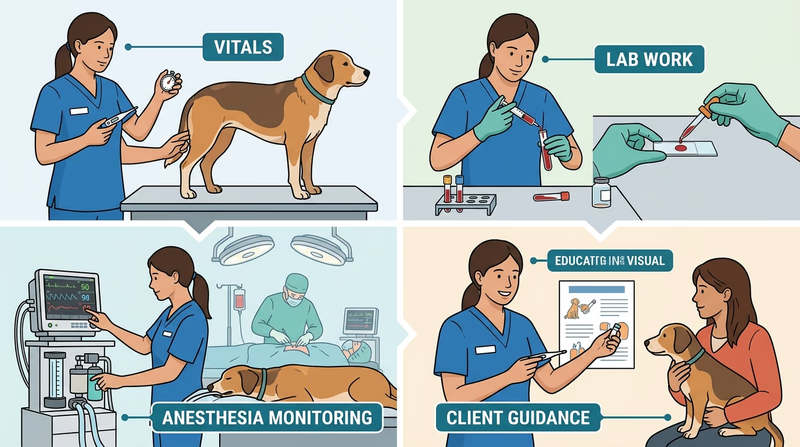
The merit badge pamphlet explains that registered veterinary technicians (R.V.T.s) or animal health technicians (A.H.T.s) perform many of the same kinds of support tasks that nurses perform in human medicine. They work under the supervision of a licensed veterinarian. They can assist with lab work, exams, anesthesia support, imaging, sample collection, patient care, and client education, but they do not diagnose disease, prescribe treatment, or perform surgery on their own.
Training required
The pamphlet says most accredited veterinary-technology programs lead to an associate’s degree after about two years of study. Some technicians complete a bachelor’s degree, which can open the door to more responsibility. Programs also include hands-on clinical training, and nearly every state requires passing a state and/or national exam before a technician can practice.
What Technician Training Includes
Common parts of an R.V.T. or A.H.T. program- Animal handling and restraint: Keeping patients and staff safe.
- Laboratory skills: Running blood, urine, and other diagnostic tests.
- Clinical procedures: Preparing patients, taking X-rays, monitoring anesthesia, and assisting with treatment.
- Communication: Explaining instructions clearly to pet owners or animal caretakers.
- Supervised practical experience: Real clinical work under trained professionals.
Finding a technician program near you
Just like veterinary schools, technician programs vary by state. Your counselor discussion should include one real training site in your state or the nearest one available. Look for:
- Whether the program is AVMA accredited
- What degree it awards
- Whether it prepares students for the Veterinary Technician National Exam (VTNE) or your state’s credentialing process
- What kind of hands-on clinical experience it includes
How a technician helps in three practice types
To answer the last part of the requirement well, choose three practice types from Req 1 and describe how the technician’s job changes in each one.
Companion animal practice
A technician may greet patients, record weight and vital signs, collect blood samples, run lab tests, take radiographs, place IV catheters, monitor anesthesia, recover patients after surgery, and explain home-care instructions. In this setting, calm animal handling and strong people skills are essential.
Equine or large-animal practice
A technician may prepare supplies for field visits, assist with restraint, collect samples, help with wound care, monitor treatment, and keep records. Because the animals are bigger and the work may happen in barns or outdoor settings, organization and safety awareness matter even more.
Exotic, marine, wildlife, or aquaculture settings
In these settings, the technician may help with specialized enclosures, water-quality checks, careful species-specific restraint, nutrition prep, sample handling, quarantine procedures, or rehabilitation support. The work is often detail-heavy because small environmental mistakes can become major health problems.
🎬 Video: Behind the Scenes as a Licensed Veterinary Technician — Cornell University College of Veterinary Medicine — https://www.youtube.com/watch?v=ytCu_rnC37E
Understanding the technician role helps you see how animal care happens as a team. Next, you will shift from careers and training to one of the most human parts of the profession: the bond between people and animals.
Req 5 — The Human-Animal Bond
When a family rushes a sick dog into a clinic, the veterinarian is not only treating an animal. They are also caring for a relationship that may involve love, trust, responsibility, grief, and hope. That relationship is the human-animal bond.
The merit badge pamphlet explains that the human-animal bond is more than simply being near an animal. It grows from the mutual benefit that people and animals gain from each other. For people, that can include companionship, security, exercise, routine, comfort, and emotional support. For animals, it includes food, shelter, health care, and protection.
What role does the veterinarian play?
A veterinarian helps strengthen that bond by keeping animals healthier and helping people care for them well. The pamphlet says a veterinarian does this by being a compassionate adviser across the animal’s lifetime. That includes:
- Providing quality medical care
- Teaching preventive care such as vaccines, parasite control, and nutrition
- Helping people choose a pet that fits their home and abilities
- Explaining hard medical choices honestly and kindly
- Supporting owners when an animal is aging, injured, or near the end of life
How Veterinarians Support the Bond
Ways medicine and communication work together- Prevention: Healthy pets are more able to live safely and comfortably with people.
- Education: Owners need guidance on food, behavior, exercise, housing, and warning signs.
- Trust: Families make better decisions when a veterinarian explains choices clearly.
- Compassion: Some of the most important veterinary moments happen during fear, pain, or grief.
Why this matters to people
The pamphlet highlights several ways the human-animal bond can affect human well-being. Studies have shown that interaction with animals may help lower stress, support emotional health, and even help some people recover after illness or surgery. That does not mean every animal is the right fit for every person, but it does show why veterinary care can affect whole households, not just pets.
Why this matters to animals
A strong bond should never mean treating an animal like a toy or ignoring its real needs. Good veterinarians help owners see animals as living beings with behavior, health, and welfare needs of their own. A person may love a pet deeply and still need help understanding proper training, exercise, enrichment, or preventive care.
🎬 Video: Exploring the human animal bond, with Maggie O’Haire, PhD — American Psychological Association — https://www.youtube.com/watch?v=M0PO5RNSA9M
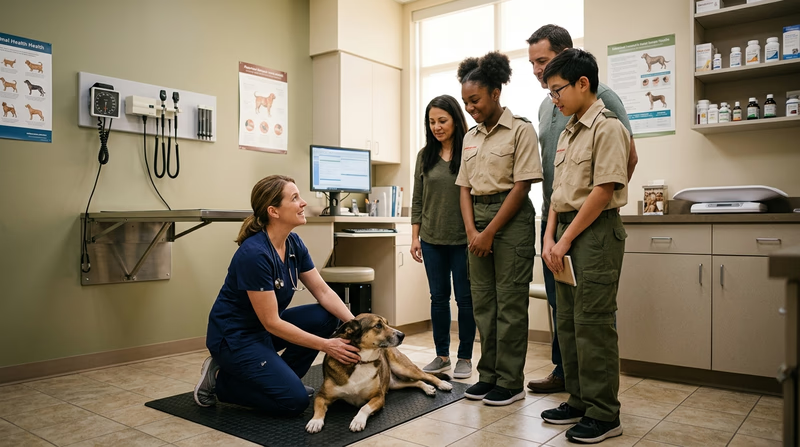
The next requirement asks you to get out of the reading stage and into direct observation. You will choose one field experience and see how this profession works in the real world.
Req 6 — Choose Your Field Experience
You must choose exactly one option for this requirement. Both choices ask you to observe, take notes, and prepare a presentation, but the kind of veterinary work you will see is different.
Your Options
- Req 6a — Observe a Veterinary Facility: Visit a clinic, hospital, or teaching hospital connected to one of the practice types from Req 1. This option helps you see direct patient care, teamwork, equipment, workflow, and communication with pet owners or animal caretakers.
- Req 6b — Shadow a Public-Service Veterinarian: Spend time with a veterinarian in one of the public-service or specialized fields from Req 2. This option helps you see how veterinary medicine serves the general public through health protection, food safety, research, inspection, education, or government work.
How to Choose
Choosing Your Option
Compare the two experiences before deciding- What you will see: Option 6a usually shows patient exams, treatment, surgery prep, and clinic teamwork. Option 6b usually shows public-health, inspection, research, military, teaching, or policy work.
- Who you will meet: Option 6a may involve veterinarians, technicians, reception staff, and pet owners. Option 6b may involve agency staff, researchers, inspectors, educators, or military personnel.
- What you will gain: Option 6a builds a better picture of day-to-day animal care. Option 6b builds a better picture of how veterinary medicine protects communities and systems.
- Ease of access: A neighborhood clinic may be easier to arrange than a government or laboratory visit, but the less familiar setting can teach you more about unusual veterinary careers.
What both options have in common
No matter which path you choose, your presentation should answer three questions:
- What did I observe?
- What did I learn about the veterinarian’s role?
- Why does this work matter to animals, people, or the public?
Bring a notebook, ask permission before taking photos or recordings, and be ready to respect privacy rules. In a clinic, that means patient and client confidentiality. In a public-health or research setting, that may mean restricted spaces or information.
Start with the first option page. Even if you later choose 6b, it helps to see what a strong observation plan looks like.
Req 6a — Observe a Veterinary Facility
A veterinary facility can look calm from the waiting room and still be full of fast decision-making behind the scenes. One patient may need vaccines, another may need surgery, and another may arrive as an emergency. This requirement is your chance to notice how the team works together when real animals and real owners are involved.
Before your visit
Ask what kind of facility you are visiting. A small-animal clinic, equine practice, specialty hospital, referral center, or mixed-animal hospital all work differently. If you know the practice type ahead of time, you can connect what you see back to Req 1.
What To Bring
Simple tools that make your visit more useful- Notebook and pen: Write observations while they are fresh.
- Neat clothes and closed-toe shoes: You are entering a professional setting.
- Three or four prepared questions: Good questions help you learn more than silent watching alone.
- A respectful attitude: You are a guest in a place that may be handling urgent medical cases.
What to observe
Try to notice the full system, not just the exam room.
The people
Who works there besides the veterinarian? You may see technicians, assistants, reception staff, kennel staff, pharmacists, or specialists. Watch how information moves from one person to another.
The animals
What kinds of patients come in? Are they pets, horses, birds, reptiles, or something else? What clues show the team is adapting its care to each species?
The workflow
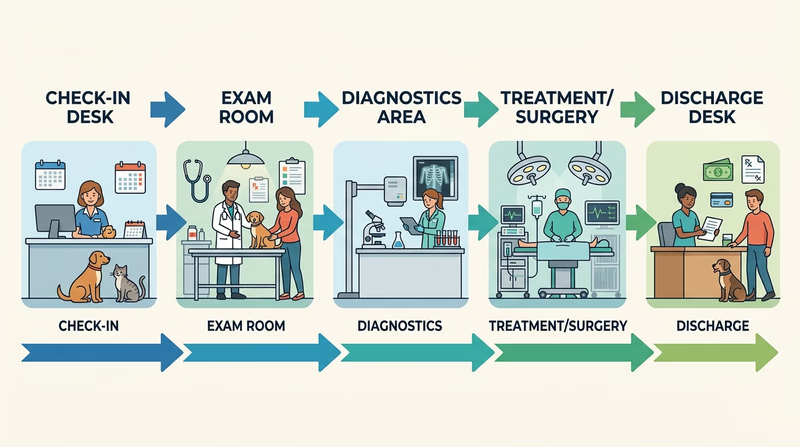
How does a patient move from check-in to exam to treatment to discharge? How does the team handle urgent cases without losing track of routine ones?
The equipment and spaces
Look for exam rooms, treatment areas, surgery prep, imaging, laboratory space, kennels, or recovery areas. Each space tells you something about what happens there.
Questions that lead to a better presentation
🎬 Video: CVM Clinical Facilities Tour — UMN College of Veterinary Medicine — https://www.youtube.com/watch?v=NZvR3WT4w_4
Building your presentation
A good presentation is not a list of random facts. Organize it around a few clear ideas:
- What kind of facility you visited
- What the veterinarian and staff actually did
- What surprised you
- How the work connected to one of the Req 1 practice types
- What you learned about teamwork, communication, or patient care
Whether you choose this option or not, the next page shows a very different kind of observation experience: veterinary work that serves the public more than individual clients.
Req 6b — Shadow a Public-Service Veterinarian
This option is especially useful if you want to see veterinary medicine outside the exam room. A public-health, government, military, teaching, food-safety, or research veterinarian may spend less time with pet owners and more time protecting communities, guiding policy, or solving system-level problems.
What makes this option different
Unlike a clinic visit, this field experience should answer two extra questions:
- What training beyond veterinary school helped this person qualify for the job?
- How does this job serve the general public?
That extra training might include an internship, residency, board certification, public-health degree, research doctorate, military training, epidemiology experience, or agency-specific certification.
What to watch for
Specialized knowledge
What does this veterinarian need to know that a general clinic veterinarian may not use every day? It could be disease surveillance, regulatory law, toxicology, food systems, data analysis, teaching methods, or laboratory protocols.
Unusual duties
This veterinarian might inspect facilities, review records, respond to outbreaks, teach students, write reports, analyze disease trends, or advise leaders. Those are veterinary tasks too, even though they may not look like “treating a patient.”
Public impact
This part matters most. Your presentation should show how the veterinarian’s work protects people, animals, food, or ecosystems on a broader scale.
Presentation Questions
Make sure your talk answers these- Which Req 2 field did the veterinarian work in?
- What special training or credentials did they need?
- What unusual or memorable activities are part of the job?
- Who benefits from this work?
- How is this career different from private clinical practice?
🎬 Video: 20 Cool Careers in Veterinary Medicine — Dr. Jasmine Shanelle — https://www.youtube.com/watch?v=HPBfPUcOwDw
By this point, you have explored many branches of veterinary medicine. The final requirement now asks you to choose one career path and reflect on whether it fits your interests, strengths, and expectations.
Req 7 — Choose a Career Reflection
You must choose exactly one veterinary career from Req 1 or Req 2, then use that same career for all five reflection pages that follow. This requirement is not asking for the “best” career. It is asking you to think honestly about fit.
Your Reflection Questions
- Req 7a — Why This Career Fits: Why would someone choose this field in the first place?
- Req 7b — What You Would Enjoy: What parts of the day-to-day work would appeal to you?
- Req 7c — The Hardest Parts of the Job: What challenges would make this career difficult?
- Req 7d — What Might Surprise You: What unexpected part of the job stands out most?
- Req 7e — Learning Never Stops: How does someone stay qualified and keep growing in this profession?
How to choose your career focus
Choosing One Career To Reflect On
Pick a role you can discuss in detail- Pick one that feels real to you: A field you observed in Req 6 is often easiest.
- Choose a field with enough detail: You need to discuss motivation, rewards, challenges, surprises, and continuing education.
- Think beyond “I like animals”: Good career reflection includes science, schedule, stress, teamwork, environment, and public impact.
- Stick with the same field for all five subpages: Your answers should build on each other.
What you will gain from this requirement
This requirement teaches you how to think like someone making a real career choice. You are learning to weigh purpose, interest, stress, lifestyle, and long-term growth instead of chasing a job title alone.
Begin with the first question: why would someone choose this field at all?
Req 7a — Why This Career Fits
People choose veterinary fields for different reasons. One person may want hands-on surgery. Another may care most about wildlife conservation, food safety, or disease prevention. Your job in this reflection is to match the career to the purpose behind it.
Good reasons to choose a veterinary field
A thoughtful answer usually includes several of these:
- Interest in the animals involved: pets, horses, livestock, birds, marine species, wildlife, or laboratory animals
- Interest in the kind of problems solved: diagnosis, surgery, outbreak control, research, teaching, or policy
- Interest in the work setting: clinic, farm, lab, government agency, aquarium, or outdoor fieldwork
- Interest in the impact: helping individual animals, supporting families, protecting the food supply, or serving the public
Build Your Answer
A simple structure for discussing your chosen field- Start with the mission: What is this field trying to accomplish?
- Add the daily appeal: What kind of work would attract someone to it?
- Connect it to strengths: Curiosity, calmness, communication, observation, or love of science.
- End with meaning: Why would this work feel worth doing over time?
Make your answer specific
Suppose you choose poultry medicine. A stronger answer is not just, “I like birds.” It is, “I would choose poultry medicine because I like prevention-focused work, population-level problem-solving, and protecting both animal welfare and the food supply.” The same idea applies to every field.
Your next reflection narrows the focus from the big reason to the personal one: what would you actually enjoy about doing this work yourself?
Req 7b — What You Would Enjoy
This reflection is about the rewarding parts of the work. Think about what would keep you interested on an ordinary day, not just on exciting days.
Things people often enjoy in veterinary careers
Depending on the field, you might enjoy:
- Solving medical puzzles
- Working directly with animals
- Helping owners or caretakers understand what to do next
- Seeing a patient recover
- Working outdoors or in a specialized environment
- Doing prevention work that stops future problems
- Using science in a practical, visible way
- Working as part of a skilled team
Keep the answer tied to your chosen field
If you chose equine medicine, maybe you like the mix of medicine, movement, and field visits. If you chose laboratory animal medicine, maybe you would enjoy careful systems, ethics, and research support. If you chose public health, maybe the rewarding part is protecting many people and animals at once.
A balanced way to answer
You can like a job for more than one reason. A strong answer often mixes:
- One task you enjoy
- One kind of impact you value
- One personal strength that fits the job
Next, you will take the same career and look at the part many people avoid thinking about: what makes the job hard.
Req 7c — The Hardest Parts of the Job
Every veterinary field has hard parts. If you can describe them honestly, you understand the career much better than someone who only sees the exciting moments.
Common challenges across veterinary work
Some challenges show up in almost every field:
- Long training and continuing study
- Emotional strain when animals are very sick or owners are upset
- Physical demands such as lifting, standing, travel, or working around large animals
- Time pressure and decision-making under stress
- Communication challenges when people disagree about treatment, cost, or priorities
Field-specific examples
The best answer connects directly to your chosen field.
- In small-animal practice, a big challenge may be balancing ideal care with what an owner can afford.
- In equine or large-animal practice, it may be weather, travel, and handling dangerous situations safely.
- In public-health or government work, it may be dealing with large systems, regulations, and pressure during outbreaks.
- In research, it may be careful ethics, precision, and patience.
- In wildlife or marine medicine, it may be limited access to patients and difficult environments.
Understanding the hard parts makes the next question even more interesting: what part of the job might surprise someone who only knows the career from the outside?
Req 7d — What Might Surprise You
The most surprising part of a veterinary career is often something people do not notice from the outside. They may imagine the animals, but not the paperwork, communication, research, ethics, regulations, or teamwork behind the scenes.
What surprises people about veterinary work
Depending on the field, the surprise might be:
- How much time is spent communicating with people, not just handling animals
- How much of the work is about prevention, not emergency treatment
- How often the job mixes science, business, and ethics
- How many roles involve public health or policy, not private practice
- How much teamwork is required with technicians, researchers, inspectors, trainers, or caretakers
Turn surprise into insight
Do not stop at naming the surprise. Explain what it taught you.
For example:
- “I was surprised by how much recordkeeping this job uses, which showed me how important accuracy is.”
- “I was surprised that a poultry veterinarian thinks about whole flocks instead of one bird at a time, which changed how I picture the profession.”
- “I was surprised that a clinic visit involved so much client education and emotional support.”
Your last reflection looks ahead. If someone chooses this field, how do they keep learning and stay qualified over time?
Req 7e — Learning Never Stops
Veterinary work changes constantly. New medicines appear, disease threats shift, regulations change, and better ways of caring for animals keep developing. That is why learning does not end at graduation.
Why continuing education matters
Veterinarians and veterinary technicians are licensed or credentialed professionals. In many states, they must complete a certain number of continuing education (CE) hours during each renewal period to keep their license active. Specialty careers may also have added expectations such as board-certification maintenance, conference attendance, published research, or job-specific recertification.
Because rules vary by state and specialty, the best answer for your counselor should connect to your chosen field and location. If you can, look up your state’s veterinary licensing board or the main professional organization for that specialty.
What Continuing Education Can Include
Ways professionals stay current- Approved CE courses in medicine, surgery, ethics, safety, or public health
- Professional conferences and workshops
- Online training modules from recognized veterinary organizations
- Board-certification maintenance for some specialties
- Agency or employer training for fields like military, public health, laboratory medicine, or inspection
Connect CE to your chosen career
The strongest answer explains not just that CE exists, but why this field needs it.
- A small-animal veterinarian needs to keep up with new diagnostics, pain control, and client-care standards.
- A public-health veterinarian must stay current on disease trends, regulations, and outbreak response.
- A research veterinarian may need ongoing training in ethics, animal care standards, and specialized methods.
- An equine or food-animal veterinarian may need updated knowledge on herd health, biosecurity, and new treatment guidance.
🎬 Video: Why Continuous Learning Matters for Veterinarians — Vet Konect — https://www.youtube.com/watch?v=OtNdXANrZvI
You have now finished the badge requirements. The next page looks beyond the badge and shows where veterinary learning can lead next.
Extended Learning
Congratulations
You have worked through the big ideas behind veterinary medicine: clinical care, public health, training, teamwork, observation, and career reflection. If this badge sparked your interest, you are already doing what future veterinary professionals do well — asking sharp questions, observing carefully, and thinking about both animals and people.
One Health in the Real World
Veterinary medicine becomes even more interesting when you zoom out from one animal and look at whole systems. The idea of One Health recognizes that human health, animal health, and environmental health are connected. A disease outbreak in wildlife can affect livestock. Food-production decisions can affect public health. Changes in land use can affect both animal stress and human exposure.
This way of thinking helps explain why veterinarians work in so many different settings. A clinic veterinarian may diagnose a disease in a dog. A public-health veterinarian may watch for whether that same disease could spread. A wildlife veterinarian may study whether it is moving through wild populations. All three are part of the same bigger picture.
Reading Animal Behavior More Deeply
Good veterinary medicine depends on behavior as much as biology. Animals often show pain, fear, stress, or illness through body language before lab results confirm anything. Learning to read posture, breathing, appetite, grooming, vocalization, and movement is a major part of becoming effective around animals.
If you want to go deeper, start comparing how species communicate discomfort. A dog that avoids eye contact and trembles is sending one kind of message. A horse pinning its ears and shifting weight is sending another. A reptile that stops eating may be showing a husbandry problem before a medical crisis becomes obvious.
Ethics and Hard Decisions
Veterinary medicine is full of ethical questions. What is the kindest treatment when an animal is suffering? How do professionals balance cost, prognosis, quality of life, and owner wishes? When should a disease outbreak change how animals are moved or housed? How much risk is acceptable in research or wildlife intervention?
These questions do not always have easy answers. That is one reason communication, empathy, and integrity matter so much in this profession. A veterinarian is not just a scientist. A veterinarian is also a guide through difficult choices.
Technology Changing the Profession
Modern veterinary work includes tools that did not exist a generation ago: digital radiology, ultrasound, CT scans, advanced laboratory testing, telemedicine support, wearable monitoring devices, and better data systems for tracking disease or herd health. Technology does not replace observation and judgment, but it can sharpen them.
If you enjoy science and problem-solving, watch how technology changes different fields. In clinics, it may speed diagnosis. In food-animal medicine, it may help track herd health patterns. In wildlife and marine work, it may help researchers monitor animals from a distance with less stress.
Real-World Experiences
Tour a Local Animal Shelter or Rescue
Attend a Veterinary School Open House
Visit a Farm, Stable, or Agricultural Fair
Explore a Zoo, Aquarium, or Wildlife Rehabilitation Center
Organizations
The main professional association for veterinarians in the United States, with career information, ethics resources, and public-health topics.
Organization: American Veterinary Medical Association — https://www.avma.org/
A key source for veterinary-school information, admissions guidance, and pre-vet career exploration.
Organization: Association of American Veterinary Medical Colleges — https://www.aavmc.org/
Shows how animal health, environmental health, and human health connect in disease prevention and public safety.
Organization: Centers for Disease Control and Prevention — One Health — https://www.cdc.gov/one-health/
Federal agency involved in animal health, wildlife services, inspection, and disease-control work that often includes veterinarians.
Organization: USDA Animal and Plant Health Inspection Service — https://www.aphis.usda.gov/
A useful organization for learning more about veterinary technician roles, standards, and career development.
Organization: National Association of Veterinary Technicians in America — https://www.navta.net/