Req 1 — Clinical Practice Settings
This requirement is an umbrella page. The main job is to compare how the same profession changes from one setting to another. A veterinarian always uses science, observation, communication, and problem-solving, but the daily work looks different depending on the species, the place, and the people involved. This page covers six major practice areas:
- 1a — Companion or small animal medicine, and equine medicine
- 1b — Food animal or large animal medicine
- 1c — Exotic animal medicine
- 1d — Marine animal medicine
- 1e — Poultry medicine
- 1f — Wildlife medicine and aquaculture medicine
Requirement 1a
Clinical roles in companion and equine practice
Companion-animal veterinarians care for pets that live closely with people, so they do much more than emergency treatment. They give vaccines, diagnose illness, perform surgery, manage chronic problems like diabetes or arthritis, help with nutrition and behavior, and guide owners through end-of-life decisions. Equine veterinarians do many of those same things for horses, but their work often happens at barns, ranches, tracks, or show grounds instead of inside a clinic.
What makes this setting different
In small-animal practice, the veterinarian often sees one patient at a time and explains choices directly to a family. In equine medicine, the veterinarian may work around a much larger animal, in a less controlled environment, and with owners who depend on the horse for sport, work, breeding, or recreation. That means good communication matters just as much as medical skill.
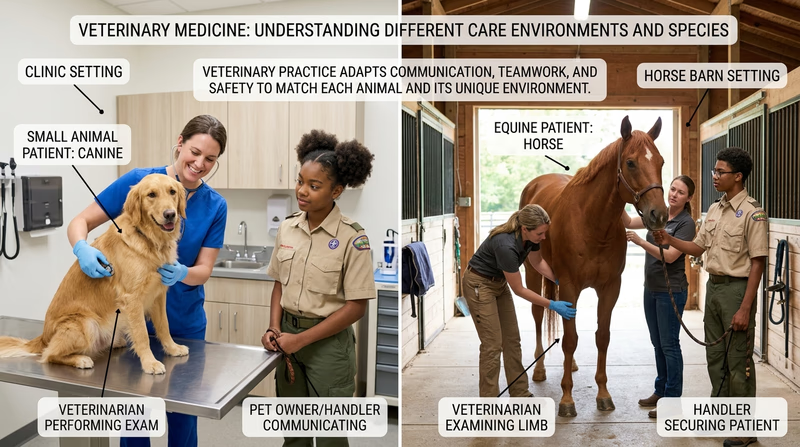
Roles You Could Mention
Key jobs in companion and equine practice
- Preventive care: Vaccines, wellness exams, parasite control, dental care, and nutrition advice.
- Diagnosis and treatment: Finding the cause of limping, coughing, skin disease, colic, infections, or injuries.
- Surgery and procedures: Spay/neuter, wound repair, imaging, dental procedures, and emergency treatment.
- Owner education: Helping people understand daily care, training, housing, and when a problem needs fast attention.
Requirement 1b
Clinical roles in food-animal medicine
Food-animal veterinarians work with herds and flocks as well as individual animals. They may treat a single calf with pneumonia, but they also look at the bigger picture: housing, sanitation, breeding, nutrition, vaccination schedules, and disease patterns across the whole operation. Their goal is animal welfare and good production at the same time.
Why herd thinking matters
Large-animal medicine often asks, “What is affecting this whole group?” instead of only, “What is wrong with this one patient?” A veterinarian may track abortion storms in cattle, lameness in dairy cows, or respiratory disease in feedlot animals. They also advise producers on records, biosecurity, and how to prevent small problems from becoming expensive outbreaks.
Requirement 1c
Clinical roles in exotic practice
Exotic-animal veterinarians care for species such as birds, reptiles, amphibians, small mammals, and zoo animals. These patients cannot tell you what hurts, and many hide signs of illness until they are very sick. That means the veterinarian must pay close attention to behavior, appetite, droppings, temperature needs, enclosure setup, and species-specific anatomy.
What owners need from this veterinarian
A large part of exotic medicine is prevention through education. Many exotic pets become ill because their environment is wrong: the wrong temperature, wrong ultraviolet light, wrong humidity, wrong diet, or unsafe handling. A veterinarian in this field teaches owners how to build the right habitat as much as how to treat disease.
Requirement 1d
Clinical roles in marine medicine
Marine veterinarians may work with dolphins, seals, sea lions, manatees, sharks, reef fish, or large aquarium collections. Some help stranded wild animals. Others work in aquariums, rehabilitation centers, research facilities, or fisheries. Their patients live in water, so the veterinarian must think about water quality, filtration, salinity, temperature, and group behavior as part of every case.
Why environment is part of the patient
For marine mammals and fish, the habitat can be as important as the body. If the water chemistry is wrong, many animals can become stressed or sick at once. A marine veterinarian often works with trainers, aquarists, biologists, and rescue teams to solve health problems safely.
Requirement 1e
Clinical roles in poultry medicine
Poultry veterinarians work with chickens, turkeys, ducks, and other birds raised for eggs, meat, breeding, or conservation. In this field, veterinarians often think at flock level rather than bird level. They monitor disease, ventilation, feed, water systems, litter conditions, vaccination programs, and biosecurity.
Why prevention matters so much
Birds live close together in many poultry settings, so disease can spread fast. A poultry veterinarian helps spot trouble early, tests for infection, and makes plans to protect both animal welfare and the food supply. That means careful records and prevention are central parts of the job, not extra tasks.
Requirement 1f
Clinical roles in wildlife medicine
Wildlife veterinarians care for free-ranging animals, animals in rehabilitation, and species involved in conservation programs. They may treat injuries, investigate disease outbreaks, collect samples in the field, help with relocation or release decisions, and work with biologists on population health.
Clinical roles in aquaculture medicine
Aquaculture veterinarians focus on fish and other aquatic animals raised in controlled systems for food, stocking, or conservation. Their work may include checking fish behavior, growth, parasites, oxygen levels, water chemistry, nutrition, and disease prevention across ponds, tanks, or net pens.
What these fields share
Both wildlife and aquaculture medicine require thinking beyond one animal. The veterinarian has to consider habitat, population health, transport stress, public health, and ecosystem impact. That makes these fields a good bridge into Req 2, where you will look more closely at public-service and research roles.
AVMA — Veterinary Career Center A broad overview of veterinary career paths, including companion, equine, food-animal, public-health, and specialty settings. Link: AVMA — Veterinary Career Center — https://www.avma.org/resources-tools/careers/veterinary-career-centerBefore you move on, make sure you can explain not just where each veterinarian works, but how the goal of the job changes from pet care to herd health to wildlife, fish, and conservation work.