Req 3 — Becoming a Veterinarian
Wanting to work with animals is a good start, but veterinary medicine is also a science-heavy profession that asks you to keep learning for years. The training path is long because veterinarians need to understand anatomy, disease, surgery, pharmacology, communication, ethics, and public health across many species.
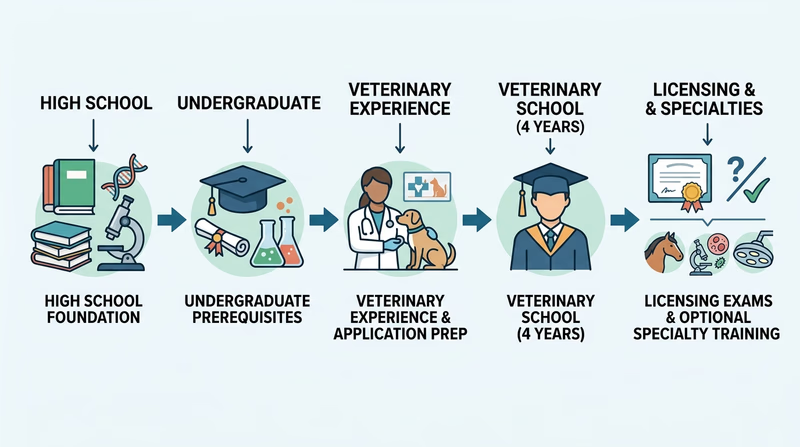
According to the Veterinary Medicine merit badge pamphlet, a doctorate in veterinary medicine usually means six to eight years of education after high school. That path usually looks like this:
- Build a strong high-school foundation in biology, chemistry, physics, math, writing, and communication.
- Complete undergraduate study at a college or university. Many students earn a science-focused bachelor’s degree, though the exact major can vary.
- Meet the prerequisites required by each veterinary college you want to apply to.
- Gain veterinary experience by volunteering or working in clinics, shelters, farms, ranches, or animal programs.
- Apply to veterinary school and complete four years of professional training leading to a D.V.M. or V.M.D. degree.
- Pass licensing exams before practicing.
What veterinary school looks like
The pamphlet describes the four professional-school years in stages:
- Years 1–2: Heavy classroom work in anatomy, physiology, microbiology, pathology, and other core sciences.
- Year 3: More direct work with medical and surgical treatment.
- Year 4: Clinical rotations with real patients in many settings, from small-animal hospitals to farm calls and exotic-animal care.
Common Application Priorities
What admissions committees usually want to see
- Strong science coursework: Especially biology and chemistry.
- Solid grades and study habits: Veterinary school is academically demanding.
- Animal and veterinary experience: Time spent seeing what the job is really like.
- Communication and leadership: Veterinarians explain hard choices to people and work on teams.
- Persistence: This is a long path, so schools look for commitment.
About prerequisites
The pamphlet is clear on one important point: prerequisites vary from college to college. One school may expect more biology. Another may require statistics, public speaking, or biochemistry. Some schools may ask for standardized testing, while others may not. That means you should not assume every veterinary school wants exactly the same application package.
Finding the nearest veterinary medical college
This part of the requirement is meant to make the career path real. Some states have a veterinary college. Others do not. If your state does not, nearby regional schools may still be the closest option. A good answer includes:
- The name of the school
- Its city and state
- Whether it is public or private
- A few examples of the required or recommended courses
- Any notes about residency preferences, application deadlines, or animal-experience expectations
🎬 Video: What Major and Classes do I need to become a Veterinarian? — Dr. Jasmine Shanelle — https://www.youtube.com/watch?v=x26KiXFabvQ
Once you understand the veterinarian path, it helps to compare it with another key role on the care team. Next, you will look at veterinary technicians and how they support the work of a veterinarian every day.