Req 4 — Veterinary Technicians in Action
A veterinary clinic runs on teamwork. The veterinarian diagnoses, prescribes, performs surgery, and leads medical decisions, but trained technicians make that care possible by handling patients well, collecting information, running tests, preparing equipment, and watching for problems.
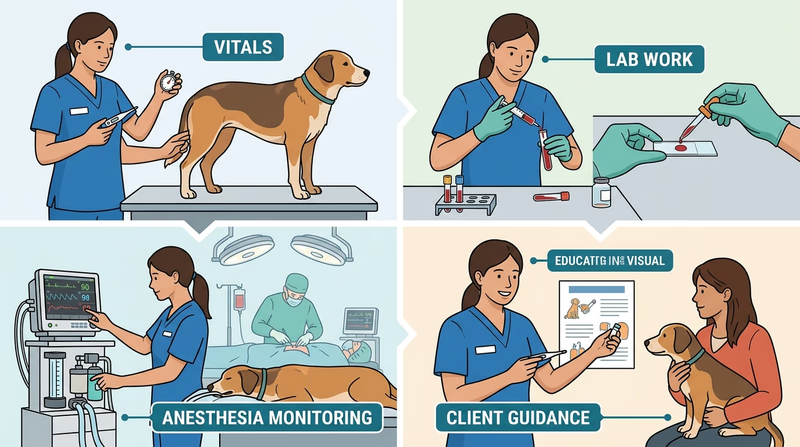
The merit badge pamphlet explains that registered veterinary technicians (R.V.T.s) or animal health technicians (A.H.T.s) perform many of the same kinds of support tasks that nurses perform in human medicine. They work under the supervision of a licensed veterinarian. They can assist with lab work, exams, anesthesia support, imaging, sample collection, patient care, and client education, but they do not diagnose disease, prescribe treatment, or perform surgery on their own.
Training required
The pamphlet says most accredited veterinary-technology programs lead to an associate’s degree after about two years of study. Some technicians complete a bachelor’s degree, which can open the door to more responsibility. Programs also include hands-on clinical training, and nearly every state requires passing a state and/or national exam before a technician can practice.
What Technician Training Includes
Common parts of an R.V.T. or A.H.T. program
- Animal handling and restraint: Keeping patients and staff safe.
- Laboratory skills: Running blood, urine, and other diagnostic tests.
- Clinical procedures: Preparing patients, taking X-rays, monitoring anesthesia, and assisting with treatment.
- Communication: Explaining instructions clearly to pet owners or animal caretakers.
- Supervised practical experience: Real clinical work under trained professionals.
Finding a technician program near you
Just like veterinary schools, technician programs vary by state. Your counselor discussion should include one real training site in your state or the nearest one available. Look for:
- Whether the program is AVMA accredited
- What degree it awards
- Whether it prepares students for the Veterinary Technician National Exam (VTNE) or your state’s credentialing process
- What kind of hands-on clinical experience it includes
How a technician helps in three practice types
To answer the last part of the requirement well, choose three practice types from Req 1 and describe how the technician’s job changes in each one.
Companion animal practice
A technician may greet patients, record weight and vital signs, collect blood samples, run lab tests, take radiographs, place IV catheters, monitor anesthesia, recover patients after surgery, and explain home-care instructions. In this setting, calm animal handling and strong people skills are essential.
Equine or large-animal practice
A technician may prepare supplies for field visits, assist with restraint, collect samples, help with wound care, monitor treatment, and keep records. Because the animals are bigger and the work may happen in barns or outdoor settings, organization and safety awareness matter even more.
Exotic, marine, wildlife, or aquaculture settings
In these settings, the technician may help with specialized enclosures, water-quality checks, careful species-specific restraint, nutrition prep, sample handling, quarantine procedures, or rehabilitation support. The work is often detail-heavy because small environmental mistakes can become major health problems.
🎬 Video: Behind the Scenes as a Licensed Veterinary Technician — Cornell University College of Veterinary Medicine — https://www.youtube.com/watch?v=ytCu_rnC37E
Understanding the technician role helps you see how animal care happens as a team. Next, you will shift from careers and training to one of the most human parts of the profession: the bond between people and animals.