Req 6a — Observe a Veterinary Facility
A veterinary facility can look calm from the waiting room and still be full of fast decision-making behind the scenes. One patient may need vaccines, another may need surgery, and another may arrive as an emergency. This requirement is your chance to notice how the team works together when real animals and real owners are involved.
Before your visit
Ask what kind of facility you are visiting. A small-animal clinic, equine practice, specialty hospital, referral center, or mixed-animal hospital all work differently. If you know the practice type ahead of time, you can connect what you see back to Req 1.
What To Bring
Simple tools that make your visit more useful
- Notebook and pen: Write observations while they are fresh.
- Neat clothes and closed-toe shoes: You are entering a professional setting.
- Three or four prepared questions: Good questions help you learn more than silent watching alone.
- A respectful attitude: You are a guest in a place that may be handling urgent medical cases.
What to observe
Try to notice the full system, not just the exam room.
The people
Who works there besides the veterinarian? You may see technicians, assistants, reception staff, kennel staff, pharmacists, or specialists. Watch how information moves from one person to another.
The animals
What kinds of patients come in? Are they pets, horses, birds, reptiles, or something else? What clues show the team is adapting its care to each species?
The workflow
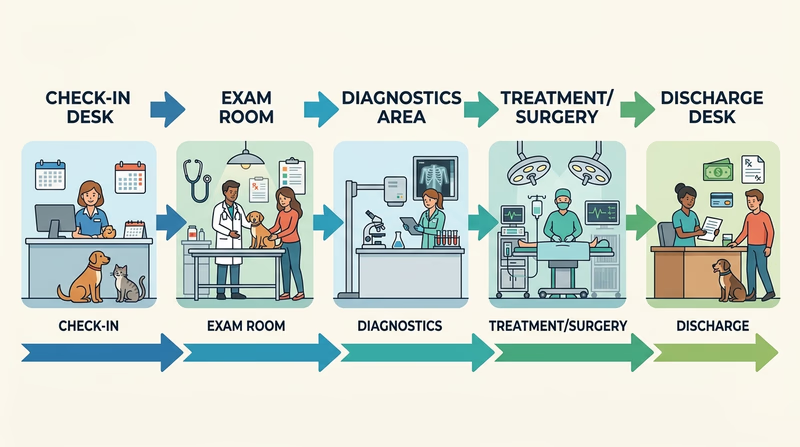
How does a patient move from check-in to exam to treatment to discharge? How does the team handle urgent cases without losing track of routine ones?
The equipment and spaces
Look for exam rooms, treatment areas, surgery prep, imaging, laboratory space, kennels, or recovery areas. Each space tells you something about what happens there.
Questions that lead to a better presentation
🎬 Video: CVM Clinical Facilities Tour — UMN College of Veterinary Medicine — https://www.youtube.com/watch?v=NZvR3WT4w_4
Building your presentation
A good presentation is not a list of random facts. Organize it around a few clear ideas:
- What kind of facility you visited
- What the veterinarian and staff actually did
- What surprised you
- How the work connected to one of the Req 1 practice types
- What you learned about teamwork, communication, or patient care
Whether you choose this option or not, the next page shows a very different kind of observation experience: veterinary work that serves the public more than individual clients.