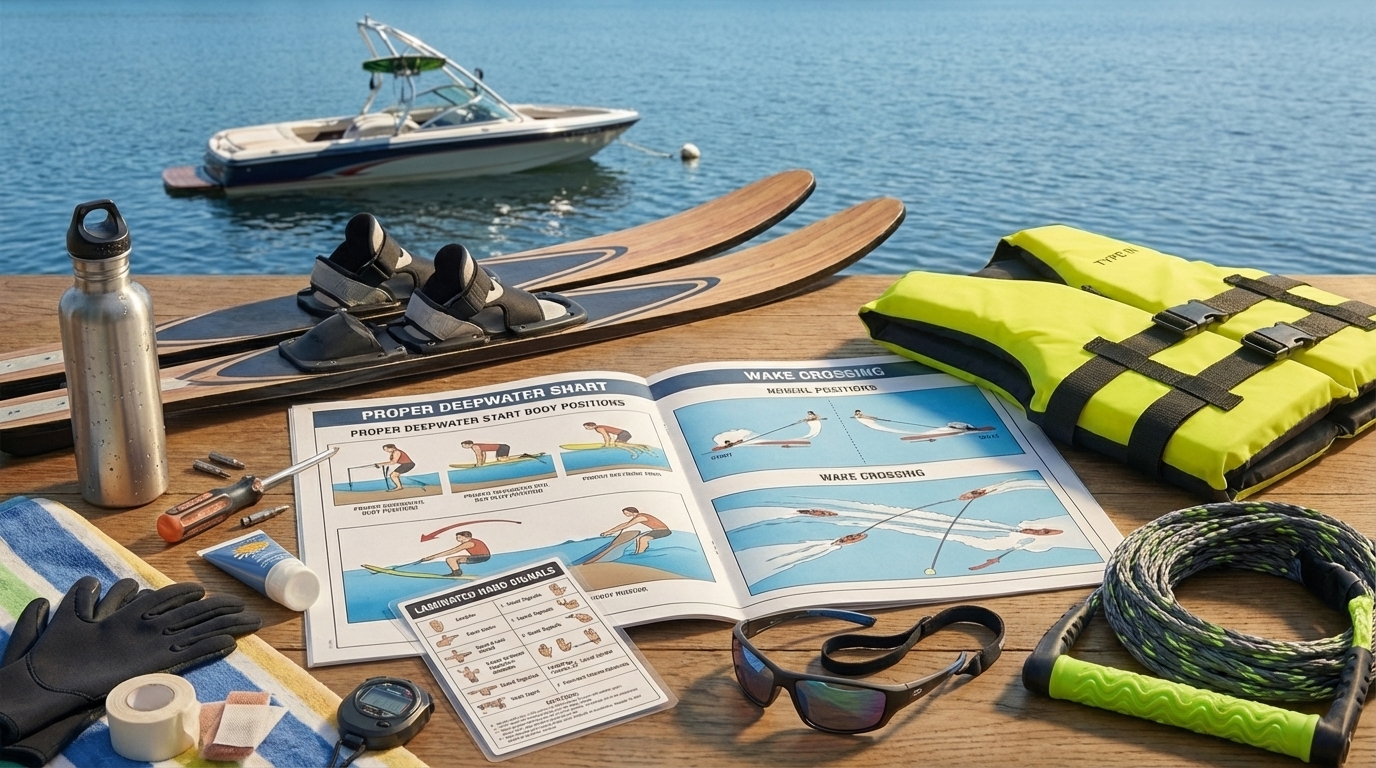
 Getting Started
Introduction & Overview
Water sports are fast, exciting, and unforgettable because they mix speed, balance, teamwork, and water safety all at once. Whether you are gliding on two skis, carving on one ski, or riding a wakeboard, you are learning how to stay calm, read conditions, and trust your training.
This merit badge is about much more than standing up behind a boat. You will learn how to spot hazards, use the right gear, communicate clearly with the driver and observer, and build the skills that make every run safer and more fun.
Then and Now
Then — Barefoot Beginnings and Wooden Skis
People were experimenting with being pulled across water long before wake parks and sleek fiberglass skis existed. In the 1920s, early skiers used long wooden boards and simple tow ropes to see whether snow-skiing ideas could work on lakes and rivers. As boats became more reliable and ski design improved, water-ski shows, slalom courses, and competitive events helped turn a backyard stunt into a real sport.
Now — A Whole Family of Towed Water Sports
Today, water sports include classic two-ski runs, slalom skiing, wakeboarding, kneeboarding, adaptive programs, and cable-park riding. Better life jackets, better boat design, and stronger safety rules mean more people can enjoy the sport while reducing risk. Scouts who learn water sports today are joining a tradition that still rewards skill and courage, but now puts far more attention on training, communication, and prevention.
Get Ready!
You do not need to be fearless to enjoy water sports. You need to be prepared. Learn the signals, fit your gear the right way, and respect the water, and you will give yourself the best chance to have a strong first start and a safe day on the lake.
Kinds of Water Sports
Two-Ski Waterskiing
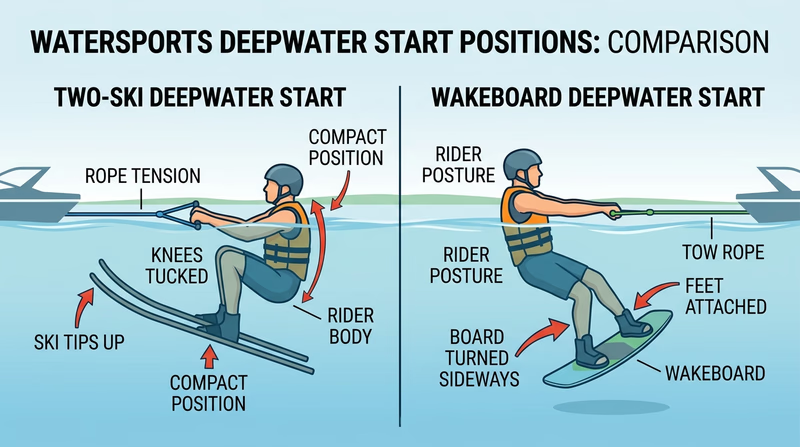
This is where many beginners start. Two skis give you a wider base, which makes getting up from deep water easier and helps you build balance while the boat pulls you into a standing position. It is the best place to learn body position, handle control, and wake crossing without having to worry about one narrow ski.
Slalom Skiing
Slalom means skiing on one ski. It demands sharper edging, stronger balance, and more control through the wakes. Many skiers work up to slalom only after they are comfortable on two skis, because small mistakes in stance or timing matter much more on one ski.
Wakeboarding
A wakeboard keeps both feet attached to one board, so your stance feels different from waterskiing right away. Many Scouts find wakeboarding easier for deepwater starts because the board naturally stays under both feet, but edging and board control still take practice. Wakeboarding rewards patience and repeated, clean attempts.
Recreational vs. Competitive Riding
Some people ride just for fun with family and friends. Others practice course skiing, jumps, wake tricks, or tournament-style runs. Both paths matter. Recreational riding teaches confidence, safety, and teamwork, while competitive riding adds precision, timing, and performance goals.
Lake Conditions Matter
A smooth early-morning lake feels very different from choppy afternoon water. Wind, boat traffic, floating debris, shoreline obstacles, and shallow areas can all change the difficulty of a run. Learning to notice those conditions is one of the most important water sports skills you can build.
Now that you know what water sports involve, start with the habits that protect everyone in the boat and everyone in the water.