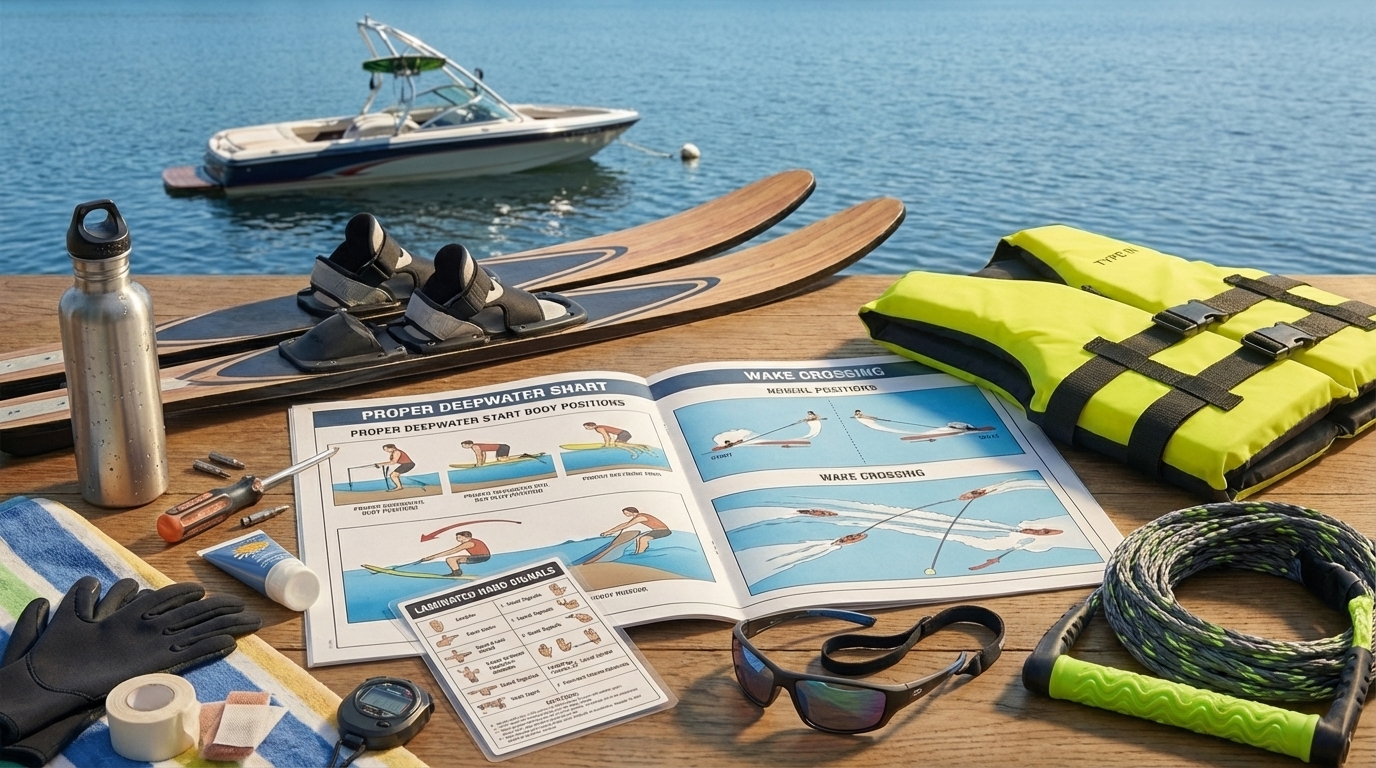
Water Sports Merit Badge — Complete Digital Resource Guide
https://merit-badge.university/merit-badges/water-sports/guide/
Introduction & Overview
Water sports are fast, exciting, and unforgettable because they mix speed, balance, teamwork, and water safety all at once. Whether you are gliding on two skis, carving on one ski, or riding a wakeboard, you are learning how to stay calm, read conditions, and trust your training.
This merit badge is about much more than standing up behind a boat. You will learn how to spot hazards, use the right gear, communicate clearly with the driver and observer, and build the skills that make every run safer and more fun.
Then and Now
Then — Barefoot Beginnings and Wooden Skis
People were experimenting with being pulled across water long before wake parks and sleek fiberglass skis existed. In the 1920s, early skiers used long wooden boards and simple tow ropes to see whether snow-skiing ideas could work on lakes and rivers. As boats became more reliable and ski design improved, water-ski shows, slalom courses, and competitive events helped turn a backyard stunt into a real sport.
Now — A Whole Family of Towed Water Sports
Today, water sports include classic two-ski runs, slalom skiing, wakeboarding, kneeboarding, adaptive programs, and cable-park riding. Better life jackets, better boat design, and stronger safety rules mean more people can enjoy the sport while reducing risk. Scouts who learn water sports today are joining a tradition that still rewards skill and courage, but now puts far more attention on training, communication, and prevention.
Get Ready!
You do not need to be fearless to enjoy water sports. You need to be prepared. Learn the signals, fit your gear the right way, and respect the water, and you will give yourself the best chance to have a strong first start and a safe day on the lake.
Kinds of Water Sports
Two-Ski Waterskiing
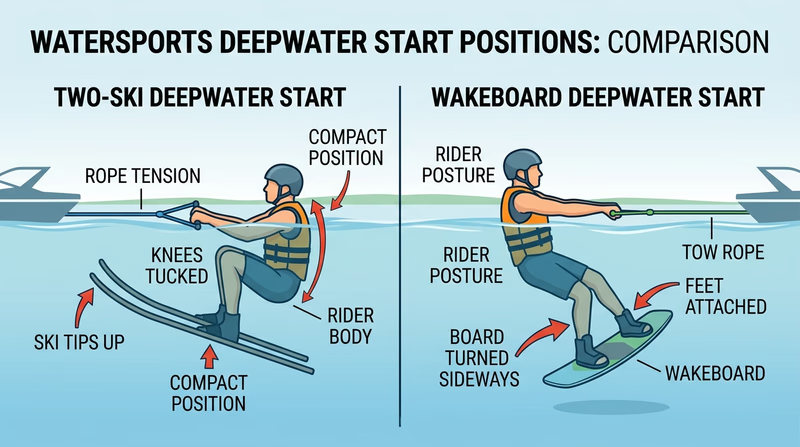
This is where many beginners start. Two skis give you a wider base, which makes getting up from deep water easier and helps you build balance while the boat pulls you into a standing position. It is the best place to learn body position, handle control, and wake crossing without having to worry about one narrow ski.
Slalom Skiing
Slalom means skiing on one ski. It demands sharper edging, stronger balance, and more control through the wakes. Many skiers work up to slalom only after they are comfortable on two skis, because small mistakes in stance or timing matter much more on one ski.
Wakeboarding
A wakeboard keeps both feet attached to one board, so your stance feels different from waterskiing right away. Many Scouts find wakeboarding easier for deepwater starts because the board naturally stays under both feet, but edging and board control still take practice. Wakeboarding rewards patience and repeated, clean attempts.
Recreational vs. Competitive Riding
Some people ride just for fun with family and friends. Others practice course skiing, jumps, wake tricks, or tournament-style runs. Both paths matter. Recreational riding teaches confidence, safety, and teamwork, while competitive riding adds precision, timing, and performance goals.
Lake Conditions Matter
A smooth early-morning lake feels very different from choppy afternoon water. Wind, boat traffic, floating debris, shoreline obstacles, and shallow areas can all change the difficulty of a run. Learning to notice those conditions is one of the most important water sports skills you can build.
Now that you know what water sports involve, start with the habits that protect everyone in the boat and everyone in the water.
Req 1 — Water Sense and Safety
These three parts work together like a safety chain. First you learn to spot hazards before they become emergencies. Then you review the injuries and illnesses most likely to happen on the water. Finally, you connect all of that to Scouting America’s official Safety Afloat rules so your decisions match the standard your counselor expects.
Focus on one idea as you read: good water-sports safety starts before the skier ever says “Hit it!”
Requirement 1a
The most common water-sports hazards are not secret dangers hiding underwater. They are ordinary problems that become serious when people rush, guess, or stop paying attention. In water sports, speed makes small mistakes happen fast, so you have to notice hazards early.
A smart way to talk through this requirement is to sort hazards into four buckets: conditions, equipment, people, and boat operations.
Conditions hazards
These are the problems created by the lake, river, or weather itself.
- Shallow water can stop a ski or board suddenly and throw you forward.
- Cold water can trigger cold-water shock and make breathing hard.
- Wind and chop make starts, crossings, and pickups harder.
- Lightning and storms turn an open lake into a dangerous place in minutes.
- Boat traffic, docks, stumps, and swimmers leave less room for error.
To anticipate these hazards, inspect the area before anyone rides. Ask: How deep is it? Where are the shallow spots? What is the weather doing? Which direction keeps the rider away from docks, swimmers, and heavy traffic?
Pre-run hazard scan
Ask these questions before every pull- Water depth: Is the water at least 5 feet deep or deeper than the rider is tall?
- Surface conditions: Are wind, chop, or crossing wakes likely to affect control?
- Traffic pattern: Where are other boats, anglers, docks, and swim areas?
- Weather: Is there thunder, lightning, or rough weather building nearby?
- Pickup route: Does the driver have room to circle back safely after a fall?
Equipment hazards
A damaged towrope, loose binding, poorly fitted life jacket, or sharp hardware can turn a normal run into an injury. Good riders check gear before launching instead of trusting that it was fine last time.
Prevent equipment hazards by checking skis or boards for cracks, rough edges, and loose parts. Inspect the rope and handle for frays. Make sure the life jacket is U.S. Coast Guard approved, snug, and right for waterskiing or wakeboarding.
People hazards
A tired rider, distracted observer, or overconfident driver can create danger even on a calm lake. Communication problems are especially risky because the rider cannot talk directly to the driver once the engine is running.
Prevent people hazards by using a dedicated observer, reviewing hand signals, and agreeing on the plan before the boat starts. If someone is cold, shaky, dehydrated, frightened, or too tired to hold good body position, stop and reset.
Boat-operation hazards
The boat itself creates special risks: propellers, stern approach, sudden acceleration, tight turns, and poor pickups after a fall. The rider’s safety depends heavily on the driver and observer doing their jobs well.
Mitigate boat-operation hazards by keeping the observer focused on the rider, approaching a fallen skier carefully, cutting the motor when needed, and never letting someone approach the stern while the engine is running.
Anticipate, prevent, mitigate, respond
Your counselor may ask you to explain the difference between these words.
- Anticipate means noticing what could go wrong before the run starts.
- Prevent means taking steps that make the problem less likely.
- Mitigate means reducing how severe the situation becomes.
- Respond means taking the right action once something has happened.
For example, if the water is cold, you anticipate cold-water risk by checking temperature and conditions. You prevent trouble by wearing the right gear and limiting exposure. You mitigate the danger by keeping blankets and dry clothes ready in the boat. You respond by getting a cold rider out of the water quickly and beginning warming steps.
Requirement 1b
This requirement is about pattern recognition. You do not need to become a doctor. You do need to notice early signs, give appropriate first aid, and know when a situation is serious enough to stop the activity and get help.
Prevention
Most common water-sports injuries are easier to prevent than to treat.
- Blisters: Use gear that fits, keep hands dry when possible, and avoid repeated rubbing from poor grip.
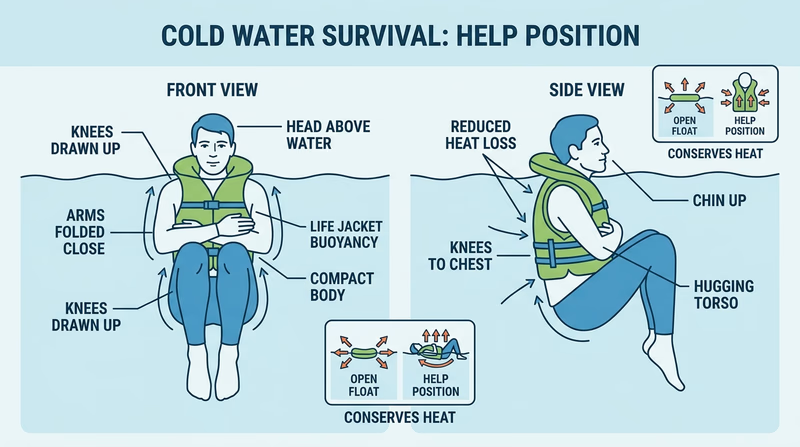
- Cold-water shock and hypothermia: Dress for water temperature, not just air temperature, and keep dry clothing nearby.
- Dehydration and heat illness: Drink water often, rest in shade, and remember that wind and spray can hide how hot you are getting.
- Sunburn: Use sunscreen, reapply it, and protect ears, neck, shoulders, and legs.
- Sprains, strains, cuts, and bruises: Warm up, use well-maintained gear, and avoid rough landings or shallow water.
- Spinal injury and concussion: Never ride in unsafe depth, never push tired riders past control, and treat hard falls seriously.
Symptoms to watch for
A Scout who can describe symptoms clearly sounds prepared.
- Blisters: Hot spots, rubbing pain, raised skin.
- Cold-water shock: Gasping, rapid breathing, panic, loss of control soon after cold immersion.
- Hypothermia: Shivering, blue lips, clumsiness, confusion, then extreme lethargy.
- Dehydration: Headache, dry mouth, dizziness, fatigue, dark urine.
- Heat-related illness: Heavy sweating, cramps, weakness, nausea, headache; heat stroke adds confusion, collapse, and possible loss of sweating.
- Sunburn: Red, painful skin and later blistering in worse cases.
- Sprains and strains: Pain, swelling, weakness, limited movement.
- Minor cuts and bruises: Bleeding, swelling, tenderness, discoloration.
- Spinal injury: Neck or back pain, numbness, weakness, trouble moving.
- Concussion or head trauma: Headache, dizziness, confusion, nausea, memory trouble, sensitivity to light, unusual behavior.
First-aid treatment
Use calm, simple explanations with your counselor.
- Blisters: Stop the rubbing, pad the area, and keep it clean.
- Cold-water shock: Get the person out of the water as quickly as possible and watch breathing closely.
- Hypothermia: Remove wet clothing, dry the person, wrap them in blankets, warm the trunk first, and avoid rough handling.
- Dehydration: Move to shade and give water or other appropriate fluids if the person is alert.
- Heat illness: Cool the person, rest them, give fluids if appropriate, and get urgent help for signs of heat stroke.
- Sunburn: Get out of the sun, cool the skin, and protect it from more exposure.
- Sprains and strains: Rest the injured area, limit use, cool it, and support it.
- Minor cuts and bruises: Clean cuts, control bleeding, bandage if needed, and monitor swelling.
- Spinal injury: Do not move the person unless there is immediate danger. Stabilize and get emergency help.
- Concussion/head trauma: End activity, monitor closely, and get medical evaluation before return to sports.
Requirement 1c
Safety Afloat is not just a boating rulebook. For water sports, it is the system that keeps the whole activity organized. The Water Sports merit badge pamphlet points directly to nine Safety Afloat points, and several of them apply almost word-for-word to waterskiing and wakeboarding.
These are the nine points you should know how to discuss:
The nine points of Safety Afloat
How they connect to water sports- Qualified supervision: A mature, trained adult leads the activity. For towed sports, supervision includes both a skilled boat driver and a separate observer.
- Personal health review: Leaders know about medical issues that could make participation unsafe.
- Swimming ability: All waterskiers and wakeboarders must pass the Scouting America swimmer test before deep-water activity.
- Life jackets: Properly fitted U.S. Coast Guard-approved life jackets are required, and towed participants need one marked for waterskiing.
- Buddy system: Every participant has a buddy, and the group keeps track of one another.
- Skill proficiency: Riders, drivers, and helpers must be trained for what they are doing.
- Planning: The group uses a float plan, checks weather, and thinks through emergencies before launching.
- Equipment: Boats, ropes, skis, boards, and rescue gear must be in good repair and ready to use.
- Discipline: Everyone follows the rules and uses good judgment, even when excited.
How Safety Afloat applies on an actual ski run
A safe run begins with planning and health review before the boat starts. It continues when the rider uses the right life jacket and the driver confirms that the observer is ready. It shows up again when the boat stays out of shallow water, the observer watches the rider instead of chatting, and the crew follows the right pickup procedure after a fall.
That means Safety Afloat is not one decision. It is a chain of decisions:
- choosing a trained driver
- using a separate observer
- checking weather and depth
- requiring the swimmer test
- inspecting life jackets and gear
- agreeing on signals and emergency plans
This page has covered the mindset behind the rest of the badge: notice hazards early, treat injuries seriously, and follow the safety system every time.
Req 2 — Gear and Boat Safety
This requirement brings safety down to the equipment and crew level. A good life jacket protects the rider in the water, and a good driver-observer team protects the rider before, during, and after every pull.
Requirement 2a
A water-sports life jacket is not just something you wear because the rule says so. It keeps your airway above water after a fall, adds visibility during pickup, and gives you flotation if you are stunned, tired, or fighting cold-water shock.
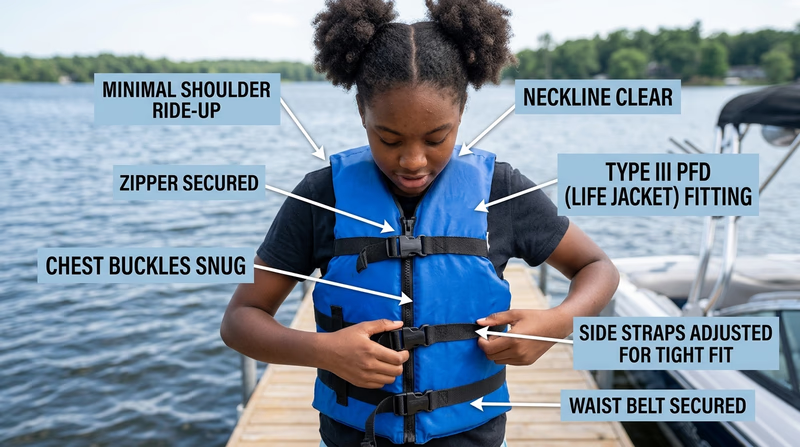
The Water Sports merit badge pamphlet explains that properly fitted U.S. Coast Guard-approved life jackets must be worn in boating activity, and that towed riders must wear one marked for waterskiing. It also notes that Type III life jackets are the usual choice for waterskiing and wakeboarding.
What makes a good water-sports life jacket
- U.S. Coast Guard approved
- Marked for waterskiing or appropriate to the activity
- Snug fit so it does not ride up
- Secure closures such as zippers, buckles, and side straps
- Freedom of movement so the rider can start, hold the handle, and recover safely
- Good condition with no torn fabric, missing buckles, or weakened flotation
Type I and Type II jackets are useful in other boating situations, but they are usually too bulky or restrictive for towed water sports. Type III flotation aids are more practical because they are designed for active movement. Type IV devices are throwables, not wearable life jackets, and Type V special-use devices should only be used according to their approval and training requirements.
How to fit a life jacket
Use this sequence when you demonstrate for your counselor- Check the label: Confirm it is approved and intended for the activity.
- Put it on fully: Zip, buckle, and secure every closure.
- Tighten from the waist up: Adjust straps so the vest is snug but still lets you breathe and move.
- Test for ride-up: Raise your arms and have someone gently pull at the shoulders. The vest should not slide up over your chin or ears.
- Move like a rider: Pretend to crouch, hold a handle, and rotate your shoulders. A good fit stays secure during movement.
Why you must always wear it
Falls in water sports are not gentle tumbles onto grass. A rider may hit the water hard, lose the handle, get turned around, or need to wait for a pickup in boat traffic or cold conditions. A life jacket gives immediate flotation during all of those moments. It is especially important because cold-water shock can cause involuntary gasping and loss of control right after immersion.
Requirement 2b
This requirement names a formal safety artifact, so you should be ready to discuss its actual points instead of speaking only in general terms. The Water Sports merit badge pamphlet lists the Water Sports Safety Code in two parts: things you should always do and things you should never do.
Water Sports Safety Code — Always
Habits that should be true on every run- Learn from a good instructor or a person with advanced ability in the sport.
- Wear a life jacket when taking part in water sports.
- Look ahead and know where you are going at all times.
- Stay away from solid objects such as docks, boats, and stumps.
- Be courteous and keep distance from other skiers, boats, and swimmers.
- Run parallel to shore and come in slowly when landing.
- Learn new maneuvers step by step instead of rushing progress.
- Have an extra person in the boat to watch the skier.
- Signal that you are okay after a fall by clasping hands over your head or waving.
- Hold up a ski in busy boating areas while waiting in the water.
- Check equipment for sharp or protruding parts before use.
- Use a stern platform or ladder when climbing back into the boat.
Water Sports Safety Code — Never
Rules that prevent some of the worst accidents- Never ski or wakeboard in shallow or unknown water.
- Never put body parts through the handle or wrap the rope around your body.
- Never yell “Hit it!” before the rope is tight and your start position is ready.
- Never ride to the point of exhaustion.
- Never ski or wakeboard at night.
- Never ride directly ahead of another boat.
- Never ski double with different rope lengths.
- Never attempt a fast landing straight toward shore.
- Never jump from a moving boat.
- Never approach the stern or climb in while the motor is running.
Boat-operator precautions
The rider may get most of the attention, but a careless driver can ruin the whole activity. The operator should:
- know local boating rules and traffic patterns
- accelerate steadily, not violently
- keep clear of swimmers, docks, and congested areas
- make wide, deliberate pickups after falls
- watch water depth and hazards all the way through the route
- follow the observer’s communication, because the observer has the best view of the skier
- cut the motor when needed during pickup and boarding
A rider who knows the code and wears the right life jacket is ready for the next gate: proving solid swimming ability before the towing skills begin.
Req 3 — Pass the Swimmer Test
This requirement exists because every later skill in the badge happens in deep water. If a ski comes off, the handle jerks away, or you have to wait calmly for pickup, you must already be a capable swimmer. Water sports does not treat swimming skill as a bonus. It treats it as a safety minimum.
The Water Sports merit badge pamphlet explains the Scouting America swimmer test in enough detail that you should know exactly what each part proves.
What the swimmer test includes
The sequence you must complete successfully- Jump feetfirst into water over your head: This proves you can enter deep water abruptly and stay composed.
- Swim 75 yards strongly: Use sidestroke, breaststroke, trudgen, crawl, or another accepted strong stroke.
- Swim 25 yards of restful backstroke: Show you can recover while still moving.
- Include at least one sharp turn: Demonstrate that you can reverse direction in deep water without pushing off.
- Rest by floating: Show that you can stay at the surface without exhausting yourself.
Why each part matters in water sports
The test is designed around real water problems.
- The deep-water jump matters because you may enter deep water unexpectedly.
- The 75-yard swim shows distance and stamina.
- The resting backstroke shows you can conserve energy instead of fighting the water.
- The sharp turn shows control when direction changes.
- The float shows survival skill if you are tired, separated from gear, or waiting for pickup.
In water sports, you are usually wearing a life jacket, but that does not replace swimming ability. A rider still needs comfort in deep water, calm breathing, and confidence after a fall.
Common mistakes to avoid
- starting with a weak, rushed stroke that burns energy too fast
- pausing in a way that looks like stopping instead of continuous swimming
- treating the backstroke as a race instead of a restful stroke
- forgetting that the float must look calm and sustainable
- depending on wall push-offs or shallow-water habits that are not allowed
How to prepare
Ask to practice the full sequence, not just pieces of it. A strong practice session might look like this:
- jump into deep water feetfirst
- swim 75 yards with a strong, steady stroke
- switch cleanly into a restful backstroke for 25 yards
- make a sharp turn in deep water
- float long enough to show real control
If you have already earned Swimming merit badge skills, this requirement should feel familiar. If not, it is still a great chance to build confidence that will make every later water-sports skill less stressful.
Now that you have the swimming standard in view, the next skill is communication — the hand signals that let the skier, observer, and driver work as one team.
Req 4 — Hand Signals That Keep You Safe
A rider behind the boat cannot tap the driver on the shoulder and ask for a slower speed. Once the engine is running, hand signals become the language that keeps everyone coordinated. This is why standard skier signals matter so much: they replace guesswork.
The Water Sports merit badge pamphlet explains that every ski boat should have a designated observer who communicates the skier’s signals to the driver. That means the observer is not an extra passenger. The observer is part of the safety system.
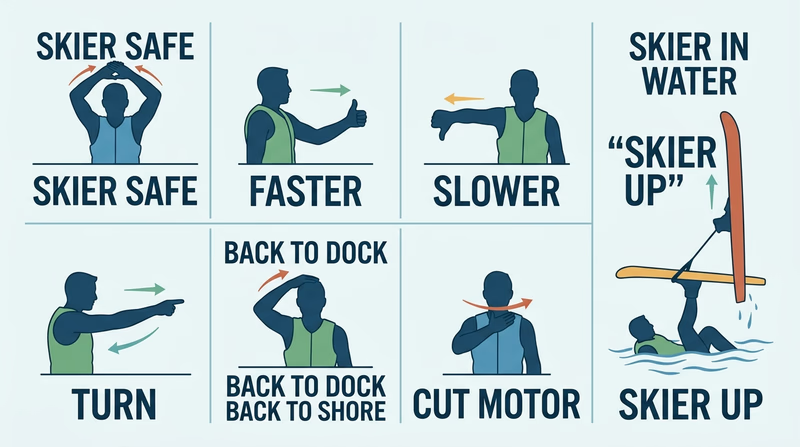
Standard skier signals to know
Be ready to show and explain each one- Skier safe: Hands clasped high over the head to show you are okay after a fall.
- Faster: Thumbs up or another agreed signal asking the driver to increase speed.
- Slower: Thumbs down or another agreed signal asking the driver to reduce speed.
- Turns: Point or signal the direction you want to turn.
- Back to dock: Pat your head or use the crew’s agreed signal to end the run and return.
- Cut motor: Signal clearly when the engine needs to stop for safety during pickup or boarding.
- Skier in water: Hold one ski upright if possible so nearby boats can spot you more easily.
Why these signals matter
Each signal solves a specific problem:
- Skier safe tells the crew that a fall was not automatically an emergency.
- Faster/slower helps the driver adjust to the rider’s size, skill, and equipment.
- Turns keeps the run predictable.
- Back to dock ends the run before fatigue turns into mistakes.
- Cut motor protects people near the stern and propeller.
- Skier in water improves visibility in busy areas.
Practice them before the boat starts
Signals work best when everyone agrees on them before leaving shore. Stand on land and rehearse them with your driver and observer so the crew responds automatically.
The observer’s job
The observer watches the skier continuously and passes the message to the driver. If the observer misses a signal, the driver’s decision may be late or wrong. That is why the observer should not be distracted by conversation, phones, or sightseeing.
When these signals are automatic, the next on-the-water skills get much easier: starting strong, crossing wakes cleanly, and falling in a controlled way.
Req 5 — Starts, Wakes, and Falls
This requirement is the heart of the badge’s action skills. You are showing that you can start under control, move across the wake with balance, and handle an unexpected stop without turning it into a dangerous crash.
Requirement 5a
A deepwater start often decides how confident the rest of the run will feel. If you rush, fight the boat, or stand too early, the start becomes harder than it needs to be. If you stay compact and let the boat do the work, the start becomes much smoother.
Entering the water from the boat
Use the stern platform or ladder when boarding and entering. Keep clear of the propeller area, and never approach the stern while the motor is running. Enter with your gear in an organized way so the rope, handle, skis, or board do not tangle around you.
Deepwater start basics
- float in a balanced crouch
- keep the handle low and close
- point skis or board in the right starting position
- let the boat pull you up instead of trying to jump to your feet
- keep arms straight and knees bent as you rise
For two skis, keep the tips up and close together. For a wakeboard, keep the board sideways until the pull begins, then let the board rotate under you. In both cases, patience matters more than strength.
Deepwater start sequence
Think smooth, not sudden- Get set: Body compact, knees bent, handle in close, eyes up.
- Wait for tension: Do not call for speed until the rope is tight.
- Let the boat pull: Resist the urge to stand up too fast.
- Rise gradually: Move from crouch to balanced riding stance.
- Settle before steering: Get stable before trying to turn or edge.
Requirement 5b
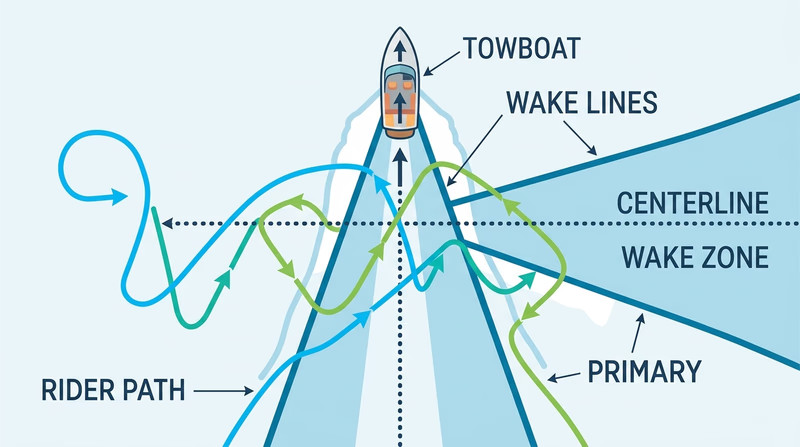
Wake crossing tests control, not bravado. The goal is to edge smoothly out, cross both wakes, and come back to center without getting bounced off balance.
Approach to wake crossing
Start outside the wakes in a stable stance with knees soft and eyes ahead. As you move in, hold a steady edge instead of making sudden jerks on the handle. Let your legs absorb the wake bumps while your upper body stays quiet.
What helps you stay in control
- a low, relaxed center of gravity
- handle close to your hips instead of high and far away
- steady pressure through both feet
- looking where you want to go, not down at the water
- patience returning to center before starting the next crossing
Returning to the center each time
The requirement is not only about crossing out and back. It is about returning to the center wake under control after each pass. That proves you are riding the whole pattern, not barely surviving one edge change.
Requirement 5c
Good riders do not just know how to stay up. They know how to stop a problem before it becomes a worse crash. Sometimes the safest move is to let go, fall away from danger, and protect your body.
Falling properly
If an obstacle, unsafe line, or loss of control makes continuing a bad idea, release the handle and fall in a controlled way. Do not try to save every run. A planned fall is much safer than hanging on too long.
In general, you want to:
- let go early rather than late
- avoid twisting against the pull of the rope
- fall away from the obstacle if possible
- keep arms and legs from reaching wildly for the water
- stay calm once you surface and signal your condition
Dropping the handle and coasting to a stop
This skill shows that you can end the pull smoothly instead of collapsing the second tension disappears. When you release the handle, stay balanced over your feet or board, keep knees bent, and ride the glide until you slow naturally.
These three parts fit together: controlled starts, controlled movement, and controlled exits. The final requirement keeps that same idea focused on your gear — fitting it correctly and handling it after a fall.
Req 6 — Fit and Recover Your Gear
A ski or wakeboard only works well when it matches the rider. Bindings that are too loose can let your foot slip at the wrong moment. Bindings that are too tight can be painful, hard to adjust, or unsafe in a fall. This requirement is about showing that you respect your equipment enough to fit it correctly on shore and manage it calmly in deep water.
Adjusting bindings on shore
Shore is where you make careful changes. You can inspect the binding, compare fit side to side, and ask for help before the boat is moving.
When fitting bindings, look for:
- a snug hold around the foot
- enough security that the foot does not wobble
- enough comfort that you can still flex and move naturally
- equal adjustment from left to right when appropriate
- straps, laces, or adjustment parts that are secure and not damaged
Why shore adjustment matters first
On land, you can notice problems before they become on-water frustration. If a boot rubs badly, a strap loosens, or your heel is not seated correctly, it is much easier to fix before launch than while floating and waiting on the boat.
Binding fit check
Questions to ask before you leave shore- Is my foot seated fully? Heel and forefoot should be in the right position.
- Is the fit snug without painful pressure? Secure does not mean crushing.
- Do both bindings match the setup I need? Check stance and spacing.
- Can I explain how to tighten or loosen them? You should know the adjustment method.
- Is the hardware in good condition? No broken parts, torn material, or loose fasteners.
Adjusting bindings in deep water
This part shows calm under real conditions. In deep water, you may be floating, managing the rope, and trying to keep your body position while fitting gear. Move slowly and keep yourself organized.
Good habits include:
- keeping the handle and rope clear of your body
- floating on your life jacket instead of fighting to stay upright
- adjusting one foot at a time if needed
- asking for a reset if the boat position or water conditions make the adjustment unsafe
Recovering a ski or wakeboard after a fall
Gear can come off in a fall, and the rider has to stay calm enough to recover it without creating a second problem. The key ideas are body control, patience, and communication.
If a ski or board comes off:
- signal that you are safe if you are uninjured
- keep the boat crew informed
- use your flotation and avoid exhausting yourself
- recover the gear methodically instead of thrashing after it
- put it back on only when you are stable and the situation is controlled
This finishes the badge’s required on-the-water skill set. From here, extended learning can show you where the sport goes next — from better technique to real-world places and organizations.
Extended Learning
Congratulations!
You have worked through a badge that asks for real preparation, real communication, and real physical control. Those same habits matter far beyond merit badges. They matter anytime you are responsible for your own safety and for the safety of a crew.
Reading Water Like an Experienced Rider
New riders often focus only on whether they can stand up. Experienced riders read the whole scene first. They notice wind lanes, boat chop, changing traffic, glare, shoreline hazards, and how the driver’s line will affect the pull. That wider awareness is one of the fastest ways to improve.
A good next challenge is to watch an entire run from the dock without riding. Ask yourself where the smooth water is, where the pickup will likely happen, and what hazards the driver is already avoiding. Then compare your predictions with what actually happens.
Improving Technique Without Rushing Tricks
Better water-sports technique usually comes from stronger basics, not from chasing harder moves too early. Deepwater starts become easier when body position is compact. Wake crossings become smoother when your knees absorb the bumps and your upper body stays quiet. Safe falls become more controlled when you let go early instead of fighting a bad line.
That means your next-level practice should include repetition of simple skills:
- clean starts with less wasted effort
- more consistent wake crossings on both sides
- smoother return to the center wake
- clearer, earlier communication with the observer and driver
Exploring Different Water-Sports Paths
If you enjoyed the badge, you do not have to stop at the exact skills in the requirements. You might try slalom skiing, kneeboarding, cable-park wakeboarding, adaptive water-sports programs, or local clinics taught by trained instructors. Each path teaches balance and water sense in a slightly different way.
One great question to ask is not just “What trick can I try next?” but “What environment will teach me something new?” A calm small lake, a larger busy lake, and a cable park all develop different habits.
Safety Leadership on the Water
One of the best ways to grow after this badge is to become the person who improves safety for everyone else. That might mean helping inspect life jackets, reviewing hand signals with younger Scouts, checking that the observer is ready, or reminding the group to pause for weather.
Water sports always look exciting from the outside. Real leadership is often the quiet habit of making sure the activity is still safe before the next rider starts.
Real-World Experiences
Watch a Tournament or Local Ski Show
Visit a Cable Wake Park
Take an Intro Lesson From a Certified Instructor
Help Run a Waterfront Safety Briefing
Organizations
National governing body for organized waterskiing and wake sports in the United States, with clubs, events, and athlete development resources.
Organization: USA Water Ski & Wake Sports — https://www.usawaterski.org/
Trusted source for first aid, CPR, and emergency-preparedness training that supports safer aquatics participation.
Organization: American Red Cross — https://www.redcross.org/
Authoritative boating-safety guidance, including life jacket information and safe boating education.
Organization: U.S. Coast Guard Boating Safety — https://www.uscgboating.org/
Child-safety organization with helpful guidance on injury prevention, water safety, and protective habits for families.
Organization: Safe Kids Worldwide — https://www.safekids.org/