Req 2 — Gear and Boat Safety
This requirement brings safety down to the equipment and crew level. A good life jacket protects the rider in the water, and a good driver-observer team protects the rider before, during, and after every pull.
Requirement 2a
A water-sports life jacket is not just something you wear because the rule says so. It keeps your airway above water after a fall, adds visibility during pickup, and gives you flotation if you are stunned, tired, or fighting cold-water shock.
The Water Sports merit badge pamphlet explains that properly fitted U.S. Coast Guard-approved life jackets must be worn in boating activity, and that towed riders must wear one marked for waterskiing. It also notes that Type III life jackets are the usual choice for waterskiing and wakeboarding.
What makes a good water-sports life jacket
- U.S. Coast Guard approved
- Marked for waterskiing or appropriate to the activity
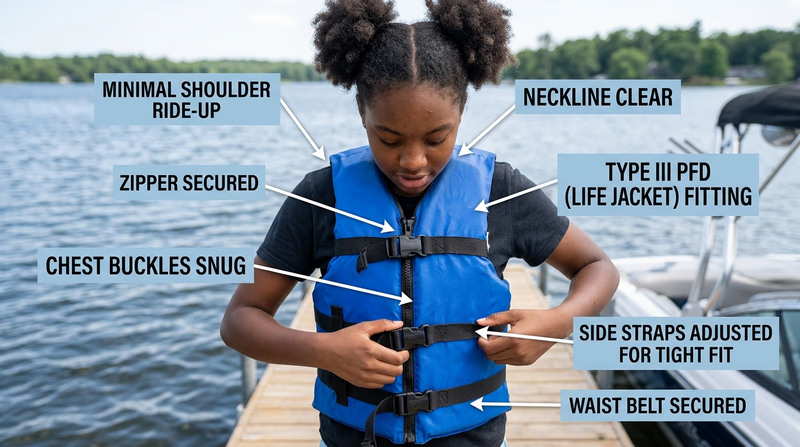
- Snug fit so it does not ride up
- Secure closures such as zippers, buckles, and side straps
- Freedom of movement so the rider can start, hold the handle, and recover safely
- Good condition with no torn fabric, missing buckles, or weakened flotation
Type I and Type II jackets are useful in other boating situations, but they are usually too bulky or restrictive for towed water sports. Type III flotation aids are more practical because they are designed for active movement. Type IV devices are throwables, not wearable life jackets, and Type V special-use devices should only be used according to their approval and training requirements.
How to fit a life jacket
Use this sequence when you demonstrate for your counselor
- Check the label: Confirm it is approved and intended for the activity.
- Put it on fully: Zip, buckle, and secure every closure.
- Tighten from the waist up: Adjust straps so the vest is snug but still lets you breathe and move.
- Test for ride-up: Raise your arms and have someone gently pull at the shoulders. The vest should not slide up over your chin or ears.
- Move like a rider: Pretend to crouch, hold a handle, and rotate your shoulders. A good fit stays secure during movement.
Why you must always wear it
Falls in water sports are not gentle tumbles onto grass. A rider may hit the water hard, lose the handle, get turned around, or need to wait for a pickup in boat traffic or cold conditions. A life jacket gives immediate flotation during all of those moments. It is especially important because cold-water shock can cause involuntary gasping and loss of control right after immersion.
Requirement 2b
This requirement names a formal safety artifact, so you should be ready to discuss its actual points instead of speaking only in general terms. The Water Sports merit badge pamphlet lists the Water Sports Safety Code in two parts: things you should always do and things you should never do.
Water Sports Safety Code — Always
Habits that should be true on every run
- Learn from a good instructor or a person with advanced ability in the sport.
- Wear a life jacket when taking part in water sports.
- Look ahead and know where you are going at all times.
- Stay away from solid objects such as docks, boats, and stumps.
- Be courteous and keep distance from other skiers, boats, and swimmers.
- Run parallel to shore and come in slowly when landing.
- Learn new maneuvers step by step instead of rushing progress.
- Have an extra person in the boat to watch the skier.
- Signal that you are okay after a fall by clasping hands over your head or waving.
- Hold up a ski in busy boating areas while waiting in the water.
- Check equipment for sharp or protruding parts before use.
- Use a stern platform or ladder when climbing back into the boat.
Water Sports Safety Code — Never
Rules that prevent some of the worst accidents
- Never ski or wakeboard in shallow or unknown water.
- Never put body parts through the handle or wrap the rope around your body.
- Never yell “Hit it!” before the rope is tight and your start position is ready.
- Never ride to the point of exhaustion.
- Never ski or wakeboard at night.
- Never ride directly ahead of another boat.
- Never ski double with different rope lengths.
- Never attempt a fast landing straight toward shore.
- Never jump from a moving boat.
- Never approach the stern or climb in while the motor is running.
Boat-operator precautions
The rider may get most of the attention, but a careless driver can ruin the whole activity. The operator should:
- know local boating rules and traffic patterns
- accelerate steadily, not violently
- keep clear of swimmers, docks, and congested areas
- make wide, deliberate pickups after falls
- watch water depth and hazards all the way through the route
- follow the observer’s communication, because the observer has the best view of the skier
- cut the motor when needed during pickup and boarding
A rider who knows the code and wears the right life jacket is ready for the next gate: proving solid swimming ability before the towing skills begin.