Req 4 — Hand Signals That Keep You Safe
A rider behind the boat cannot tap the driver on the shoulder and ask for a slower speed. Once the engine is running, hand signals become the language that keeps everyone coordinated. This is why standard skier signals matter so much: they replace guesswork.
The Water Sports merit badge pamphlet explains that every ski boat should have a designated observer who communicates the skier’s signals to the driver. That means the observer is not an extra passenger. The observer is part of the safety system.
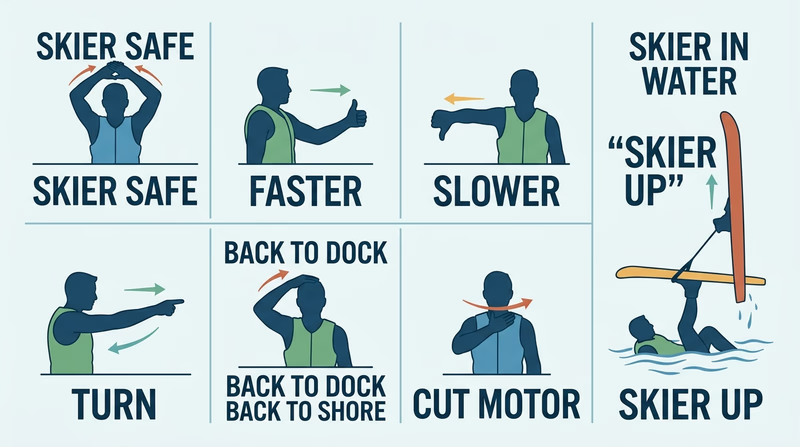
Standard skier signals to know
Be ready to show and explain each one
- Skier safe: Hands clasped high over the head to show you are okay after a fall.
- Faster: Thumbs up or another agreed signal asking the driver to increase speed.
- Slower: Thumbs down or another agreed signal asking the driver to reduce speed.
- Turns: Point or signal the direction you want to turn.
- Back to dock: Pat your head or use the crew’s agreed signal to end the run and return.
- Cut motor: Signal clearly when the engine needs to stop for safety during pickup or boarding.
- Skier in water: Hold one ski upright if possible so nearby boats can spot you more easily.
Why these signals matter
Each signal solves a specific problem:
- Skier safe tells the crew that a fall was not automatically an emergency.
- Faster/slower helps the driver adjust to the rider’s size, skill, and equipment.
- Turns keeps the run predictable.
- Back to dock ends the run before fatigue turns into mistakes.
- Cut motor protects people near the stern and propeller.
- Skier in water improves visibility in busy areas.
Practice them before the boat starts
Signals work best when everyone agrees on them before leaving shore. Stand on land and rehearse them with your driver and observer so the crew responds automatically.
The observer’s job
The observer watches the skier continuously and passes the message to the driver. If the observer misses a signal, the driver’s decision may be late or wrong. That is why the observer should not be distracted by conversation, phones, or sightseeing.
When these signals are automatic, the next on-the-water skills get much easier: starting strong, crossing wakes cleanly, and falling in a controlled way.