 Getting Started
Introduction & Overview
Weather is more than whether you need a jacket today. It affects flight schedules, campouts, crop harvests, road crews, wildfire danger, shipping, and safety decisions you make every week. In this guide, you will learn how the atmosphere works, how to spot patterns in the sky, and how to stay safer when conditions turn dangerous.
Then and Now
Then
For most of human history, weather forecasting started with careful watching. Farmers noticed wind shifts, sailors read the clouds, and travelers learned that a sudden drop in pressure or the look of the western sky could mean trouble. Long before satellites or radar, people survived by paying attention to what the air, clouds, and seasons were telling them.
Now
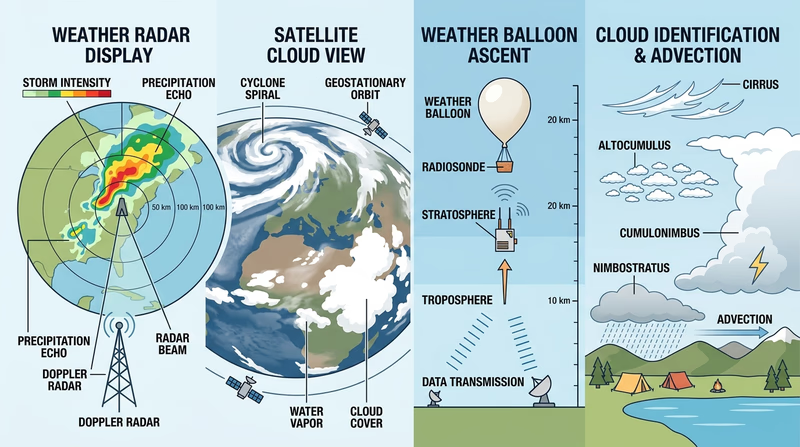
Today, meteorologists still observe the sky, but they also use weather balloons, radar, satellites, ocean buoys, computer models, and thousands of local reports. That mix of old-school observation and modern technology helps communities prepare for hurricanes, flash floods, winter storms, wildfire smoke, and heat waves. Weather science matters because good information gives people time to act.
Get Ready!
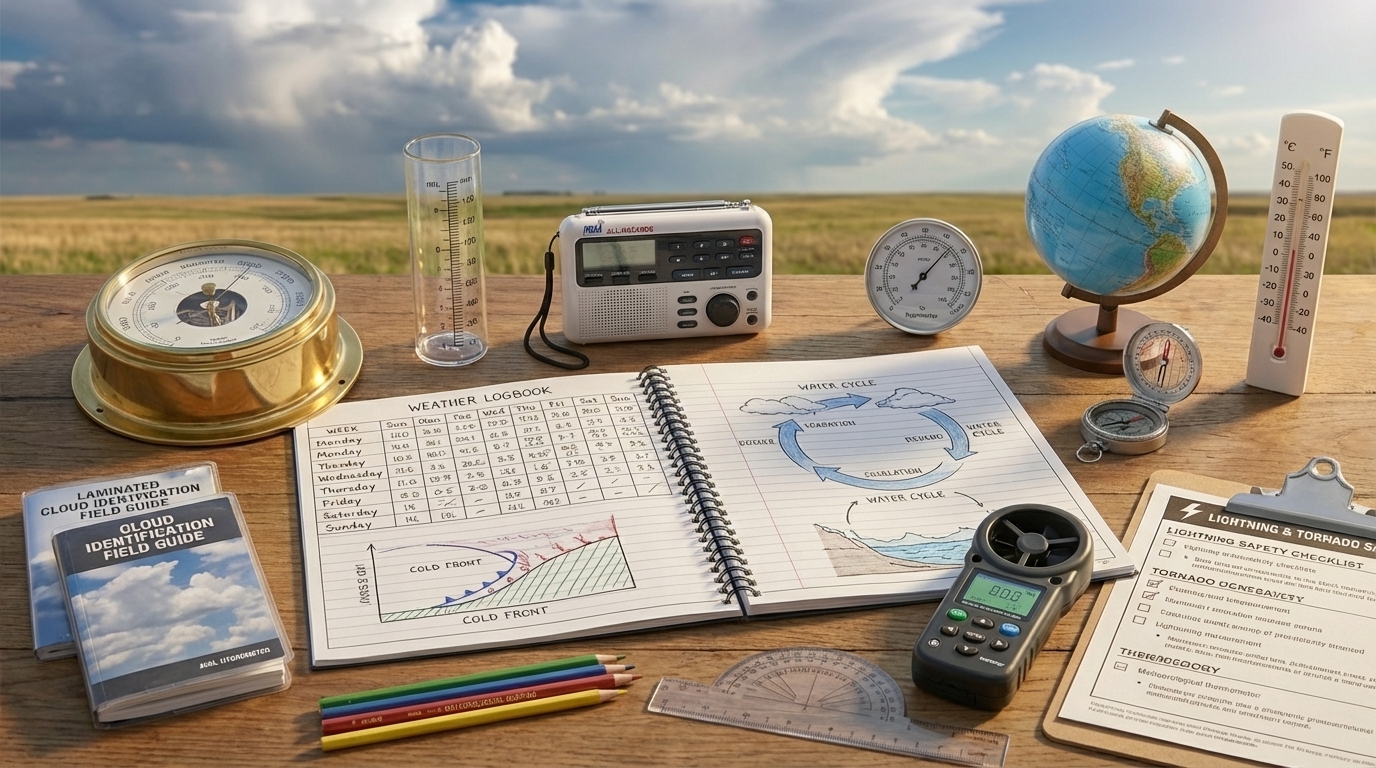
This badge rewards Scouts who notice details. If you like checking the sky before a hike, tracking storms on a map, or figuring out why dew covered the grass this morning, you are already thinking like a meteorologist. Bring your curiosity, a notebook, and a habit of observing the same place carefully over time.
Kinds of Weather
Fair-weather patterns
Some weather is calm and steady. Clear skies, light winds, and slowly changing temperatures often happen when stable air and higher pressure dominate an area. These are the days when a forecast may seem boring, but even fair weather teaches you how the atmosphere behaves.
Stormy weather
Other days are full of rising air, thick clouds, strong winds, and rapid changes. Thunderstorms, blizzards, tropical systems, and severe cold fronts all show what happens when air masses clash and energy moves quickly through the atmosphere. These are the patterns that demand respect from hikers, boaters, and anyone working outdoors.
Local weather
Every place has its own weather habits. Mountains push air upward and help clouds form. Large lakes can create extra snow or fog. Coastlines feel the influence of ocean temperatures and sea breezes. Paying attention to your local area helps you understand why the same storm can affect two nearby places very differently.
Long-term climate patterns
Weather is what is happening now or in the next few days. Climate is the long-term pattern of temperature, precipitation, and seasons in a place. A desert climate, a humid subtropical climate, and a polar climate all produce very different everyday weather.
Next Steps
You are about to start with the big picture: what meteorology is, how weather differs from climate, and why forecasts matter so much to people whose work and safety depend on the sky.