Weather Merit Badge — Complete Digital Resource Guide
https://merit-badge.university/merit-badges/weather/guide/
Introduction & Overview
Weather is more than whether you need a jacket today. It affects flight schedules, campouts, crop harvests, road crews, wildfire danger, shipping, and safety decisions you make every week. In this guide, you will learn how the atmosphere works, how to spot patterns in the sky, and how to stay safer when conditions turn dangerous.
Then and Now
Then
For most of human history, weather forecasting started with careful watching. Farmers noticed wind shifts, sailors read the clouds, and travelers learned that a sudden drop in pressure or the look of the western sky could mean trouble. Long before satellites or radar, people survived by paying attention to what the air, clouds, and seasons were telling them.
Now
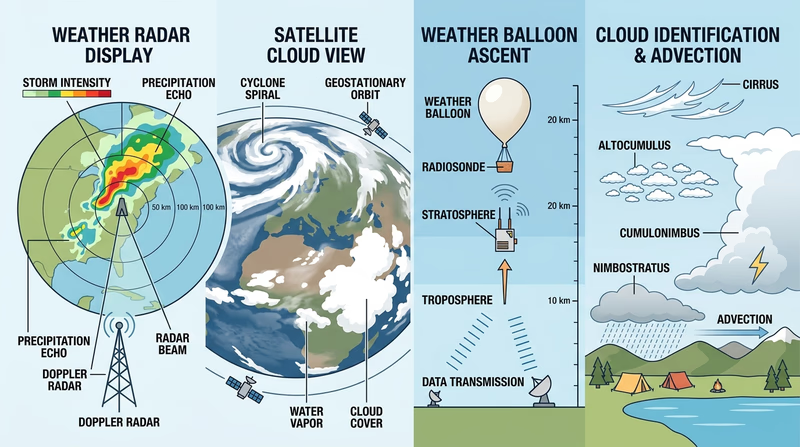
Today, meteorologists still observe the sky, but they also use weather balloons, radar, satellites, ocean buoys, computer models, and thousands of local reports. That mix of old-school observation and modern technology helps communities prepare for hurricanes, flash floods, winter storms, wildfire smoke, and heat waves. Weather science matters because good information gives people time to act.
Get Ready!
This badge rewards Scouts who notice details. If you like checking the sky before a hike, tracking storms on a map, or figuring out why dew covered the grass this morning, you are already thinking like a meteorologist. Bring your curiosity, a notebook, and a habit of observing the same place carefully over time.
Kinds of Weather
Fair-weather patterns
Some weather is calm and steady. Clear skies, light winds, and slowly changing temperatures often happen when stable air and higher pressure dominate an area. These are the days when a forecast may seem boring, but even fair weather teaches you how the atmosphere behaves.
Stormy weather
Other days are full of rising air, thick clouds, strong winds, and rapid changes. Thunderstorms, blizzards, tropical systems, and severe cold fronts all show what happens when air masses clash and energy moves quickly through the atmosphere. These are the patterns that demand respect from hikers, boaters, and anyone working outdoors.
Local weather
Every place has its own weather habits. Mountains push air upward and help clouds form. Large lakes can create extra snow or fog. Coastlines feel the influence of ocean temperatures and sea breezes. Paying attention to your local area helps you understand why the same storm can affect two nearby places very differently.
Long-term climate patterns
Weather is what is happening now or in the next few days. Climate is the long-term pattern of temperature, precipitation, and seasons in a place. A desert climate, a humid subtropical climate, and a polar climate all produce very different everyday weather.
Next Steps
You are about to start with the big picture: what meteorology is, how weather differs from climate, and why forecasts matter so much to people whose work and safety depend on the sky.
Req 1 — Meteorology, Weather, and Climate
A pilot deciding whether to take off, a farmer deciding whether to plant, and a construction crew deciding whether to pour concrete all care about the same thing: what the atmosphere is about to do. This requirement introduces the language of weather science and shows why forecasts are not just interesting—they help people protect lives, equipment, time, and money.
What is meteorology?
Meteorology is the science of the atmosphere and the weather it produces. Meteorologists study temperature, air pressure, wind, clouds, moisture, storms, and all the ways those pieces interact. They collect observations, compare patterns, and use models to predict what is likely to happen next.
A simple way to remember it is this:
- Meteorology is the science.
- Weather is the day-to-day condition of the atmosphere.
- Climate is the long-term pattern of weather in a place.
Weather vs. climate
Weather includes things you can notice in the short term: rain today, wind this afternoon, frost tomorrow morning, or a thunderstorm arriving before dinner. It can change quickly, sometimes within minutes.
Climate is the bigger pattern. It describes what is typical over many years in a place, such as hot and humid summers, mild wet winters, or dry conditions most of the year. A single snowy day does not create a cold climate. A long record of seasons, temperatures, and precipitation does.
Here is a useful comparison:
| Term | Time scale | Examples |
|---|---|---|
| Weather | Minutes to days | A cold front tonight, afternoon thunderstorms, patchy fog at sunrise |
| Climate | Many years | Desert, tropical rainforest, humid continental, polar |
🎬 Video: What is Meteorology? (video) — https://youtu.be/UKOu9OKvvb4?si=dhC0zfySCYRgQ_Md
🎬 Video: Weather vs Climate (video) — https://youtu.be/6Aigcv7UnTU?si=CUj8ne3OVaoeZB_W
Why forecasts matter to different groups
Forecasts are useful because weather changes the risks and opportunities people face. The same forecast can mean something very different to different jobs.
Farmers
Farmers care about rain, temperature, frost, hail, humidity, drought, and wind. A late freeze can kill blossoms on fruit trees. Heavy rain can delay planting or wash away soil. Dry weather may force irrigation. Wind can damage crops or spread wildfire.
Forecasts help farmers decide when to plant, irrigate, harvest, protect animals, cover sensitive plants before frost, or delay work when storms or hail are likely.
Sailors
Sailors pay close attention to wind direction, wind speed, waves, visibility, fog, pressure changes, thunderstorms, and tropical systems. On the water, weather can change a safe trip into an emergency quickly.
Forecasts help sailors decide when to leave port, reef sails, avoid storms, choose a safer route, or stay in harbor.
Aviators
Aviators depend on weather for safety from takeoff to landing. Pilots watch for crosswinds, turbulence, icing, thunderstorms, low clouds, visibility, and wind shear. Even a small weather detail can matter because aircraft move through the atmosphere at high speed.
Forecasts help aviators decide whether to delay or cancel a flight, change altitude or route, carry extra fuel, or avoid icing and thunderstorm areas.
Outdoor construction crews
Construction workers deal with heat stress, cold stress, lightning, wind, rain, snow, mud, and frozen ground. Weather affects both safety and the quality of the work. Concrete, roofing, painting, crane work, and excavation all depend on conditions.
Forecasts help crews decide when to stop work, protect materials, schedule concrete pours, delay roofing or lifting operations, and prepare workers for extreme heat or cold.
Why forecasts matter
Each group depends on weather for a different reason- Farmers: Forecasts protect crops, soil, and livestock.
- Sailors: Forecasts reduce the risk of being caught by rough water or storms.
- Aviators: Forecasts help pilots avoid dangerous conditions in the air and at airports.
- Construction crews: Forecasts prevent injuries and help materials perform the way they should.
What to say to your counselor
When you discuss this requirement, do more than give short definitions. Explain how the ideas connect. You might say that meteorology studies the atmosphere, weather describes short-term conditions, and climate describes long-term patterns. Then give real examples of how a forecast changes decisions for each group.
You can make your explanation stronger by using situations such as these:
- A farmer hears that frost is possible overnight.
- A sailor sees a forecast for rising winds and thunderstorms.
- A pilot checks for icing and low ceilings before departure.
- A construction supervisor sees a high-wind advisory for crane work.
Those examples show that weather knowledge is practical, not just academic.
National Weather Service Explore current forecasts, hazard maps, radar, and forecast discussions from the official U.S. weather agency. Link: National Weather Service — https://www.weather.gov/As you move to the next requirement, keep this idea in mind: understanding weather is not only about knowing what is happening in the sky. It is also about knowing what actions keep people safe when conditions turn dangerous.
Req 2 — Dangerous Weather and Family Safety
A beautiful day can turn dangerous fast. The goal of this requirement is not to memorize scary weather facts. It is to help you recognize hazards early, know the right outdoor response, and make sure your family has talked through what to do before a storm, flood, or temperature emergency ever starts.
Watch vs. warning
The Weather merit badge pamphlet explains this clearly: a watch means hazardous weather is possible or conditions are favorable for it to develop, while a warning means hazardous weather is already happening or heading your way.
That difference matters because the right response changes:
- Watch = pay attention, review plans, stay alert, and be ready to move.
- Warning = take protective action now.
🎬 Video: Know the Difference Between a Watch and a Warning (video) — https://youtu.be/bXWZdKVoII8
Fast memory trick
Use this to explain the difference clearly- Watch: Watch the sky, your radio, and your plans.
- Warning: Warning means act now.
Five dangerous weather conditions
You can choose many valid examples, but these five are common and important for Scouts outdoors.
Thunderstorms and lightning
Lightning can strike far from the center of a storm. If you hear thunder, you are close enough to be struck.
Outdoor safety rules:
- Go to a substantial building or hard-topped vehicle right away.
- Leave open fields, ridge tops, towers, waterfronts, and isolated trees.
- Stop swimming, boating, and fishing.
- Wait at least 30 minutes after the last thunder before resuming activity.
Flash floods
Flash floods can happen with little warning, especially in narrow valleys, dry washes, low crossings, and places downstream from heavy rain you cannot even see.
Outdoor safety rules:
- Move immediately to higher ground.
- Stay out of streambeds, drainage channels, and low-water crossings.
- Never walk, swim, or drive through floodwater.
- Camp well above creeks and rivers if heavy rain is possible.
Tornadoes
Tornadoes bring violent rotating winds and dangerous flying debris. You may get only a short warning.
Outdoor safety rules:
- Get to a sturdy building if one is available.
- Go to the lowest level, in a small interior room away from windows.
- If no building is available, identify a low spot only as a last resort and protect your head.
- Avoid vehicles, tents, and highway overpasses as shelter.
Winter storms and dangerous cold
Wind, wet clothing, and low temperatures can lead to frostbite and hypothermia faster than many people expect.
Outdoor safety rules:
- Dress in layers and keep extra dry clothing packed.
- Protect hands, feet, ears, and face.
- Eat, drink, and keep moving before you get dangerously cold.
- Turn back early if wind, snow, or visibility make travel unsafe.
🎬 Video: Winter's Hidden Hazard - Cold Weather Health & Safety (video) — https://youtu.be/g3vEkqotiE8?si=cw3WFhC7u4ewKzU2
Hurricanes or tropical storms
These systems bring strong winds, flooding rain, storm surge near coasts, and tornado risk. Even if you live inland, a tropical system can still be dangerous.
Outdoor safety rules:
- Follow evacuation orders early.
- Do not camp near shorelines, flood zones, or rivers when a storm is approaching.
- Secure gear before strong winds arrive.
- Stay indoors and away from floodwater during the storm.
🎬 Video: Hurricane Preparation and Safety (video) — https://youtu.be/SsTPG8Occv4?si=gNVnhnMLDcnG9sEL
Family discussion matters
The requirement ends with something important: discuss safety rules with your family. That step makes your weather knowledge useful at home, not just in a badge conversation.
Talk through questions like these:
- Where would we go during a tornado warning?
- How would we get emergency alerts at night?
- If roads flood, what route would we avoid?
- What supplies do we need for a power outage in heat, cold, or storms?
- If a campout is planned, who decides when to cancel or leave early?
🎬 Video: Severe Weather Safety (video) — https://youtu.be/H6icWfyMBNk?si=GmtqrGlxqjA0L4tl
Talking about hazards is one thing. The next requirement shows you where to get the forecast and the warning information that helps you act on time.
Req 3 — Forecasts and Warnings
Checking the weather should be part of trip planning, not an afterthought in the parking lot. A Scout heading outdoors needs two kinds of information: a forecast that helps with planning ahead, and a warning system that can get urgent hazard information to you fast.
Good forecast sources for outdoor planning
You need sources that are current, local, and easy to check again as plans change.
National Weather Service forecast pages
The National Weather Service is one of the best sources for planning hikes and campouts. It offers local forecasts, hazard maps, hourly timelines, radar, and forecast discussions. If you know your destination, you can often get much better information than a general city forecast gives.
National Weather Service (website) Find local forecasts, radar, alerts, and hourly details for the exact area where your troop or family will be outdoors. Link: National Weather Service (website) — https://www.weather.gov/Local TV or radio forecasts
Local weathercasters often explain not just what the forecast is, but why it matters in your area. They may highlight flooding spots, timing of storms, school impacts, and local terrain effects that are easy to miss in a generic forecast.
Weather apps with official alert support
A weather app can be useful if it provides updated radar, hourly forecasts, and reliable alert notifications. The best app is not just the prettiest one. It is the one you trust to update quickly and clearly when conditions change.
🎬 Video: The Best Weather App? (video) — https://www.youtube.com/shorts/Nve356YrnFg
Strong warning sources for emergencies
A forecast tells you what may happen. A warning source needs to reach you when dangerous weather is happening now.
NOAA Weather Radio All Hazards
The merit badge pamphlet points out that NOAA Weather Radio All Hazards provides up-to-the-minute weather information on special weather-band frequencies. This is especially useful at home, in camp, and overnight when you may not be staring at a phone.
Wireless emergency alerts on phones
Many phones receive urgent weather alerts automatically. These are useful because people usually have phones close by, but they still have weaknesses: batteries die, signal can fail, and not everyone hears a phone in a storm.
Sirens, public address systems, and event leaders
At home, a community tornado siren or local emergency alert system may be part of the warning chain. During Scout outings, the troop leadership may also relay warnings after monitoring radio, phone, or campground systems. That is why good communication plans matter.
🎬 Video: Ways To Get Warnings (video) — https://youtu.be/ZqmguEWojYw?si=i5mOnz2kN1QUpdKO
Use more than one source
No single source is perfect. A smart Scout uses backups.
| Need | Best approach |
|---|---|
| Planning a trip | Check an official forecast, then compare with local radar or a trusted local forecaster |
| Overnight warning coverage | Use NOAA Weather Radio and phone alerts |
| Remote outdoor activity | Assign an adult or youth leader to monitor updates before and during the activity |
| Home safety | Know how warnings arrive by phone, radio, and local emergency systems |
What to say to your counselor
To complete this requirement well, name at least two forecast sources and two warning sources. Then explain why each is useful.
For example, you might say:
- I would use the National Weather Service and a trusted local TV weather source to prepare for a campout.
- I would rely on NOAA Weather Radio and wireless phone alerts for emergency warnings.
You can also explain the difference between planning tools and warning tools. Forecasts help you decide what might happen. Warnings tell you when to act.
Pre-trip weather check
A simple routine Scouts can use before heading outdoors- The night before: Read the forecast and note storms, temperatures, and wind.
- The morning of: Recheck timing, especially for thunderstorms and flood risk.
- At the trailhead or campsite: Look at radar and active alerts.
- During the activity: Keep at least one warning source running.
The next requirement goes deeper into why forecasts work at all. You will learn how pressure systems and fronts help create the weather patterns forecasters are tracking.
Req 4 — Pressure Systems and Fronts
A weather map can look crowded with lines, arrows, and symbols, but it is really showing one big story: where air is sinking, where air is rising, and where different air masses are meeting. Once you understand pressure systems and fronts, a forecast starts to make much more sense.
High pressure vs. low pressure
Air pressure is the weight of the air above you pushing downward. Meteorologists track areas where pressure is relatively higher or lower than nearby places.
High-pressure systems
High pressure is usually linked with sinking air. Sinking air tends to warm and dry out, which makes cloud formation less likely. That is why high pressure is often connected with fair or calmer weather.
Fair does not always mean perfect. High pressure can also bring hot, still summer days, cold winter nights, fog trapped near the ground, or stale air that does not mix well. But in everyday weather talk, high pressure is usually the system connected with more settled weather.
Low-pressure systems
Low pressure is usually linked with rising air. Rising air cools as it expands, and cooler air is more likely to form clouds and precipitation. That is why low pressure is often related to poorer weather, including rain, snow, stronger winds, and stormier conditions.
The Weather merit badge pamphlet also notes that low-pressure regions often dominate the boundaries between air masses, where active weather develops.
🎬 Video: Weather 101: High Pressure vs. Low Pressure (video) — https://youtu.be/8mHEry8tSPM?si=_Rx2aPuB2UpvW9o1
What is a front?
A front is the boundary where two different air masses meet. Those air masses may differ in temperature, moisture, or both. Because they behave differently, the boundary between them is often where important weather happens.
The Weather merit badge pamphlet describes fronts as regions of transition. That is a good phrase to remember. Fronts are change zones.
Cold fronts
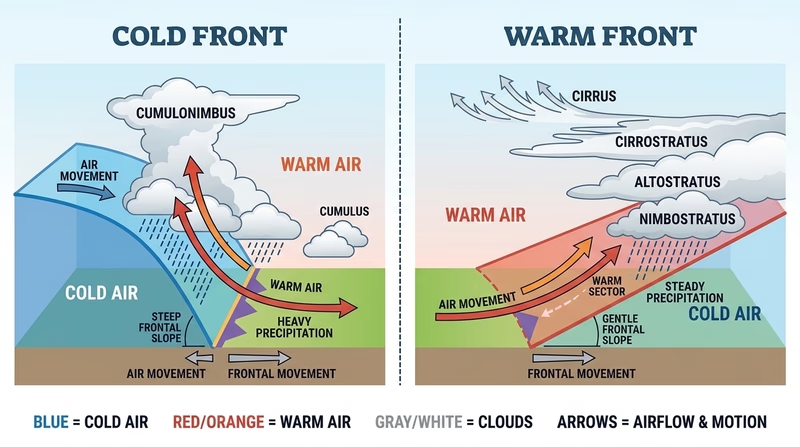
A cold front forms when colder, denser air replaces warmer air. Because the cold air stays near the ground and wedges underneath the warm air, the warm air is forced upward rather quickly.
That quick lift often creates:
- a steeper frontal slope
- a narrower band of active weather
- towering clouds such as cumulonimbus
- showers or thunderstorms near the front
Cold fronts can bring dramatic changes in a short time. Temperature drops, wind shifts, and stormy weather may arrive quickly.
Warm fronts
A warm front forms when warmer air replaces colder air. Warm air tends to glide up and over the cooler air instead of shoving underneath it. That produces a gentler slope.
That gentler lift often creates:
- layered clouds spreading out ahead of the front
- precipitation that may begin before the front passes
- a longer, more gradual change in weather
The Weather merit badge pamphlet explains that clouds and rain can arrive a day or more before a warm front actually passes.
🎬 Video: What Are Weather Fronts? Warm Front, Cold Front? (video) — https://youtu.be/5Cnx5Bzctas?si=bJcnCUw3ysbD99rD
What to include in your drawings
For your counselor, your cross sections should show more than two arrows and a label. Make sure your drawing includes all of these elements:
| Feature | Cold front | Warm front |
|---|---|---|
| Which air mass is advancing | Cold air | Warm air |
| Slope of the front | Steep | Gentle |
| Typical clouds | Cumulonimbus, stratocumulus | Stratus, nimbostratus |
| Where precipitation tends to form | Near or just ahead of the front | Ahead of the front over a broader area |
| How weather changes | Faster and more dramatic | Slower and more gradual |
Sky clues you can notice outdoors
You do not need a giant weather center to notice fronts. The pamphlet describes how a frontal system may be announced by a procession of cloud types. High wispy cirrus may appear first, then thicker layered clouds, and finally dark rain clouds. A swelling cumulus cloud, on the other hand, can warn you that a cold front or unstable air may be building toward thunderstorms.
This connects closely to Req 6, where you will identify cloud types and relate them to weather.
Pressure systems and fronts explain the big picture. Next you will zoom in on the processes that create wind, rain, lightning, and hail inside those weather systems.
Req 5 — Wind, Rain, Lightning, and Hail
This requirement gets to the moving parts of weather. Instead of memorizing vocabulary, think about what the atmosphere is always trying to do: balance differences in temperature, pressure, and moisture. Wind, rain, lightning, and hail are all results of that constant movement and energy transfer.
What causes wind?
Wind is air moving from one place to another because of differences in air pressure. Air tends to move from areas of higher pressure toward areas of lower pressure. The bigger the pressure difference, the stronger the wind can become.
Pressure differences often start because the sun heats Earth unevenly. Land and water warm at different rates. Dark surfaces absorb more heat than light ones. The equator receives more direct sunlight than the poles. As air warms, it becomes less dense and tends to rise. Cooler, denser air sinks and moves in to replace it. That movement is wind.
Other factors matter too:
- Earth’s rotation bends large-scale wind patterns.
- Mountains, valleys, forests, and buildings redirect local winds.
- Fronts and storms tighten pressure differences and can make winds much stronger.
Why does it rain?
Rain starts with water vapor in the air. When warm, moist air rises, it cools. Cooler air cannot hold as much water vapor as warmer air can, so the vapor begins to condense onto tiny particles in the air. That creates cloud droplets.
As those droplets collide and grow, they become heavy enough to fall as precipitation. If the air is warm enough from cloud to ground, that precipitation falls as rain.
Rain commonly forms when:
- warm air rises along a front
- air is forced upward over mountains
- strong sunshine causes rising air and thunderstorms
- moist air cools enough to reach saturation
🎬 Video: What Creates Weather? (video) — https://youtu.be/OtHc497jn_U?si=TZ7dkSYs7wj_8P_c
How lightning forms
Lightning forms inside storm clouds when strong updrafts and downdrafts move ice particles, water droplets, and hail around violently. Those collisions help separate electrical charges inside the cloud. Over time, the difference in charge becomes so strong that electricity suddenly discharges.
That discharge may happen:
- within one cloud
- between two clouds
- between a cloud and the ground
Thunder is the sound made when the lightning channel superheats the air so quickly that the air expands like a shock wave.
🎬 Video: What Causes Lightning? (video) — https://youtu.be/VqXnN_FQfrc?si=YiUTVTx49LXWtYbO
How hail forms
Hail forms inside strong thunderstorm clouds, especially ones with powerful updrafts. A small ice particle gets carried upward into very cold air, where liquid water freezes onto it. The growing hailstone may fall, then get lifted again by another strong updraft. Each trip adds another layer of ice.
When the hailstone becomes too heavy for the updraft to support, it falls to the ground.
That means large hail usually tells you the storm has very strong upward motion.
🎬 Video: What is Hail? (video) — https://youtu.be/6M-ycZLSF1w?si=eMavnw4Y-B1ma5QY
A simple way to connect the four ideas
| Weather event | Main cause |
|---|---|
| Wind | Air moves because pressure is different from place to place |
| Rain | Moist air rises, cools, condenses, and droplets grow heavy enough to fall |
| Lightning | Charges separate inside storm clouds and discharge suddenly |
| Hail | Strong storm updrafts lift ice repeatedly so it grows in layers |
How to explain this to your counselor
Try connecting each process to a picture in your mind:
- Wind is air rushing to balance pressure differences.
- Rain is water vapor cooling and returning to Earth.
- Lightning is a giant electrical discharge from separated charges in a storm.
- Hail is layered ice grown by powerful updrafts.
If you explain the causes instead of only naming the events, your answer will sound much stronger.
The next requirement helps you read one of the easiest clues weather gives us: clouds. Once you know their levels and shapes, the sky becomes a forecast tool.
Req 6 — Cloud Clues
Clouds are one of the easiest weather tools to use because you can see them without special equipment. A Scout who learns to recognize a few common cloud families can often guess whether the weather is staying calm, changing gradually, or building toward rain or storms.
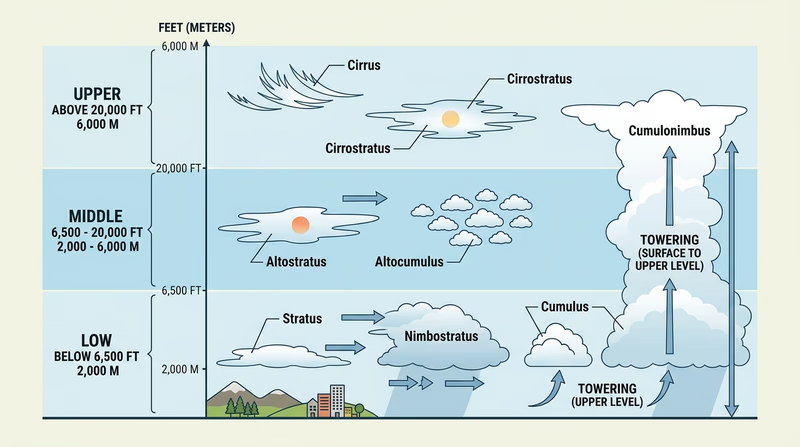
Upper-level clouds
High clouds form in the colder upper part of the atmosphere and are often thin or wispy because they are made largely of ice crystals.
Cirrus
Cirrus clouds look feathery or streaky. They often appear in fair weather, but they can also be the first sign that a change is coming.
Cirrostratus
Cirrostratus clouds form a thin veil across the sky. They can make the sun or moon look hazy and may create halos. They often show that moisture is increasing high in the atmosphere and that a warm front may be approaching.
Cirrocumulus
Cirrocumulus clouds appear as small ripples or patches, sometimes called a “mackerel sky.” They may still mean fair weather, but they can also hint that the atmosphere is changing.
Middle-level clouds
Middle clouds are thicker and often appear gray or layered.
Altostratus
Altostratus clouds spread across the sky as a gray blanket. The sun may still show through dimly. The Weather merit badge pamphlet notes that altostratus often indicates an approaching warm front and a change toward rain or snow.
Altocumulus
Altocumulus clouds look patchy or clumped. They can be part of fair weather, but if they build and thicken in warm, humid conditions, they may signal growing instability.
Low-level clouds
Low clouds are closest to the ground and often have the clearest connection to immediate local weather.
Stratus
Stratus clouds form a low gray layer, almost like fog lifted off the ground. They often bring gloomy skies, mist, or light drizzle.
Stratocumulus
Stratocumulus clouds appear lumpy or rolled but still stay in a broad layer. They may bring little precipitation, though they can help show that cooler air is moving in.
Nimbostratus
Nimbostratus clouds are dark, thick, and widespread. They are classic rain-or-snow clouds that often bring steady precipitation.
Towering storm clouds
Cumulus
Small puffy cumulus clouds are common in fair weather. On a warm day, they often mean the atmosphere is bubbling upward but not yet severe.
Cumulonimbus
Cumulonimbus clouds are the giants of thunderstorm weather. They grow tall because strong rising air is carrying moisture upward fast. These clouds are linked to lightning, heavy rain, hail, strong winds, and sometimes tornadoes.
🎬 Video: What Are the Different Types of Clouds? (video) — https://youtu.be/JIkEMBiT6hQ?si=3bZrjTTiTTFmspzQ
Matching clouds to weather
| Cloud type | Level | Common weather clue |
|---|---|---|
| Cirrus | Upper | Fair weather now, but change may be coming |
| Cirrostratus | Upper | Moisture increasing aloft; front may be on the way |
| Altostratus | Middle | Thickening sky; rain or snow may follow |
| Stratus | Low | Gray, damp, drizzly weather |
| Nimbostratus | Low | Steady rain or snow |
| Cumulus | Low to growing vertical | Fair weather if small and scattered |
| Cumulonimbus | Towering vertical | Thunderstorms and severe weather risk |
Watching a weather change unfold
The pamphlet describes a common sequence before a frontal system arrives: high wispy clouds first, then a thicker veil, then darker layered clouds, and finally precipitation. That sequence is useful because it shows that clouds are not random decorations. They are clues to what the atmosphere is doing.
This connects directly to Req 4. Fronts help explain why cloud types change in a predictable order.
Next you will follow the moisture itself. The water cycle explains how evaporation, condensation, and precipitation connect the sky, the ground, and the oceans into one moving system.
Req 7 — The Water Cycle in Motion
The water cycle is one of the most important ideas in weather because it explains where clouds and precipitation come from. The air does not make water out of nothing. It moves water already on Earth from oceans, lakes, soil, plants, clouds, rivers, ice, and groundwater through a repeating cycle.
The major processes to include
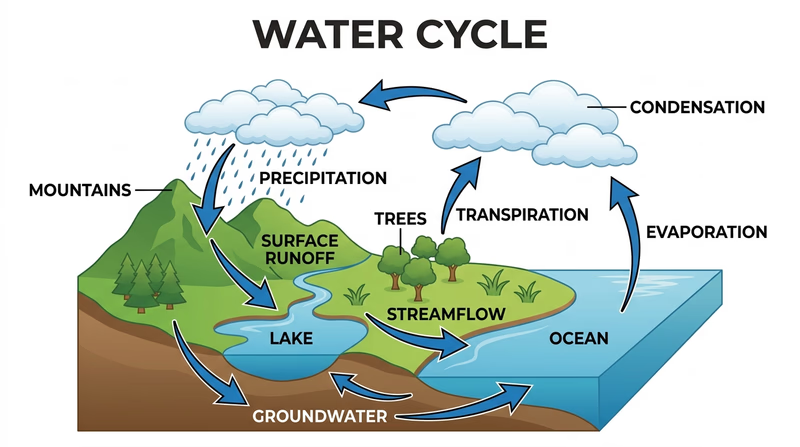
The Weather merit badge pamphlet highlights these major parts of the cycle: evaporation, transpiration, condensation, precipitation, runoff, streamflow, and groundwater movement. Those are the labels you should be ready to place on your diagram and explain out loud.
Evaporation
Evaporation happens when liquid water changes into water vapor and rises into the air. Oceans provide most of the water vapor in the atmosphere, but lakes, streams, and wet ground also add moisture.
Transpiration
Transpiration is water released by plants, mainly through their leaves. Plants are part of the weather story because they return moisture to the air.
Condensation
Condensation happens when water vapor cools enough to change back into tiny liquid droplets or ice crystals. That process helps form clouds, fog, dew, and frost.
Precipitation
When cloud droplets or ice particles grow large enough, they fall as precipitation. That includes rain, snow, sleet, or hail.
Runoff and streamflow
Water that falls on land may move across the surface into rivulets, streams, rivers, and eventually the ocean. That surface movement is runoff, and the movement through streams and rivers is part of streamflow.
Infiltration and groundwater
Some water soaks into the ground and helps refill underground water supplies. The pamphlet explains that some of this water becomes groundwater and may collect in aquifers.
🎬 Video: How Does Rain Form and What is the Water Cycle? (video) — https://youtu.be/zBnKgwnn7i4?si=VZrtRmGFKtiaNJCV
How to draw a strong diagram
Your diagram does not have to be artistic. It does need to be clear. A strong water cycle diagram includes:
- the sun as the energy source
- a large body of water such as an ocean or lake
- evaporation rising upward
- cloud formation from condensation
- precipitation falling to land and water
- runoff moving over land into streams or rivers
- groundwater soaking downward
- transpiration from plants
Water cycle drawing checklist
Make sure these labels appear on your diagram- Evaporation from oceans, lakes, or other water surfaces
- Transpiration from plants
- Condensation forming clouds
- Precipitation falling from clouds
- Runoff moving across the land
- Groundwater soaking into or moving under the ground
- Streams or rivers carrying water back toward larger bodies of water
🎬 Video: Easy Water Cycle Drawing (video) — https://youtu.be/l4h_z1Hy-lE?si=WnRWlOT2aHIX5TGI
How to explain it aloud
If your counselor asks you to explain the cycle, talk through it like a trip:
- Water evaporates from oceans, lakes, and wet surfaces.
- Plants add moisture through transpiration.
- Water vapor rises and cools.
- Condensation forms clouds.
- Precipitation falls.
- Water runs off, soaks in, freezes, melts, or flows through streams.
- Eventually much of it returns to larger bodies of water and the cycle continues.
That explanation shows that the water cycle is not a circle drawn on paper only. It is a real, always-moving system.
Why this matters in weather
The water cycle explains why humidity changes, why clouds form, why dew or frost appears, and why different places get different amounts of precipitation. It also connects to Req 5 and Req 6: rain depends on condensation and precipitation, and clouds are visible evidence that the cycle is active overhead.
Next you will step back and look at how human actions can change the environment, the climate, and the way weather affects people.
Req 8 — People, Climate, and Change
Weather happens naturally, but people can change the conditions that shape climate and daily life. This requirement asks you to think bigger than a single storm. It asks how human choices affect air, land, water, temperature, and the way communities experience weather hazards.
Human activities that can alter the environment
There are many valid examples. You do not need to list every one. Pick a few you can explain clearly.
Burning fossil fuels
Cars, trucks, power plants, factories, and many heating systems burn coal, oil, or natural gas. That releases greenhouse gases such as carbon dioxide into the atmosphere. Greenhouse gases help trap heat, which can influence long-term climate patterns.
Effects on climate and people may include:
- hotter average temperatures in many places
- more dangerous heat waves
- stress on crops and water supplies
- changing patterns of drought, wildfire risk, or heavy rainfall
Deforestation
When forests are removed, the land changes in several ways. Trees no longer absorb as much carbon dioxide, shade the ground, or release moisture through transpiration. Soil may also erode more easily.
Effects on climate and people may include:
- warmer local conditions
- reduced habitat for wildlife
- more runoff and flood risk
- less moisture returned to the air
Urban development
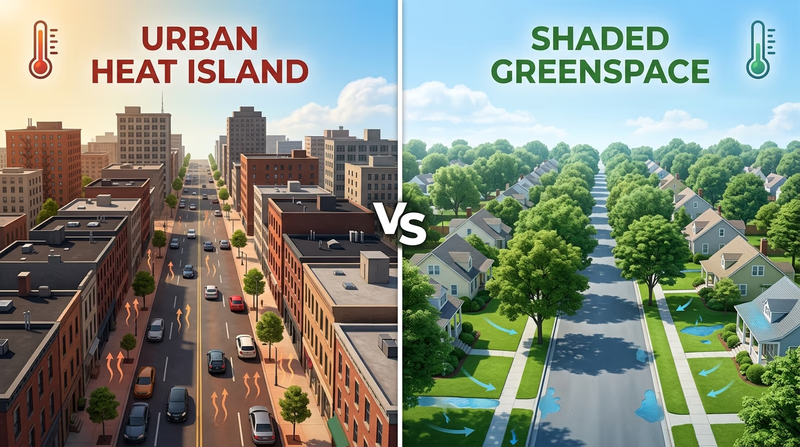
Cities replace soil, trees, and grass with pavement, rooftops, and other surfaces that heat up quickly. This can create an urban heat island, where cities stay warmer than nearby rural areas, especially at night.
Effects on climate and people may include:
- higher nighttime temperatures
- more heat stress, especially for older adults and young children
- increased energy use for air conditioning
- faster runoff and flash flooding after heavy rain
Air pollution and aerosols
Particles and pollutants in the atmosphere can affect health directly and may also change how sunlight and clouds behave. Smoke from wildfire, industry, or transportation can reduce air quality and make it harder for people with asthma or other breathing problems.
Effects on climate and people may include:
- breathing problems and missed outdoor activity
- reduced visibility
- changes in heating and cooling of the atmosphere
- damage to ecosystems and buildings
🎬 Video: Causes and Effects of Climate Change (video) — https://youtu.be/oD4gvDliieY?si=hdY-Hb4veM6tWsRF
Keep the focus on people
The requirement is not only about the environment. It is also about how people are affected. That can include:
- health risks from heat, smoke, or poor air quality
- stronger flood impacts where drainage is poor
- damage to homes, roads, and crops
- changes in water availability
- shifts in where people can work, farm, or safely live
A strong requirement answer
Connect each activity to both climate and people- Name the activity: for example, fossil fuel burning or deforestation.
- Describe the environmental change: hotter air, less forest cover, more runoff, more greenhouse gases.
- Describe the climate effect: altered temperature, moisture, or weather risk.
- Describe the human effect: health, safety, farming, water, or infrastructure.
Avoid oversimplifying
Climate is a huge system, so most changes do not come from one activity alone. That is why it helps to speak carefully. Instead of saying a single action “causes all bad weather,” explain that human activities can influence the environment and the long-term conditions that affect people.
🎬 Video: 10 Human Activities Heavily Impacting Climate Change (video) — https://youtu.be/yS0D9xOlzNc?si=tm7nGt5kuKq9XxhE
This requirement looks at human influence on climate. The next one explains a natural cause of climate differences across Earth: the tilt of our planet’s axis.
Req 9 — Earth's Tilt and Regional Climate
If Earth were not tilted, climates around the globe would feel very different. Seasons would be far weaker, and the difference between tropical, temperate, and polar regions would not work the same way it does now. This requirement is really about sunlight: where it hits most directly, where it arrives at a shallow angle, and how that pattern changes through the year.
The big idea: angle of sunlight
Earth is tilted about 23.5 degrees on its axis. Because of that tilt, different parts of the planet receive different amounts of solar energy at different times of year.
When sunlight strikes more directly:
- the energy is concentrated over a smaller area
- heating is stronger
- days may also be longer during that season
When sunlight arrives at a low angle:
- the energy spreads over a larger area
- heating is weaker
- the atmosphere also absorbs and scatters more of that light before it reaches the ground
Near the equator
Places near the equator receive fairly direct sunlight all year. Day length also changes less there than it does at higher latitudes.
That is why equatorial climates are often:
- warm year-round
- less seasonal in temperature
- more shaped by wet and dry patterns than by big swings between summer and winter
Near the poles
Places near the poles receive sunlight at a much lower angle, so the energy is spread out and weaker. During part of the year, they may also get very short days or even long periods without sunrise.
That is why polar climates are often:
- much colder
- strongly seasonal in daylight
- home to long winters and short cool summers
In the middle latitudes
Regions between the equator and the poles get the biggest season changes that many Scouts know well. Their sunlight angle and day length change much more through the year, so temperatures and weather patterns shift a lot from season to season.
That is why many middle-latitude climates have:
- warm or hot summers
- cool or cold winters
- noticeable spring and fall transitions
- wide differences in weather through the year
🎬 Video: Why Do We Have Different Seasons? (video) — https://youtu.be/WgHmqv_-UbQ?si=3s2ISRCkU3Dido89
Climate zones in plain language
| Region | Sunlight pattern | Typical climate result |
|---|---|---|
| Near the equator | More direct sunlight year-round | Warmer overall, smaller temperature swings |
| Middle latitudes | Big seasonal changes in angle and day length | Stronger seasons |
| Near the poles | Low-angle sunlight, huge daylight changes | Colder climates, long winters |
🎬 Video: Why Do We Have Different Climates Across the Globe? (video) — https://youtu.be/eDVbKrRV-mU?si=l6l6quf6fr2IQ3gl
What to emphasize to your counselor
A strong explanation connects three ideas:
- Earth is tilted.
- Tilt changes the angle and length of sunlight by latitude and season.
- Those sunlight differences shape climate.
You do not need to make the answer more complicated than that. Keep it clear and physical.
By now you know the science behind weather and climate. The next requirement gives you a chance to use that knowledge in a real project: either build an instrument and keep a weather log, or visit a weather expert and learn how your community gets warned.
Req 10 — Choose Your Weather Project
This requirement covers two different paths, and you should choose the one that fits your interests, schedule, and access to local resources.
- Req 10a is a maker-and-observer project. You build a simple weather instrument and use it as part of a one-week weather log.
- Req 10b is a field-and-interview project. You visit or speak with a weather professional and learn how your community receives warnings.
Your options
- Req 10a — Build an Instrument and Keep a Log: Make a wind vane, anemometer, rain gauge, or hygrometer, then track weather data and compare forecasts with what actually happened. This option helps you learn by observing patterns over time.
- Req 10b — Visit a Weather Expert: Visit a National Weather Service office or interview a meteorologist, broadcaster, extension officer, or university instructor. This option helps you learn how weather science works in your community and how warnings reach people.
How to choose
Choosing your option
Think about time, access, and what kind of learning you want- Hands-on building: Choose 10a if you like making things, recording observations, and comparing forecast data with real conditions.
- Meeting professionals: Choose 10b if you enjoy asking questions, seeing how experts work, and learning how community warning systems operate.
- Time available: 10a takes at least a week of consistent observation. 10b may take less time overall, but it depends on scheduling a visit or interview.
- What you will gain: 10a builds careful observation habits and data-collection skills. 10b builds interviewing skills and helps you understand local weather hazards and communication systems.
A good way to decide
Ask yourself these questions:
- Can I make and check an instrument at the same time every day for a week?
- Do I have a safe place to set up and read it?
- Is there a local weather office, broadcaster, or meteorology instructor I could contact?
- Which option would I be more excited to explain to my counselor afterward?
There is no wrong choice. The goal is to complete one option well.
You will start with the instrument-and-log option on the next page. Even if you choose the interview option instead, it still helps to read ahead and see what weather observation looks like.
Req 10a — Build an Instrument and Keep a Log
This option turns you into a weather observer. Instead of only reading forecasts, you will build a simple tool, collect data at the same time each day, and compare predictions with what the sky actually did. That is exactly the kind of habit that helps meteorologists spot patterns.
Choose your instrument
Each instrument teaches you something different.
Wind vane
A wind vane shows wind direction. It is best if you want to focus on how air moves around your home or campsite.
Anemometer
An anemometer measures wind speed. It is helpful if you want to compare calm and breezy days more carefully.
Rain gauge
A rain gauge measures precipitation. It is simple, practical, and especially useful if showers are common where you live.
Hygrometer
A hygrometer measures humidity. This is great if you want to compare muggy and dry conditions or connect moisture to dew, frost, and comfort.
🎬 Video: Weather 101: Build Your Own Wind Vane! (video) — https://youtu.be/kSHRBUTMq0o?si=6XqGX8yB-svIK85z
🎬 Video: DIY Anemometer (Measure Wind Speed) (video) — https://youtu.be/Gab07UaoeZI?si=iQpXL42eMjDoNIkz
🎬 Video: How to Make a Rain Gauge (video) — https://youtu.be/MLmVaiSEF9w?si=atHOcyY2Yfn2Vu-W
🎬 Video: How to Make Your Own Hygrometer (video) — https://youtu.be/lNPSzifZ-Y0?si=4_dPuJHkkLw5hp75
Set up your observation routine
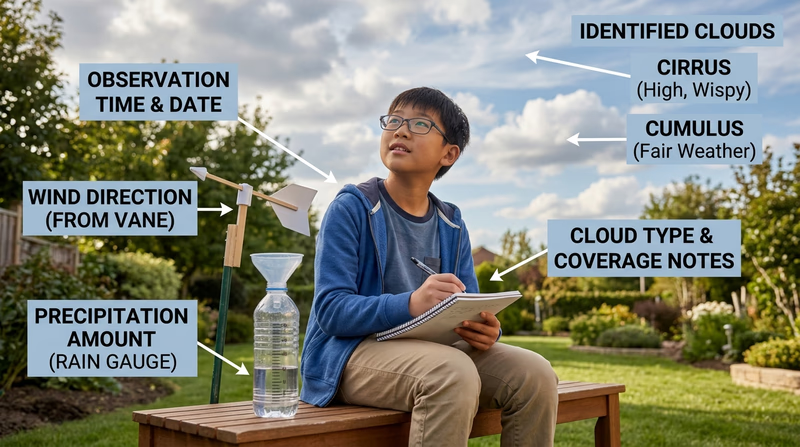
The Weather merit badge pamphlet recommends keeping a weather log and making entries at the same time each day. That matters because weather changes all day long. If you check at 7 a.m. one day and 5 p.m. the next, your comparison becomes much less useful.
Try to choose a time you can actually keep for seven straight days.
Record:
- wind direction and speed
- temperature
- precipitation
- cloud types
- morning dew or frost when present
- forecast from radio or television
- what weather really happened later
Good weather log habits
Small choices make your data much better- Use the same time every day: Consistency matters more than the exact hour.
- Use the same location: That reduces extra variables.
- Write observations right away: Do not trust your memory later.
- Compare prediction to reality: The forecast is part of the assignment, not just your measurement.
What makes a strong log?
A strong log is readable and specific. Do not just write “nice weather” or “bad weather.” Use real terms like:
- scattered cumulus
- steady light rain
- wind from the northwest
- frost on grass at sunrise
- forecast called for storms after 3 p.m.; actual storm arrived at 5 p.m.
That kind of detail helps you and your counselor see whether you observed carefully.
Compare forecasts honestly
Forecasts are not magic. They are informed predictions. Sometimes they are close. Sometimes the timing is off or your exact location experiences something slightly different.
That is not a failure. It is part of what makes this option valuable. You are learning that weather depends on location, timing, and changing conditions.
Connect it to other requirements
This option brings together much of what you already studied:
- Req 3 helps you choose forecast sources.
- Req 4 helps you notice fronts and pressure changes.
- Req 6 helps you identify cloud types.
- Req 7 helps you understand moisture, dew, frost, and precipitation.
That is why this requirement is such a good test of whether the badge concepts are starting to fit together.
The next option takes a different path. Instead of building and logging, you will learn directly from a weather expert or office about local dangers and warning systems.
Req 10b — Visit a Weather Expert
This option is about local knowledge. Weather is never completely generic. A mountain town, farming region, coastline, desert city, and river valley can all face very different hazards. By talking with a weather professional, you learn what matters most where you live and how warnings actually reach the people who need them.
Who you can talk to
The requirement gives several good choices:
- a National Weather Service office staff member
- a local TV or radio weathercaster
- a private meteorologist
- a local agricultural extension service officer
- a university meteorology instructor
The Weather merit badge pamphlet notes that there are more than 120 National Weather Service offices in the United States and its territories, and it encourages Scouts to arrange a visit if possible.
🎬 Video: Behind the Scenes of the National Weather Service Atlanta/Peachtree City (video) — https://youtu.be/DuZqz7wGXGY?si=cS4abYCrQrbtR3Qp
What to find out
Your conversation should answer two big questions:
- What weather is most dangerous or damaging in my community?
- How do severe weather and flood warnings get to homes in my community?
Depending on where you live, the most serious local hazards might include:
- tornadoes
- flash floods
- hurricanes or tropical storm flooding
- winter storms and ice
- wildfire smoke and extreme heat
- severe thunderstorms with hail or damaging winds
- coastal flooding or storm surge
Questions worth asking
The pamphlet includes sample questions for meteorologists, especially about learning more and about careers. For this requirement, add local-hazard questions too.
Questions for your weather expert
Use these to guide your visit or interview- Which weather hazard causes the most damage in our area?
- Which weather hazard creates the most danger to life?
- What time of year is the highest risk?
- What signs should people notice before that weather arrives?
- How do warnings reach homes here?
- What mistakes do people in this community commonly make during severe weather?
- What should Scouts doing outdoor activities pay special attention to in this area?
Warning paths to understand
A good answer should show the full path, not just name one device. Warnings may move through several channels:
- National Weather Service alerts
- NOAA Weather Radio All Hazards
- TV and radio broadcasters
- wireless emergency alerts on cell phones
- local sirens or emergency systems
- campground staff, school systems, or community notification tools
Take notes like a reporter
Bring a notebook. Record names, job titles, main points, and any examples the person shares. If they describe a past storm, flood, or local emergency, that example can make your discussion with your counselor much stronger.
You can organize your notes under these headings:
- most dangerous local weather
- most damaging local weather
- seasons of greatest concern
- how warnings are issued
- how warnings are received at home
- what outdoor groups should do differently in your area
Why this requirement matters
This is not just a visit badge task. It teaches you that weather readiness depends on local conditions and local communication systems. A Scout in Arizona, Florida, Minnesota, or West Virginia should not expect exactly the same answer.
Next you will use what you have learned to teach others. Req 11 asks you to turn weather safety knowledge into a short presentation for a group.
Req 11 — Teach Weather Safety
Knowing safety rules is important. Being able to explain them clearly to someone else is even better. This requirement asks you to organize what you learned into a talk that is simple, accurate, and useful for real outdoor situations.
Build your outline first
Your counselor must approve your outline before your talk, so make it clear and easy to follow. A strong five-minute talk usually works best with three short sections—one for each hazard—and a quick opening and closing.
A simple structure looks like this:
- Why weather safety matters outdoors
- Lightning safety rules
- Flash flood safety rules
- Tornado safety rules
- Quick review and reminder to act early
Lightning safety points
Explain that lightning can strike outside the heaviest rain and that thunder is the warning sign everyone can understand.
Key outdoor rules to teach:
- If you hear thunder, move to a substantial building or hard-topped vehicle.
- Leave water, open fields, ridge tops, and isolated tall objects.
- Stop swimming, boating, and fishing right away.
- Wait 30 minutes after the last thunder before returning.
Flash flood safety points
Flash floods are dangerous because they can arrive quickly and with strong force.
Key outdoor rules to teach:
- Move to higher ground immediately.
- Stay out of streambeds, drainage channels, and floodwater.
- Never drive or walk through moving water.
- Avoid camping in low areas when heavy rain is possible.
Tornado safety points
Tornado safety is about strong shelter and protecting yourself from debris.
Key outdoor rules to teach:
- Go to a sturdy building if one is available.
- Move to the lowest level and a small interior room away from windows.
- Avoid tents, vehicles, and overpasses as shelter.
- Protect your head and neck.
Make your talk easy to remember
A good talk does not sound like you are reading a textbook. Use short examples.
For example:
- “If thunder starts while your patrol is cooking dinner, what do you do first?”
- “If a creek near camp starts rising fast, where should you go?”
- “If a tornado warning happens during a meeting, what shelter is best?”
Those examples help your audience imagine the situation instead of just hearing a list.
What makes a strong presentation
Talk checklist
Before you present, make sure your talk does these things- Accurate: The rules match real weather safety guidance.
- Organized: Your audience can follow it easily.
- Specific: You say what to do, not just that weather is dangerous.
- Practical: Your examples sound like real camp or outdoor situations.
- Approved: Your counselor has seen the outline first.
This requirement turns you into a teacher. The final numbered requirement asks you to look forward and explore how weather knowledge can become a career.
Req 12 — Careers in Meteorology
Meteorology is much bigger than standing in front of a green screen and pointing at a map. The Weather merit badge pamphlet describes careers in research, teaching, forecasting, television, government service, and military operations. This requirement is your chance to see which part of the field sounds most interesting to you.
Career paths you might research
Operational meteorologist
These meteorologists create forecasts, monitor hazards, and issue warnings. Many work for the National Weather Service or private forecasting companies.
Broadcast meteorologist
These professionals explain forecasts to the public on TV, streaming platforms, or digital news services. They need strong science knowledge and strong communication skills.
Research meteorologist or climate scientist
Researchers study the atmosphere, satellites, storms, climate trends, air pollution, and forecasting tools. They often work at universities, government labs, or research centers.
Specialized weather roles
Weather knowledge also supports aviation, oceanography, emergency management, agriculture, military planning, renewable energy, wildfire forecasting, and hurricane reconnaissance.
🎬 Video: Hurricane Hunter (video) — https://youtu.be/F8pF3jOtM0U?si=V_vTXWHWd7JcRRAz&t=22
🎬 Video: Careers in Meteorology - National Weather Service Hurricanne Meteorologist (video) — https://youtu.be/Jmzry0djEQA?si=O_Pvh47t0WegPRU4
🎬 Video: Careers in Meteorology - Broadcast Meteorology (video) — https://youtu.be/CkmLI5VsdbY?si=4golNNv7EBcqZ2Ds
🎬 Video: Careers in Meteorology - Digital Meteorology (video) — https://youtu.be/jzmwzbhIhJQ?si=RfiZhEq-gtxMp-g6
Education and training
The pamphlet says that meteorologists need a strong foundation in science and math. It also explains that many meteorology jobs require a bachelor’s degree in meteorology, atmospheric science, or a related field such as physics. Classes in calculus and thermodynamics are especially important for many paths.
Broadcast work may add another need: strong communication skills. Research careers may require graduate school. Shift-based forecasting jobs may require nights, weekends, and extra hours during emergencies.
What to research for one career
Your counselor will want more than a job title. Pick one career and gather details in these categories:
- training and education needed
- cost of that education
- job outlook or job prospects
- salary range
- typical job duties
- chances for career advancement
Career research checklist
Use these categories to organize your notes- What does this person do day to day?
- What degree or training is required?
- How long does that path usually take?
- What might it cost?
- What are entry-level opportunities like?
- How can someone advance in the field?
- What part of the job sounds interesting to you?
Good research methods
The requirement gives you several ways to learn:
- interview a professional
- visit a workplace
- search online with permission
- use library resources
A good interview can make your report much stronger. Ask what the person actually does in a normal week, what surprised them about the career, and what they wish they had known when they were your age.
What might make the career interesting?
That last part of the requirement matters. Do not only list facts. Think about what draws you in.
Maybe you like:
- solving science problems
- warning people about dangerous weather
- explaining complex ideas clearly
- flying into storms to collect data
- working with technology, satellites, and radar
- helping farmers, pilots, or emergency managers make better decisions
The more specific your answer is, the more real your discussion will feel.
You have now completed the numbered requirements. The Extended Learning page will show you where weather curiosity can lead next—through experiences, organizations, and deeper topics.
Extended Learning
Congratulations
You have finished the requirements, but weather is the kind of subject that gets more interesting the longer you watch it. The same sky can teach you science, safety, pattern recognition, and service to your community. If this badge made you look up more often, you are already headed in the right direction.
Storm Spotting and Local Awareness
One of the best next steps is learning how weather affects your own area in more detail. What kind of storm causes the most damage where you live? Is it flash flooding, hail, tornadoes, winter ice, coastal flooding, wildfire smoke, or extreme heat? Start tracking those local patterns the same way a meteorologist would: by looking for repeated causes, seasons, and warning signs.
You can also learn what trained storm spotters do. Spotters do not chase danger for fun. They watch carefully, report what they see, and help weather professionals understand what is actually happening on the ground.
Forecasting as a Puzzle
Forecasting is part science, part pattern recognition, and part decision-making under uncertainty. Meteorologists compare current observations with past patterns and computer guidance, then decide what is most likely. That means a forecast is never only about data. It is also about judgment.
Try this on your own: look at a three-day forecast, then write down what you think will happen and why. Compare your notes with what actually happens. Over time you will start noticing which clues are the most useful in your area.
Weather, Climate, and Service
Weather knowledge can help you serve others. Scouts who understand heat risk, lightning safety, and flood danger can make better choices for younger Scouts, families, and outdoor groups. Even simple habits—checking radar before a meeting, recognizing building clouds, or moving camp away from a flood-prone creek—can prevent real emergencies.
Real-World Experiences
Visit a National Weather Service Office
Attend a Skywarn or Community Weather Program
Track a Week of Local Weather Like a Forecaster
Visit a Science Museum or University Atmospheric Lab
Organizations
Official U.S. weather agency providing forecasts, warnings, radar, educational resources, and local forecast office information.
Organization: National Weather Service — https://www.weather.gov/
The federal agency that supports weather, climate, ocean, and environmental science, including the National Weather Service.
Organization: National Oceanic and Atmospheric Administration — https://www.noaa.gov/
Professional organization for atmospheric and related sciences with student-friendly information about weather and climate careers.
Organization: American Meteorological Society — https://www.ametsoc.org/
Offers atmospheric science learning resources, explainers, and classroom-ready materials from a major atmospheric research organization.
Organization: UCAR Center for Science Education — https://scied.ucar.edu/