Req 8 — People, Climate, and Change
Weather happens naturally, but people can change the conditions that shape climate and daily life. This requirement asks you to think bigger than a single storm. It asks how human choices affect air, land, water, temperature, and the way communities experience weather hazards.
Human activities that can alter the environment
There are many valid examples. You do not need to list every one. Pick a few you can explain clearly.
Burning fossil fuels
Cars, trucks, power plants, factories, and many heating systems burn coal, oil, or natural gas. That releases greenhouse gases such as carbon dioxide into the atmosphere. Greenhouse gases help trap heat, which can influence long-term climate patterns.
Effects on climate and people may include:
- hotter average temperatures in many places
- more dangerous heat waves
- stress on crops and water supplies
- changing patterns of drought, wildfire risk, or heavy rainfall
Deforestation
When forests are removed, the land changes in several ways. Trees no longer absorb as much carbon dioxide, shade the ground, or release moisture through transpiration. Soil may also erode more easily.
Effects on climate and people may include:
- warmer local conditions
- reduced habitat for wildlife
- more runoff and flood risk
- less moisture returned to the air
Urban development
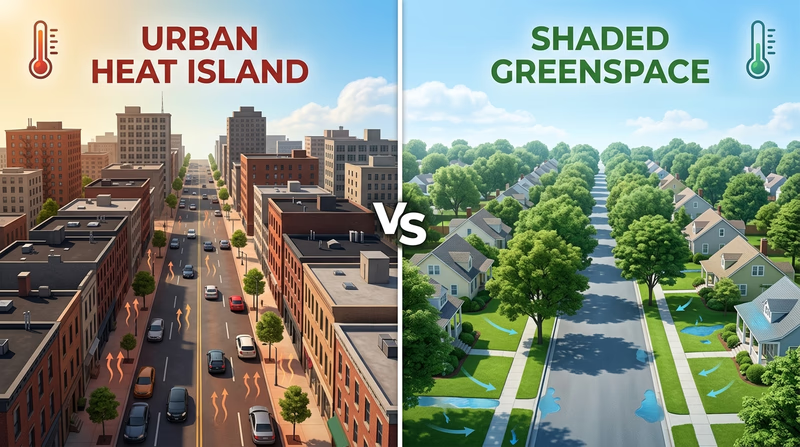
Cities replace soil, trees, and grass with pavement, rooftops, and other surfaces that heat up quickly. This can create an urban heat island, where cities stay warmer than nearby rural areas, especially at night.
Effects on climate and people may include:
- higher nighttime temperatures
- more heat stress, especially for older adults and young children
- increased energy use for air conditioning
- faster runoff and flash flooding after heavy rain
Air pollution and aerosols
Particles and pollutants in the atmosphere can affect health directly and may also change how sunlight and clouds behave. Smoke from wildfire, industry, or transportation can reduce air quality and make it harder for people with asthma or other breathing problems.
Effects on climate and people may include:
- breathing problems and missed outdoor activity
- reduced visibility
- changes in heating and cooling of the atmosphere
- damage to ecosystems and buildings
🎬 Video: Causes and Effects of Climate Change (video) — https://youtu.be/oD4gvDliieY?si=hdY-Hb4veM6tWsRF
Keep the focus on people
The requirement is not only about the environment. It is also about how people are affected. That can include:
- health risks from heat, smoke, or poor air quality
- stronger flood impacts where drainage is poor
- damage to homes, roads, and crops
- changes in water availability
- shifts in where people can work, farm, or safely live
A strong requirement answer
Connect each activity to both climate and people
- Name the activity: for example, fossil fuel burning or deforestation.
- Describe the environmental change: hotter air, less forest cover, more runoff, more greenhouse gases.
- Describe the climate effect: altered temperature, moisture, or weather risk.
- Describe the human effect: health, safety, farming, water, or infrastructure.
Avoid oversimplifying
Climate is a huge system, so most changes do not come from one activity alone. That is why it helps to speak carefully. Instead of saying a single action “causes all bad weather,” explain that human activities can influence the environment and the long-term conditions that affect people.
🎬 Video: 10 Human Activities Heavily Impacting Climate Change (video) — https://youtu.be/yS0D9xOlzNc?si=tm7nGt5kuKq9XxhE
This requirement looks at human influence on climate. The next one explains a natural cause of climate differences across Earth: the tilt of our planet’s axis.